Estonian Prime Minister Kristen Michal, in an interview with the public broadcaster Eesti Rahvusringhääling (ERR) published on Tuesday, November 24, stated that Estonia will not provide its territory, airspace, or territorial waters to any country — including Ukraine — for carrying out any attacks. According to him, Tallinn has "made it clear" to allies and Kyiv that these resources "cannot be used by anyone else." The statement comes against the backdrop of ongoing strikes against the Russian "shadow fleet" in the Baltic Sea and is one of the most specific public definitions of the Estonian position regarding the use of its jurisdiction during the conflict.
Limits of Estonian jurisdiction
Michal emphasized that Estonia's position is permanent and unambiguous: the country does not act as a platform for offensive operations against Russia. At the same time, the Prime Minister did not deny the fact that Ukrainian strikes against the "shadow fleet" and related infrastructure are continuing — on the contrary, he said he expects them to continue, as he assesses these vessels to play a key role in financing Russia's war against Ukraine and in transporting weapons. Thus, Tallinn separates the issue of the inadmissibility of using its territory from the assessment of the expediency and legality of the strikes against the ships themselves.
Environmental risk in the Baltic Sea
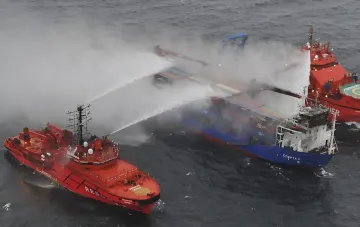
Separately, Michal outlined the environmental aspect. The head of government identified damage to the tankers and cargo ships of the "shadow fleet," many of which, he said, are in poor technical condition, as a threat to the Baltic Sea. He recalled the recent attack on the Russian cargo ship "Sparta II" in the Gulf of Finland and stated that a potential fuel leak "poses a serious danger to the state of the Baltic Sea." According to the Prime Minister, a signal will be sent to Kyiv regarding the risk of environmental pollution: "They have likely already received this message through channels below the level of heads of state, but it will undoubtedly be voiced again."
Strike on "Sparta II" and Kyiv's position
Ukrainian President Volodymyr Zelenskyy confirmed to Bloomberg on November 23 that Kyiv was responsible for the drone strike on the freighter "Sparta II" in the Gulf of Finland, stating: "We did the right thing." According to him, any vessel under the Russian flag carrying weapons or sanctioned cargo is a legitimate target for Ukraine in Russian territorial or neutral waters. Leningrad Region Governor Alexander Drozdenko reported on November 21 that two drones had attacked a cargo ship headed to Kaliningrad in neutral international waters of the Gulf of Finland, approximately three nautical miles from the Russian border.
Context: "shadow fleet" and sanctions
The vessel "Sparta II" has been under US sanctions since 2022. According to The Insider, it has been linked to the transport of weapons in Russia's interests: in August 2022, the ship was recorded leaving the Syrian port of Tartus with S-300 air defense systems on board. It is these operations that, according to Tallinn's assessment, make the "shadow fleet" an object of ongoing strikes, which simultaneously increases the environmental risks for the Baltic, which the Estonian government points to.