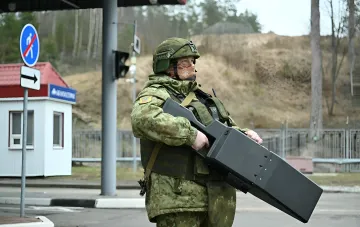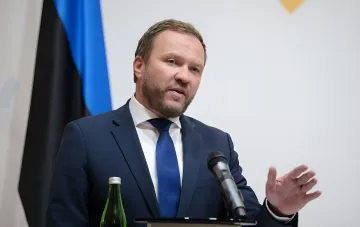
On November 23, the Russian Ministry of Foreign Affairs summoned the charge d'affaires of Estonia in Moscow, Marek Jürgenson (Marek Juhtegi). According to RBC-Ukraine, citing a statement from the Russian diplomatic department, a "firm protest" was delivered to him regarding two of Tallinn's decisions: accusing Russia of a failed arson attempt at a military-industrial complex facility near Tallinn and the Estonian government's decision to close crossing points on the Russian-Estonian border starting December 1, 2026.
"Border of open war": Moscow's rhetoric
As reported by the outlet, the Russian Foreign Ministry stated that such "hasty accusations" "once again reveal the fierce Russophobic essence of the Estonian regime." The ministry also used explicit language: "The Estonian diplomat was again pointed out that such provocative and extremely dangerous actions are on the verge of unleashing an open war with Russia." Thus, the Russian side shifted the discussion from the plane of a specific arson incident to the plane of a full-scale conflict threat.
Economic arguments and "boomerang" threats
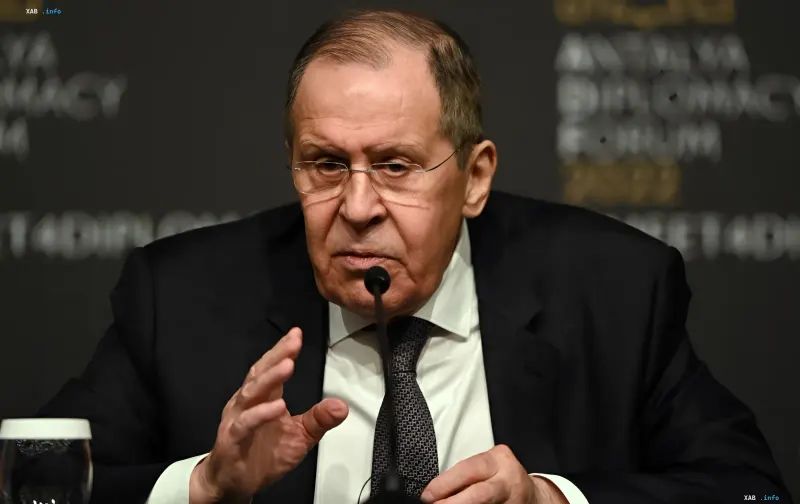
The statement from Foreign Minister Sergey Lavrov's team claims that closing the state border "will first and foremost deliver another blow to the Estonian economy and will boomerang back on Tallinn itself, as well as its EU and NATO allies." Moscow called Estonia's decision "another anti-Russian venture, adding to the collection of numerous hostile actions taken by this Baltic state over the past years." In concluding the diplomatic demarche, Russia stated that it reserves the right to take "comprehensive political and diplomatic measures aimed at protecting Russia's national interests and the legitimate rights of Russian citizens."
Context: grain transit and the Baltic
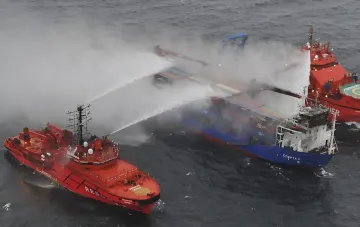
Beyond the border issue, the Russian Foreign Ministry expressed dissatisfaction with what they say is Tallinn's complete ban on the transit of Russian and Belarusian grain through Estonian territory, as well as attempts to obstruct the movement of Russian cargo vessels in the Baltic Sea, as claimed in the statement. Moscow included these points in a list of actions it assesses as "provocative and extremely dangerous."
Tallinn's reaction and the broader backdrop
The decision by Estonia to close border crossing points was made against the backdrop of accusations against Russia regarding the arson attempt on the military-industrial complex near Tallinn. Earlier, according to the same outlet, Estonia responded harshly to Vladimir Putin's proposal for negotiations in Moscow and was preparing an action plan in case of Russian occupation. Thus, the diplomatic demarche in Moscow on November 23 became part of a growing exchange of mutual accusations between the two sides, where each interprets the actions of the other as an escalation.