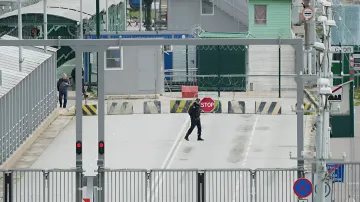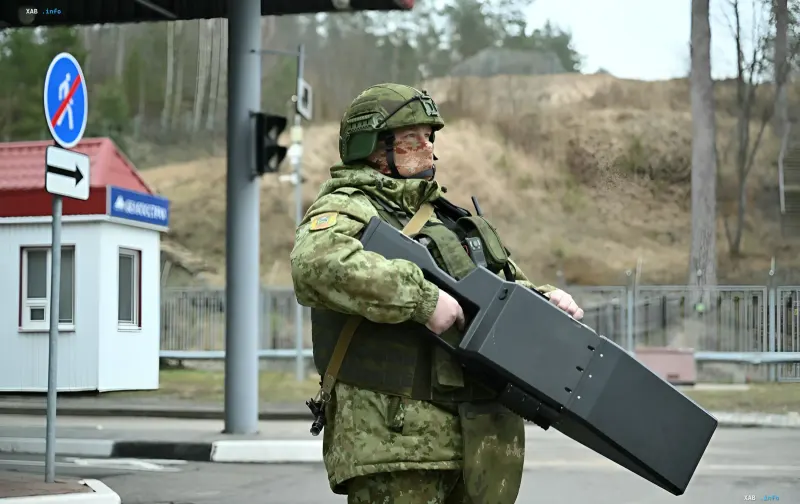
Latvian Prime Minister Andris Kulbergs has publicly criticized Estonia's decision to stop transport traffic through border crossings with Russia. In his assessment, such a step by the neighboring state is a mistake and appears absurd if not implemented in coordination with all three Baltic countries. The statement came in response to direct questions from journalists about whether Riga intends to follow the same path and close its own border crossings.
Criticism from Riga: a move without coordination
Kulbergs emphasized that Estonia should have consulted with Latvia and Lithuania beforehand before making a unilateral decision to close the border to transport flows. The head of the Latvian government linked the abruptness of the move to the electoral context in Tallinn, noting that the region's security and logistics require a coordinated position from all three countries, rather than isolated decisions. Thus, Riga has effectively indicated that it does not consider closing the border an optimal tool and is not prepared to automatically repeat Estonia's actions.
Four scenarios and expected traffic growth
At the same time, the Latvian side expects that the transport flow previously passing through Estonian crossings will be redistributed and increase at its own border. In the Latvian government, according to Kulbergs, four action scenarios for this case are being evaluated, although the Prime Minister did not publicly disclose their details. This approach indicates that Riga is preparing for the operational consequences of closing the neighboring direction and is modeling response options for increased load at its checkpoints in advance.
Moscow's reaction: "on the verge of war"
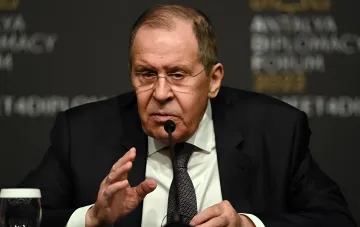
Against the backdrop of these statements, the Russian Foreign Ministry issued a sharp response to Tallinn's decision to close checkpoints from December 1 and to accusations against Russia of attempting to set fire to a defense enterprise. Moscow stated that Estonia was "on the verge of war" with Russia. This rhetoric contrasts with the position of the Baltic capitals, which present the border closure as a measure related to transport logistics and security, rather than as an escalation of the conflict.
Plan in case of occupation
Separately, it was previously reported that Estonia is preparing an action plan in case of Russian occupation. According to it, state online services should continue to function even in a scenario where the government manages the country from abroad. The combination of these measures — from closing the border to preparing backup management scenarios — reflects the intensification of rhetoric and practical preparation in Tallinn, to which Riga has now publicly reacted, highlighting the need for coordination between Baltic states.