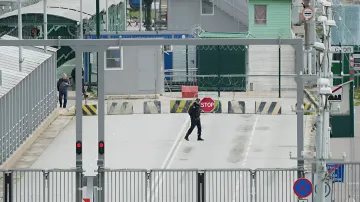
The Estonian government has decided to suspend the crossing of the state border with Russia at road checkpoints. Starting December 1, 2026, at 7:00 AM, crossings will be halted at all five land checkpoints: Narva-1, Narva-2, Koidula, Luhamaa, and Saatse. In six months, the cabinet will assess whether to maintain or modify the imposed restriction. In a commentary, Alar Laneman calls this move a "logical and inevitable response to provocations by the eastern neighbor," emphasizing that any such decision carries not only practical content but also emotions and a signal.
Closure mechanics and six-month review
According to Laneman, the decision specifically affects road traffic: all active land border checkpoints on the Estonian-Russian border are listed—Narva-1, Narva-2, Koidula, Luhamaa, and Saatse. The imposed restriction is not indefinite: after six months, the government will evaluate whether its continuation is appropriate. Such a mechanism, in the author's assessment, allows for flexibility and a return to review should the situation change.
Regional context: Estonia is not alone
Laneman notes that Estonia is not an exception in the actions taken by Baltic and Northern European countries. Finland, he points out, closed its land border with Russia back in December 2023, and Latvia, Lithuania, and Poland have significantly restricted border crossings on their eastern frontiers. Thus, the Estonian decision fits into the general trend of tightening control on Europe's eastern flank.
Security, economy, and the election calendar
The practical consequences of the decision, according to Laneman, are multifaceted. On one hand, closing the border reduces opportunities for provocative attacks, hostile intelligence activities, and information gathering, while reducing the load on border points allows internal security agencies to focus on other tasks: building reserve capabilities, countering drones, and protecting critical infrastructure. On the other hand, the author regretfully notes that the decision will complicate communication for individual families and business activities in border areas. Laneman specifically points to the calendar factor: ahead of the Riigikogu elections, internal security and protection take on special significance.
EU internal border: Why it must not be closed
A separate section of the commentary is dedicated to the EU internal border between Estonia and Latvia. Laneman warns that talk of closing the border or restricting movement between the two countries is dangerous: any such steps, in his view, undermine the foundations of the European Union's functioning and destroy European unity, thereby serving the goals of adversaries. Instead, the author proposes improving the efficiency of EU internal security institutions—especially in Estonia, Latvia, and Lithuania—and strengthening their cooperation.
A signal to several parties
Concluding the analysis, Laneman interprets the decision as a signal to several addressees at once. The eastern neighbor, he says, is being made to understand that normal cross-border communication between neighbors is preferable to its absence; for allies, it is an example to follow; for residents of Estonia, it reinforces a sense of confidence against the backdrop of war fatigue and a constant factor of fear, especially ahead of Christmas. The author also notes the internal contradiction in the eastern neighbor's position—a combination of, on one hand, "hatred, contempt, and envy," and on the other, a desire to come to Europe to vacation, study, buy real estate, and do business—and expresses hope that closing the border will help them realize that normal communication between states is always better than its absence.