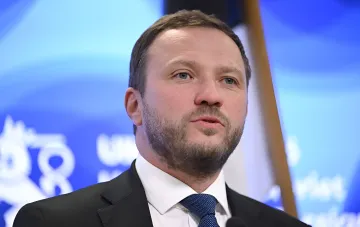
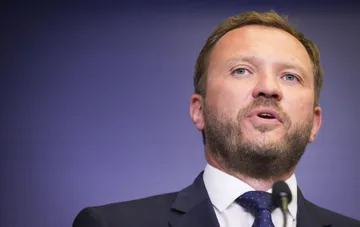
The Estonian government intends to close all checkpoints on the land border with Russia starting December 1, 2026. This was announced last Sunday, November 15, by Minister of Foreign Affairs Margus Tsahkna. The decision, made against a backdrop of ongoing mutual accusations of sabotage, quickly became a top topic in European security policy and sparked a wave of official reactions in Brussels, Kyiv, Warsaw, Vilnius, and Moscow.
Tallinn’s Decision and Context
The closure of all land border crossings is an unprecedented step for the Baltic nation, through which a significant portion of land transit between Russia and the rest of Europe has historically passed. In Tallinn, the decision is justified by the need to strengthen security under conditions that Estonian authorities describe as increasing sabotage activity. Formally, the restriction takes effect on December 1, 2026, leaving several days for organizational and logistical procedures.
Support from Kyiv, Warsaw, and Vilnius
The first to declare “full solidarity” with Estonia was Ukrainian Foreign Minister Andrii Sybiha. In a post on X, he stated that Moscow is “increasingly resorting to sabotage and intimidation” against European countries, calling the border closure a “clear signal that hostile actions have concrete consequences.” Polish Foreign Minister Radosław Sikorski also expressed support, emphasizing that Estonia “has every right to defend itself and control its borders,” and that every act of aggression becomes a justification for restrictions on Russian diplomacy and citizens. Lithuanian President Gitanas Nausėda called the closure of the checkpoints an “adequate response to attempts to destabilize the region” and did not rule out that Vilnius could take similar measures if incidents continue.
Moscow’s Position
In Russia, the response to Tallinn’s plans has been sharply negative. Official Russian Foreign Ministry spokesperson Maria Zakharova stated the day before that the initiative of the Estonian authorities “fits into yet another bout of aggressive and unbridled Russophobia.” On Monday, November 16, Russian presidential press secretary Dmitry Peskov rejected all accusations of organizing sabotage, calling them “unsubstantiated” and devoid of “argumentation or proof.” According to him, such statements are coming not only from Tallinn but also from other European capitals.
Impact on Tourism and Logistics
The practical consequences of the border closure affect the civilian sector as well. According to the Association of Tour Operators of Russia, cited by the publication Agentstvo, Estonia accounts for more than 60% of land travel by Russians to Europe: in 2024, Russians made 821,000 trips across land borders, of which 510,000 were through the border with Estonia. This means that from December 1, a significant portion of transit passenger and cargo traffic will be forced to redistribute to alternative routes, which may increase the load on other border crossings in the region.