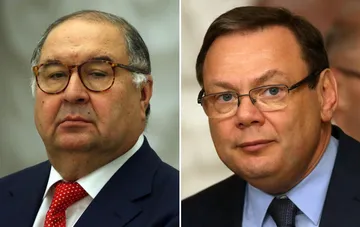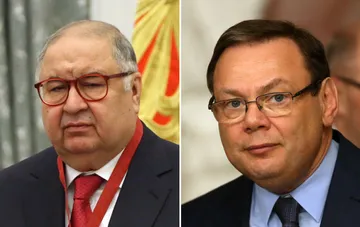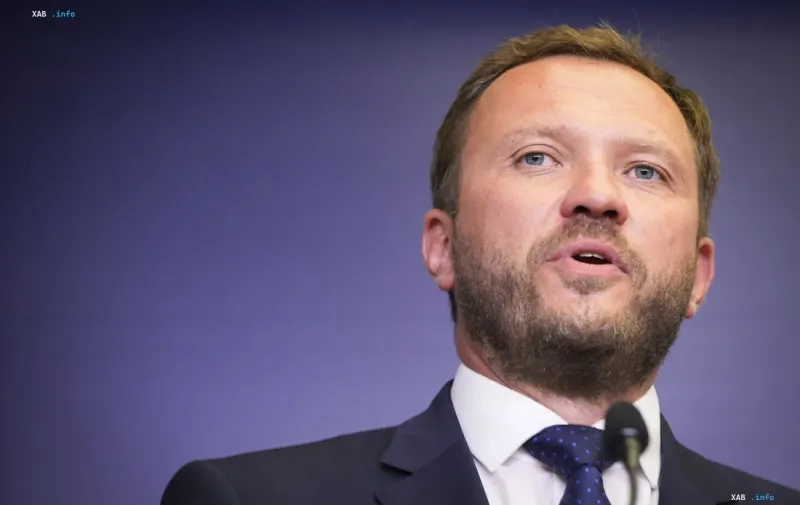
Estonian Foreign Minister Margus Tsahkna stated that France will have to publicly explain its actions after Paris insisted on the lifting of EU sanctions against Russian oligarchs Alisher Usmanov and Mikhail Fridman. According to the diplomat, the French side's persuasion amounted to "the wrong signal at the wrong time," and the lack of detailed explanations calls into question allies' trust in Paris's position within the unified sanctions regime against Russia.
Tallinn's Reaction: "No In-Depth Explanations Were Given"
In an interview cited by RBC-Ukraine via Reuters, Tsahkna emphasized that he still did not understand what was actually happening and why the French authorities were seeking to remove two businessmen from the sanctions list. "One country took a very hardline position that these two people had to be removed from the list, otherwise we would effectively lose the sanctions regime... This is an absolutely wrong message... They need to explain what they are doing. No in-depth explanations were given," the minister lamented. In his assessment, Paris's position undermined trust in France and complicated Europe's attempts to build a coordinated front of restrictions against Moscow.
Paris's Motives: National Security and Pressure from Baku
France, justifying its position, cited national security concerns. Meanwhile, as Reuters notes, Paris was under pressure from Azerbaijan, where, according to the outlet, at least two French citizens were being held. EU media insiders reported that in private conversations the French side claimed that Baku was using Usmanov for "blackmail" in connection with the case of the detained French nationals. The Azerbaijani side denied these accusations. It is separately noted that Usmanov has long been linked to luxury assets in Western Europe, including real estate on the French Riviera, and that sanctions against him were imposed by the EU back in 2022 as one of the wealthiest Russians.
Contradictory Data
Available sources contain conflicting accounts of Paris's real motives. On the one hand, France officially justified its demand to lift sanctions by citing national security concerns. On the other hand, EU insiders link the actions of the French authorities to pressure from Azerbaijan and alleged "blackmail" through Usmanov over the case of the detained French nationals — an accusation that Baku categorically denies. Moreover, if France, by its own account, justified its position on national security grounds, then, in Tallinn's assessment, "in-depth explanations" were never provided to its allies. Thus, the public version and the versions from private sources do not match, and the key motive — pressure from Baku — remains unconfirmed by the official Azerbaijani side.
Context: Ryan's Pardon and the Reaction of Kyiv and Riga
On September 23, it was reported that the President of Azerbaijan, Ilham Aliyev, pardoned French businessman Martin Ryan, who had been behind bars for ten years on espionage charges. According to media reports, he was released the day after Alisher Usmanov was removed from the EU sanctions list, which further fuels the theory linking the two events. Earlier, the European Union unexpectedly for many reversed the sanctions against Usmanov and Fridman, prompting an immediate reaction from Ukrainian President Volodymyr Zelenskyy and Foreign Minister Andriy Sybiha. The Prime Minister of Latvia, for his part, explained for the first time why his country failed to block this EU move despite its attempts to do so.
The combination of these events — from Tallinn's public demand that Paris provide explanations to the chronology of Ryan's pardon — is fueling a new wave of discussion in Europe over how resilient the sanctions regime is and how individual countries can influence its specific decisions under pressure from third states.