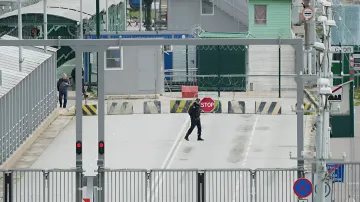
Starting December 1, 2026, Estonia is closing all active border checkpoints on its border with Russia. According to the government, the restrictions will last for at least six months. The closures affect the vehicle checkpoints 'Narva-1' (crossing via the 'Friendship' bridge from Estonian Narva to Russian Ivangorod), 'Koidula' (Kunicina Gora), 'Luhamaa' ( Shumilkino), and 'Saatse', as well as the 'Narva-2' pedestrian bridge, which, however, has not been operational since November 28, 2022. Thus, the last major land corridor connecting the European Union with the territory of the Russian Federation is being cut off.
How the route through Estonia to Russia was arranged
In recent years, a whole transport infrastructure has formed around the Estonian-Russian checkpoints: numerous companies and private drivers transported passengers on both the Estonian and Russian sides of the border. The routes were used by Russian emigrants and tourists, residents of the Baltic states and Finland visiting relatives or traveling for work. A typical arrangement looked like this: a passenger traveled to the Estonian checkpoint (for example, from Riga to Luhamaa — about three hours), collected their luggage at the border, passed passport and customs control first on the Estonian side and then on the Russian side, after which another driver met them to continue the journey to St. Petersburg or Pskov. Scheduled buses from Tallinn to St. Petersburg crossed the border in Narva using a similar scheme, while on the Tallinn — Pskov route via Koidula, passengers got off with their luggage, passed control, and boarded the same bus already on the Russian side.
Border delays have become the norm
Multi-hour waits at the Estonian-Russian border have been described by travelers many times. According to one passenger, 'you can spend a day at the border in a bus.' In May 2024, The Insider reported that an Ecolines scheduled bus was delayed at the Russian checkpoint Shumilkino (connected to Estonian Koidula) for 10–12 hours. On November 22, 2026, Delfi reported that passengers on an Ecolines bus traveling from St. Petersburg to Riga spent the night in the neutral zone between the Shumilkino and Koidula checkpoints: they passed Russian control around 5:30 PM, but the Estonian side stated it would not have time to complete procedures before the checkpoint closed, and the bus only moved on around eight in the morning on November 23.
Political context: the Threod Systems arson and authorities' reaction
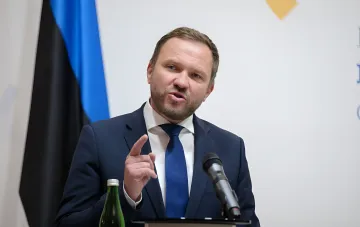
Estonian authorities announced plans to close the border on November 15, and on November 20 the cabinet approved the Interior Ministry's request. The pretext was an attempted arson attack on the building of the defense enterprise Threod Systems in the village of Viimsi near Tallinn, which occurred on the eve of the announcement. Estonian authorities called the incident a 'sabotage' and blamed Russian military intelligence for organizing it; eight Latvian residents have been detained on suspicion of preparing the crime, five of them remanded in custody, and no Russian citizens were reported among them. Prime Minister Kristen Michal stated: 'We will not allow Russia to use our openness against us.' Foreign Minister Margus Tsahkna noted on the social network X that the closure will reduce the threat to the population and 'send a clear signal' that attacks on the defense industry are unacceptable, as well as helping to stop sanctions evasion.
Criticism of the decision and consequences for residents
The border closure has not passed without criticism within the country. Estonian President Ülle Madise urged the government not to make decisions 'under the influence of emotions.' Narva Mayor Jaan Toots demanded the creation of 'humanitarian corridors' for emergency trips to relatives, emphasizing that such people 'pose no danger to the state.' Estonian residents launched a petition asking to preserve the possibility of crossing the border. The Narva City Council noted that the decision could seriously impact the work of local enterprises and jeopardize jobs. Private carriers have already begun rerouting their paths: for instance, Baltic Transfer informed passengers that it will carry out transport to Kaliningrad and Belarus via the Lithuanian borders. Until the decree comes into force, some Russians and Baltic residents continue to use the familiar route to manage to cross the border before December 1.