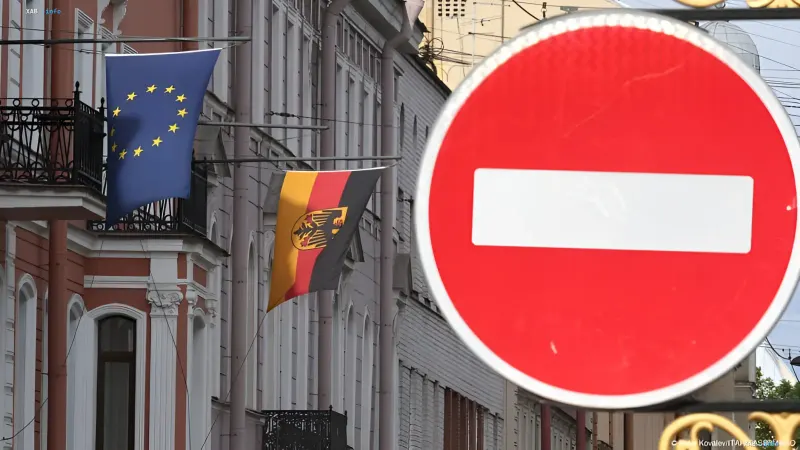
The European Union is moving to a new stage of pressure on Russia regarding visas. According to a DW report, the measures under discussion may be included in the 22nd package of sanctions against the Russian Federation. The initiative involves not just tightening conditions, but a systematic narrowing of Russian citizens' access to Schengen visas — ranging from limiting applicant categories to a possible total ban, which one member state has already publicly called for.
What the European Commission Proposes
In a statement by European Commissioner for Home Affairs and Migration Magnus Brunner on November 23, 2026, two key points were outlined. First, a ban on entering EU territory for former Russian combatants. Second, the issuance of Schengen tourist visas to Russians only in "specific documented cases." Thus, it is proposed to effectively replace the standard practice of issuing tourist visas with an exceptional, case-by-case verification process.
Denmark's Position: A Total Ban
Denmark has proposed a more radical step. On November 21, 2026, Copenhagen authorities called for a complete halt to issuing Schengen visas to Russian citizens. This means that two different scenarios are already circulating within the EU: the European Commission's compromise option of maintaining a narrow corridor for justified cases, and the total ban advocated by the Danish side.
Timeline and Chronology: Aiming for January 2027
According to information cited by RBC referencing Politico and Swedish Justice Minister Gunnar Strömmer, the European Commission is finalizing the development of proposals to tighten visa rules and plans to present them in January 2027. Strömmer noted that from the Swedish perspective, he would like to see the document even earlier. The initiative is being pushed by several countries, including Poland, Sweden, and Estonia, which link the need for restrictions to "protection against hybrid attacks." According to the same publication, about 478,000 Schengen tourist visas were issued to Russians in 2025, many of them multiple-entry; the Swedish minister called this system a "security threat."
Geographic Restrictions and Impact on Tourism
In addition to tightening issuance, the EU is also discussing limiting the territorial validity of Schengen visas for Russians. According to the preliminary agenda CM 4357/26 published by the Council of the EU on October 7, the visa working group considered three topics related to Russia: the issuance of visas with Limited Territorial Validity (LTV), Germany's initiative to form a unified restrictive approach, and the application of visa provisions from the 21st sanctions package. Norway, Iceland, Switzerland, and Liechtenstein — non-EU Schengen Area states — also participated in the discussion. LTV visas allow stay only in one or several states explicitly stated in the document, which, according to tourism industry experts, could affect multi-country sightseeing programs, bus tours, and European cruises.
Moscow's Reaction
Russian authorities have reportedly called such actions discrimination. Thus, the visa track is becoming another field of mutual recrimination: Brussels and a number of member states justify the measures on security grounds, while Moscow interprets them as politically motivated restrictions on citizens' rights.