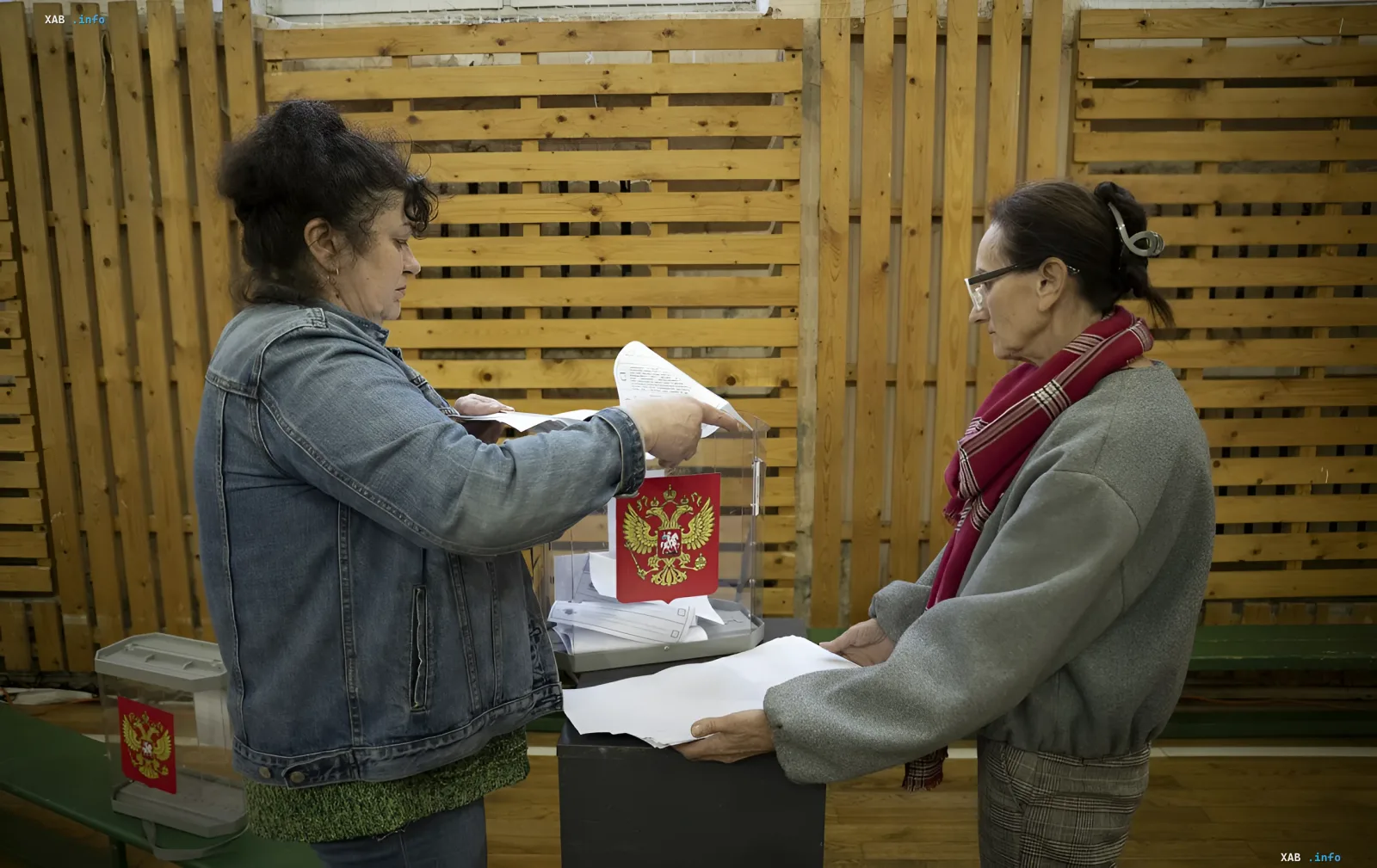
The European Union has officially stated that it does not recognize either the holding or the results of the so-called 'elections' to the State Duma of the Russian Federation, which were conducted in the temporarily occupied territories of Ukraine. The Brussels statement explicitly lists Crimea and Sevastopol, as well as certain territories of the Donetsk, Luhansk, Zaporizhzhia and Kherson regions, where, according to the EU's assessment, voting was organized under military control. The EU's position is stated unequivocally: neither the process itself nor its outcome has any legitimacy in the eyes of the international community.
Brussels's position: neither the process nor the results are recognized
The document emphasizes that the holding of Russian 'elections' on the seized territories violates international law, including the UN Charter, as well as Ukraine's independence, sovereignty and territorial integrity. It is precisely this point that forms the legal basis for subsequent steps: Brussels links the very fact of voting on occupied lands with the continuation of armed aggression and Russia's refusal to acknowledge internationally established borders.
Sanctions response: who will be subject to restrictions
The European Union has announced its intention to impose sanctions on individuals who took part in organizing voting in the occupied territories, as well as those who ran as candidates. As a result, the restrictions could affect not only the top tier of the organizational structure but also individual participants in the electoral process at the local level. It is important that, at the time of the statement, the matter concerns an announcement and the preparation of a sanctions package, rather than its already being in force — this distinction between intent and implementation matters for the further dynamics.
Violation of international law and call for troop withdrawal
In addition to the electoral issue, the European Union in its statement returned to the basic demands made to Moscow since the start of the full-scale conflict: to respect Ukraine's internationally recognized borders and to end the war. Brussels demanded the complete and unconditional withdrawal of Russian troops and military equipment from Ukrainian territory, linking this to the legitimacy of any political procedures that Russia is attempting to carry out on the seized lands.
Domestic Russian context: competition and the absence of observers
A separate section of the statement is devoted to the situation surrounding the 'elections' within Russia itself. The EU pointed to the limitation of political competition, the intensification of repression and the lack of equal conditions for participants in the electoral process. Separate regret was expressed over Russia's decision not to invite OSCE observers: according to the EU's assessment, this deprived voters and institutions of the opportunity to obtain an independent assessment of the voting process.
Contradictory data
When comparing sources, a terminological inconsistency is noticeable in the description of the same territories: some Russian media outlets call them 'new regions,' others — 'historical regions,' whereas the EU statement and the Ukrainian framing use the wording 'temporarily occupied territories of Ukraine.' This difference in rhetoric does not change the substance of Brussels's position, but it reflects different political frameworks for describing the same fact. In addition, the materials accompanying the statement mention that on 20 September, during a drone attack on Moscow, residents of the capital received no warnings via sirens or SMS, and analysts link this to the authorities' reluctance to reduce voter turnout; this detail is of a contextual and analytical nature and is not part of the EU's official sanctions statement, and should therefore be regarded as an accompanying, rather than a sanctions-package-confirmed, fact.