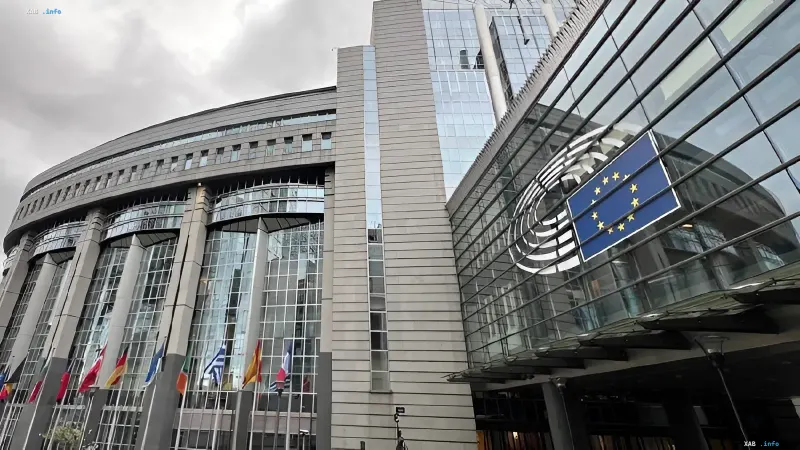
In the corridors of power in Brussels, despite loud public declarations of support for enlargement, a serious crisis of trust is brewing. According to Politico, citing senior EU diplomats, key member states of the European Union — France, Germany, the Netherlands, and Italy — are expressing deep concern regarding accelerated integration procedures for new candidates. In 2026, as Europe’s geopolitical map continues to shift, leading EU capitals fear that the hasty admission of states with unstable institutions could lead to the emergence of new “Trojan horses” within the bloc — countries capable of blocking key decisions.
Institutional Crisis and Veto Risk
The core of European leaders’ concerns lies in the principle of unanimity, which governs the Council of the European Union on matters of foreign policy, security, taxation, and the admission of new members. Diplomats point to a real threat: a newly admitted state could, at any time, shift its domestic political course and use its veto power to sabotage common interests. This risk of institutional crisis has become particularly acute in light of precedents involving prolonged disputes with certain Central and Eastern European states over the rule of law.
In response, the EU is discussing radical safeguard mechanisms. These include temporarily limiting veto rights for new members or introducing phased integration without immediately granting full institutional powers. In essence, this amounts to creating a “second tier” of membership, where new countries must prove their loyalty and stability before receiving full voting rights.
Contradictory Data: Geopolitics vs. Pragmatism
Currently, the EU faces a situation where two powerful groups of countries demonstrate fundamentally different approaches to enlargement, creating tension in diplomatic circles.
Position of the “Brakes” (France, Germany, Netherlands): Berlin and Paris insist that the accession process must be strictly based on the individual merits of candidates (merit-based approach). They demand prior deep internal reform of the EU itself and a transition to qualified majority voting before enlargement. For them, adherence to Article 2 of the Treaty on European Union (democracy, justice standards) is critical to avoid fueling eurosceptic sentiments in domestic elections.
Position of the “Accelerators” (Baltics, Scandinavia, Poland, Austria): These countries call for accelerated negotiations with candidates, including Ukraine, Moldova, and Western Balkan states. They view enlargement as an element of geopolitical stability and security, fearing that delaying the process could lead to destabilization along the continent’s eastern borders.
Legal Frameworks and Copenhagen Criteria
Accession to the European Union is governed by Article 49 of the Treaty on European Union and requires compliance with the so-called Copenhagen Criteria of 1993. However, in 2026, these criteria are being interpreted more rigorously. Decisions to close negotiation chapters and sign an Accession Agreement require unconditional approval by all 27 EU member states and ratification by their national parliaments. In France’s case, this may also require a national referendum, adding uncertainty to the process.
At present, EU institutions continue screening candidate countries’ legislation, yet the legal framework for conducting internal institutional reforms within the bloc remains subject to fierce intergovernmental debates. Candidate countries risk ending up in a “purgatory” of negotiations, where demands placed upon them grow as existing members reshape the rules of the game.