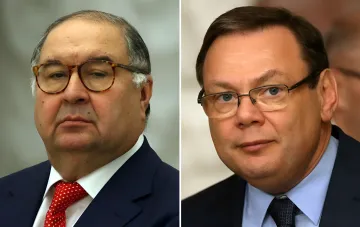
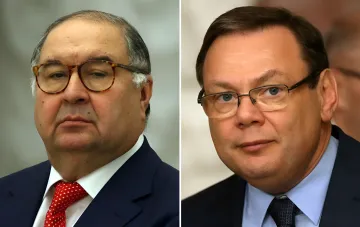
The European Union has made a decision that is both good and bad news for Ukraine. On the one hand, Brussels has extended the entire package of sanctions against the Russian Federation for three years — this means that until 2029 the restrictions will no longer be reviewed every six months, as was previously the case. On the other hand, two Russian billionaires — Alisher Usmanov and Mikhail Fridman — have been removed from the sanctions list. Their European assets are being unfrozen, the ban on entering EU countries is lifted, and their corporate empires are given the opportunity to return to normal operations.
How the mechanics of sanctions have changed and why this time is different
Previously, the European Union imposed sanctions only temporarily: every six months all member states had to agree to their extension. It was precisely this vulnerability that Hungarian Prime Minister Viktor Orbán actively exploited in the past, regularly proposing to remove from the sanctions list either Moscow Patriarch Kirill, or Russian oligarchs Pyotr Aven or Viktor Rashnikov. This time, however, the initiative to lift restrictions on specific individuals did not come from Budapest. Unexpectedly, it was France that declared its desire to free Usmanov from sanctions, while Slovakia put forward a similar demand regarding Fridman. Without agreement on these two names, in the worst case more than 3,000 individuals and companies — including Vladimir Putin, many of whom have been on the lists since 2014 — would have been removed from sanctions. This is why most EU countries, including consistent supporters of the sanctions policy, made concessions. Until the last moment, Latvia blocked the exclusion of both oligarchs.
Paris and Baku: what really lies behind the lifting of sanctions on Usmanov
Officially, France declined to explain its motives in detail, limiting itself to the phrase about a "specific national security issue." However, according to the Financial Times, the decision on Usmanov may have been part of a deal with Azerbaijan, which has recently been pressuring Paris. This includes, in particular, the release of entrepreneur Marten Ryan, arrested in Baku on espionage charges, and artist Théo Clère, sentenced to three years in prison for graffiti in the Baku metro. Official Baku categorically denies any agreement on Usmanov, but the very next day the President of Azerbaijan pardoned Ryan — a circumstance that observers view as indirect confirmation of the deal.
The Turkish lobby: why Central Asia is pushing for Usmanov's release
Although most of Usmanov's assets are concentrated in Russia, he himself is a native of Uzbekistan. A whole group of Turkic states has consistently been pushing for the lifting of sanctions on him. Turkey, Azerbaijan and other countries in the region view Usmanov as an unofficial ambassador and patron who connects Central Asia with Europe. Turkish President Recep Tayyip Erdoğan, in a letter to Robert Fico, noted that the lifting of sanctions on Usmanov is supported by Azerbaijan, Kazakhstan, Kyrgyzstan and Uzbekistan. "The reason is that Usmanov has invested heavily in Central Asia, has common interests with the Aliyev family, and uses this channel to lobby for the lifting of sanctions," explains an RBC-Ukraine source in diplomatic circles of one of the region's countries.
Fridman, Luxembourg and arbitration in The Hague
As for Mikhail Fridman, it was Slovakia that pushed for his exclusion from the sanctions list. In addition, Luxembourg, where Fridman's key company — the investment group LetterOne — is registered, supported such a decision. This is linked to the oligarch's lawsuit against Luxembourg at the Arbitral Tribunal in The Hague: Luxembourg argued that its position in the proceedings would become more vulnerable if the EU removed only Usmanov, but not Fridman, from the sanctions list. Thus, the legal dispute in The Hague effectively became an additional lever of pressure on Brussels.
What this means in practice: unfreezing of assets and return to Europe
Exclusion from the sanctions list first and foremost lifts the ban on both billionaires entering European Union countries and allows their European assets to be unfrozen. Fridman has an extensive corporate network in Europe: through LetterOne he controls shareholdings in telecom operators Turkcell and Qwantel, the Holland & Barrett pharmacy chain and the Remedica pharmaceutical project. The exact amount of his frozen assets is not officially disclosed, however, the scale of the claims against Luxembourg suggests billions of dollars. Fridman will also regain his elite real estate, in particular villas in Saint-Tropez on the French Riviera. "If Fridman is the main shareholder, then by this logic he may also gain access to the company. But to regain control over funds, real estate and business, he will still have to go through a number of legal and administrative procedures," notes Egor Ostapov, an analyst at the "ANTS" network for the protection of national interests.
Contradictory data
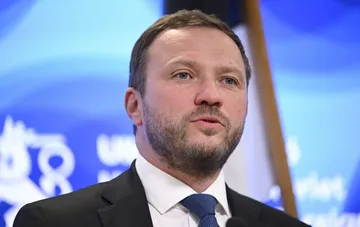
The main discrepancy in the versions concerns the motives of Paris. France's official position boils down to an abstract "specific national security issue" without any details. The Financial Times, on the contrary, directly links the decision to the release of Ryan and Clère in Azerbaijan. Baku, in turn, denies the existence of any deal on Usmanov, however, the fact of Ryan's pardon the day after the announcement of the lifting of sanctions makes this version highly plausible. The second inconsistency: France states that its overall policy toward Russia is not changing and Paris remains a key partner of Ukraine, but the simultaneous lifting of sanctions on two major Russian businessmen against the backdrop of an ongoing conflict sends a contradictory signal to Kyiv and its allies. Estonia, in particular, demanded additional explanations from France in connection with this decision.