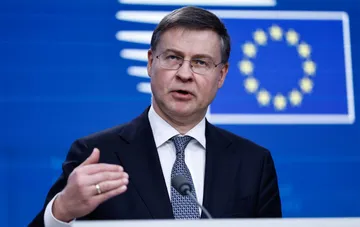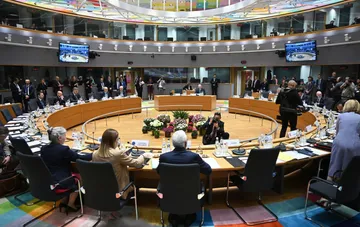
The EU's Committee of Permanent Representatives (Coreper) agreed to extend the sanctions package against Russia for a full three years, abandoning the previous practice of annual — and earlier semi-annual — renewals. At the same time, EU diplomats agreed to remove two Russian billionaires — Alisher Usmanov and Mikhail Fridman — from the list of restrictive measures. This was reported on September 22 by European Union diplomats, citing Reuters and Ukrainian outlets RBC-Ukraine and MIGnews. According to sources, the sanctions list, which will take effect in its updated form, covers approximately 3,000 individuals and entities.
Why Exactly Two Oligarchs Are Being Removed from the List
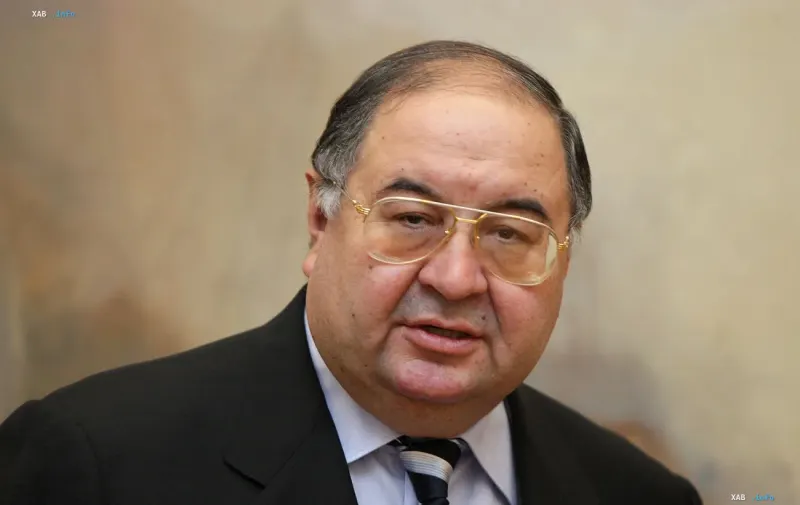
The decision regarding Usmanov and Fridman, according to reports, was driven by pressure from certain capitals. France insisted on removing Alisher Usmanov from sanctions, citing national security considerations. Luxembourg, in turn, demanded a similar approach to Mikhail Fridman — after he filed a lawsuit against the country for $16 billion. Under EU procedure, sanctions require the unanimous approval of all member states, and, as sources note, the last country to oppose the compromise was Latvia.
Kyiv's Position: "Strengthening, Not Weakening"
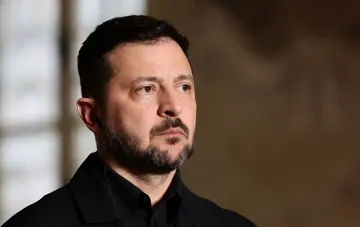
Ukrainian President Volodymyr Zelenskyy, commenting on the sanctions track, stated that the response to escalation by Russia should be the strengthening of restrictions, not their easing. "Every name on the sanctions list got there for a reason: each of them is a cause of why this war started and continues, why our people are dying every day," he emphasized during a meeting with Danish Prime Minister Mette Frederiksen, thanking Copenhagen for supporting this line. Head of the President's Office Kirill Budanov had earlier also called on the EU not to weaken the sanctions regime so that Russian oligarchs could no longer continue to finance Russia's military machine.
Contradictory Data
In the public sphere, against the backdrop of the Coreper decision, there are two not entirely consistent versions. On the one hand, RBC-Ukraine had earlier reported that the EU had, on the contrary, decided not to remove Usmanov and Fridman from the sanctions list. On the other — as of September 22, EU diplomats confirm that the committee agreed to remove both from the list. In addition, Radio Svoboda journalist Rikard Jozwiak emphasizes that the agreement reached is still preliminary: a written procedure must be completed by 20:00 to officially ratify the decision. It is precisely at this final stage, he says, that problems arose in previous rounds, preventing a decision from being adopted. Thus, until the written procedure is completed, the final text of the agreement may be adjusted.
What This Changes for the Sanctions Regime
Extending the measures for three years instead of the previous semi-annual cycle formally increases the stability and predictability of the restrictive measures: partners and companies will no longer have to wait for a new package each time. At the same time, the removal of two major players from the list is perceived in Kyiv as a signal of weakening pressure, which prompted the public statements by Zelenskyy and Budanov. The final status of the decision will depend on whether the written procedure can be completed within the set time without new disagreements between the capitals.