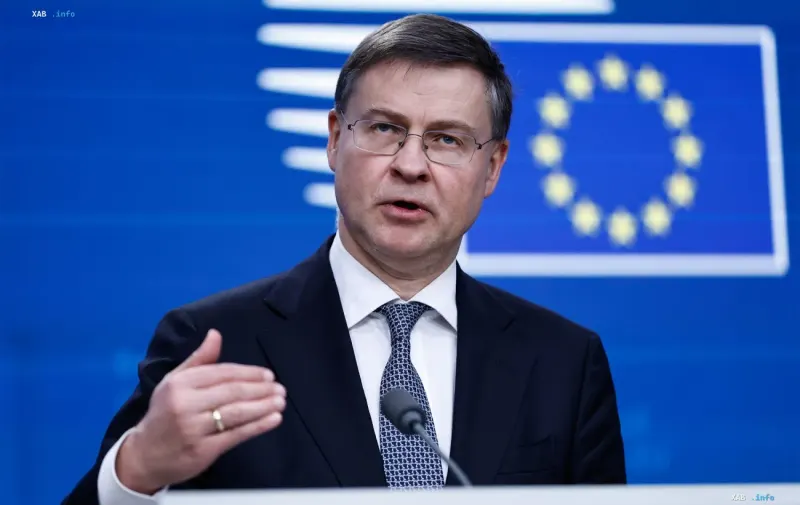
Economy Commissioner Valdis Dombrovskis, in an interview with the Euractiv agency, openly acknowledged that a "certain fatigue" is growing within the European Union over the years-long tightening of anti-Russian sanctions. At the same time, he stressed that this state of mind must be overcome so as not to allow Moscow to win the war against Ukraine. According to the official, after nearly five years of conflict, the sense of fatigue is understandable, but the EU's commitments to Kyiv remain unchanged: to support Ukraine and to pressure Russia "for as long as it takes."
Context: the Usmanov and Friedman case
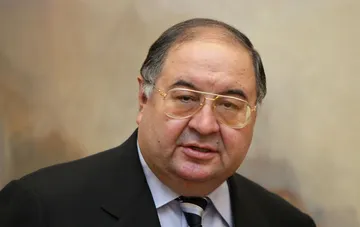
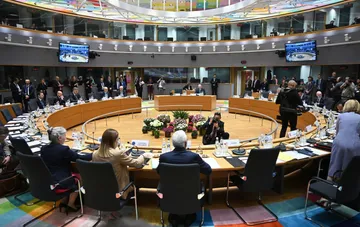
Dombrovskis's call came against the backdrop of the EU's high-profile decision to remove Russian oligarchs Alisher Usmanov and Mikhail Friedman from the sanctions lists. The initiative was pushed by France, which secured the lifting of the restrictions. Latvia, which had previously blocked the decision, ultimately withdrew its veto under pressure from Paris. The situation became telling: for the adoption or amendment of sanctions measures, the EU requires a unanimous decision by all 27 member states, which makes the process extremely vulnerable to lobbying pressure from individual capitals.
Sanctions mechanism reform: possible, but not quickly
Against this backdrop, journalists asked Dombrovskis whether the possibility of changing the very mechanism for adopting sanctions was being considered, so as to eliminate the unanimity requirement. The commissioner confirmed that such an idea had indeed been discussed — including in Germany and under European Commission President Ursula von der Leyen. However, he warned: a quick reform is impossible. Changing the procedure requires amending the EU's founding treaties, and their ratification, in turn, requires the unanimous approval of all 27 countries. Thus, the paradox is that to abolish the unanimity rule, unanimity itself is required.
"They need to be stopped"
Concluding the interview, Dombrovskis drew a sharp conclusion: under current conditions, "the only way out is to increase pressure on Russia." He emphasized that European countries need to demonstrate the political will to continue supporting Ukraine and to step up economic pressure on Moscow. "It is clear that Putin and Russia will not stop on their own. They need to be stopped," the commissioner summed up, effectively calling on Brussels not to fall for Kremlin tricks, which, according to him, are deliberately aimed at splitting and weakening the sanctions regime.
Contradictory data
No significant discrepancies in dates, figures, or assessments were found in the provided sources. All four verified outlets (RBC-Ukraine, Eurointegration, UNN, RBC) uniformly convey the essence of Dombrovskis's statement and the circumstances of the Usmanov–Friedman case. The only nuance: the phrasing "nearly five years of war" is correct for September 2026 (the conflict began in February 2022), although some sources emphasize "years-long" pressure, which stylistically but not factually diverges from the main text.