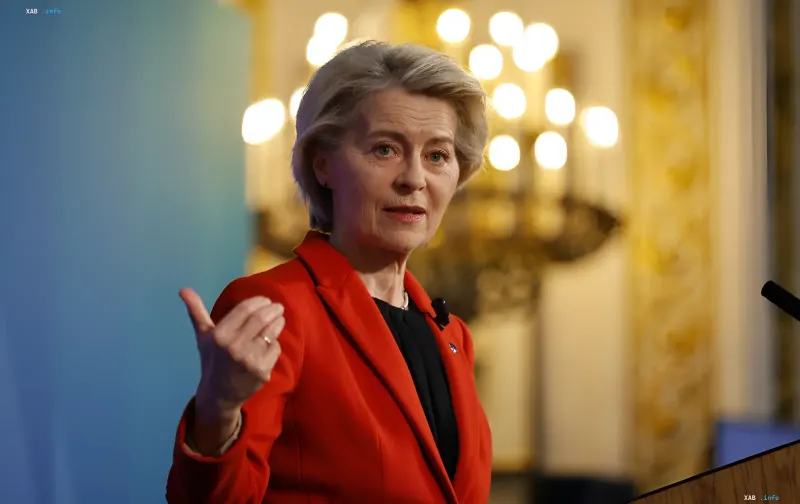
European Commission President Ursula von der Leyen, in a speech at the European Parliament in Strasbourg on 25 November, set out two specific demands on Russia which, in her words, must confirm Moscow's readiness for serious negotiations. The first step — a halt to attacks on energy infrastructure throughout the winter. The second — ensuring the safe transport of food through the Black Sea. The EC chief stressed that these arrangements will carry not only practical significance but will also serve as a signal to the international community as to whether the Kremlin backs its talk of negotiations with real actions.
Two ceasefire formats as a test of seriousness
In von der Leyen's assessment, the proposed ceasefire formats are a litmus test for gauging Moscow's position. “These will be important steps, as they will show that Russia is serious about negotiations,” the European Commission president said. In effect, Brussels is tying the further momentum of the negotiation track to concrete actions by the Russian side in energy and maritime corridors, rather than to rhetorical statements.
Criticism of Moscow's “maximalist demands”
Speaking in Strasbourg, von der Leyen also accused Russia of violating the European security architecture. In her words, Vladimir Putin not only puts forward maximalist demands but keeps adding new ones — as an example she cited the demand for Finland to leave NATO. “This shows that Putin does not want serious negotiations, and that is why support for Ukraine… must continue,” the EC chief concluded, justifying the need to maintain pressure on Moscow.
Context: Berlin and Washington initiatives
The European Commission's position fits into a series of parallel diplomatic signals in recent weeks. On 19 November, following the meeting of the coalition of the willing in Berlin, the leaders of Germany, France, the UK and Ukraine called on Russia to agree to an energy ceasefire for the entire winter period. A few days later, a similar call came from Washington: the US urged Ukraine and Russia to halt mutual attacks on energy infrastructure and food supply chains, separately noting the need for safe and unimpeded commercial shipping in the Black Sea.
What this means for the negotiation track
The combined statements from Brussels, Berlin and Washington indicate that Western capitals are trying to build a unified set of “preconditions” for a possible dialogue: a freeze on strikes on energy in winter and the unblocking of maritime corridors. For Moscow, these demands amount to a de facto concession in two sensitive areas — energy pressure and logistics — making their fulfilment a politically difficult step. Thus, the coming weeks will be a test of whether Russia is ready to move from statements about negotiations to concrete actions.