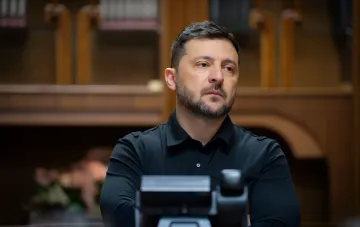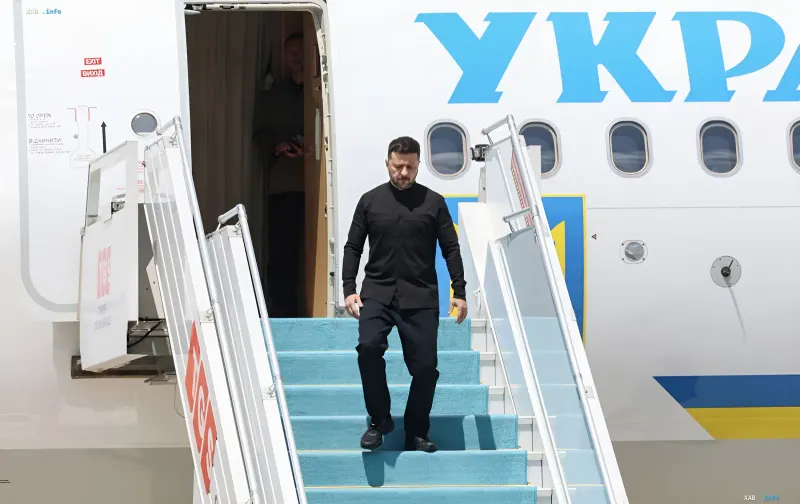
European Commissioner for Defence Andrius Kubilius stated that Russian provocations involving the use of drones and sabotage operations pose a direct and growing threat to civilian aviation in European Union member states and neighbouring countries. He said this in a conversation with journalists, commenting on the recent incident in Moldovan airspace linked to the departure of Ukrainian President Volodymyr Zelensky to Norway on 8 September 2026.
Incident in Moldova: flight delay and drone crash
As Norwegian Prime Minister Jonas Gahr Støre previously reported, the aircraft of the head of the Ukrainian state "was nearly shot down by a drone during take-off from Moldova". The Moldovan government confirmed that Zelensky's departure from the country to Norway on 8 September was delayed due to the presence of a Russian drone in the republic's airspace. Permission to take off was granted only after it became known that the drone had crashed and exploded near the village of Starî Mihaileni in Rîșcani District — approximately 160 km from Chișinău International Airport.
Brussels' assessment: from "possible aggression" to a call to strengthen defence
Commenting on the incident, Kubilius emphasised that, in Zelensky's own words, "perhaps this was not a direct aggression against the president's plane", however "it is quite clear that the situation is becoming increasingly dangerous for civilian aviation in neighbouring countries as well". In his words, the key question now is how exactly to stop such activity by Russia. The European Commissioner stated that Russian provocations require the European Union to "be even more proactive in developing our defence capabilities".
Contradictory data
There are a number of discrepancies in assessments surrounding the incident in Moldova. On the one hand, Norwegian Prime Minister Støre and the Moldovan ambassador to the US, Vladislav Culminsky, point to the deliberate nature of the threat: according to Culminsky, the Russian drone that violated Moldovan airspace "may have been flying towards the Ukrainian president's plane deliberately". On the other hand, the European Union, as reported by strana.news, found no confirmation that the Russian UAV in Moldova intended to attack Zelensky's plane. Kubilius also left a caveat in his wording that "perhaps this was not a direct aggression". Thus, the question of whether the drone was aimed directly at the president's aircraft or whether its appearance in the airspace was of a different nature remains open and unconfirmed at the level of official EU conclusions.
Not the first case: precedents on the Eastern flank
Kubilius reminded that threats to European leaders and civilian aircraft have been recorded not for the first time. In particular, he recounted that last year, while travelling with European Commission President Ursula von der Leyen through the countries of the EU's Eastern flank, in Bulgaria the pilots encountered "truly significant problems due to the jamming of navigation signals", which, in his words, "is also very dangerous for civilian aviation". According to Brussels' assessment, these episodes form a persistent trend that requires a systematic response from the European Union in the area of defence policy and airspace protection.