The European Union intends to persuade the United Kingdom and Canada to increase financial assistance to Ukraine, as Kyiv could face a funding deficit of around 70 billion euros in 2027. This was reported by Politico, citing five EU officials, including representatives of the European Commission, and two diplomats. Brussels plans to raise the issue of additional support at two upcoming summits: the EU-Canada meeting is scheduled for October 29–30, and the summit with the UK for November 20. According to the publication, turning to partners outside the bloc is driven by Ukraine's growing financial needs and uncertainty regarding further assistance from the United States.
Scale of Financial Needs and the EU's Role
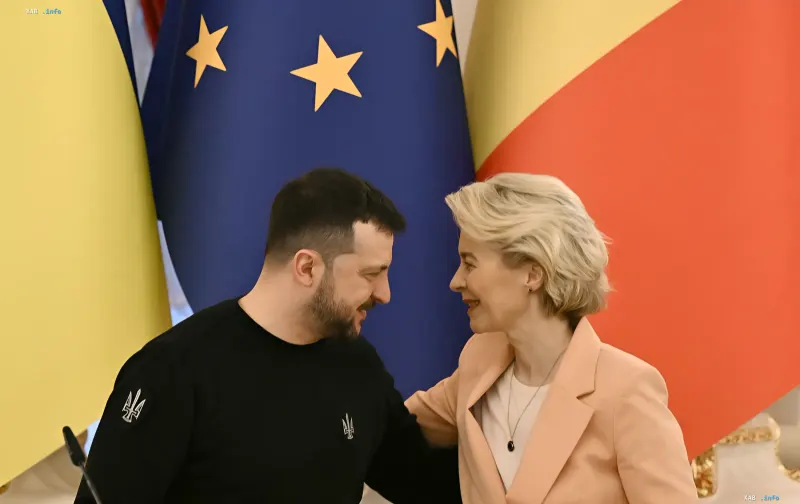
European Commission President Ursula von der Leyen stated that the EU, together with its member states, provides about 80% of all external aid to Ukraine. At the same time, she emphasized the urgency of expanding contributions from other partners: "We urgently need other partners to step up their efforts." The European Union previously committed to providing Kyiv with a 90 billion euro loan for 2026 and 2027, which, according to Brussels' estimates, will cover about two-thirds of Ukraine's needs. The EU expected to receive another 45 billion euros from international partners—Canada, Japan, South Korea, Australia, and Norway. However, some of the expected aid is arriving with delays, as several governments have still not approved or allocated the promised funds. Ukraine's financial needs for 2027 have additionally increased due to intensified Russian offensives, the costs stemming from the US and Israeli war against Iran, and shifts in Washington's stance toward Moscow.
What London and Ottawa Have Already Provided
European officials emphasize that appealing to the UK and Canada is not a criticism of their policies: both countries actively support Ukraine, but Kyiv's needs continue to grow. The UK states that it has provided a total of 25 billion pounds sterling in aid to Ukraine since the beginning of the conflict. Canada, in turn, has pledged military assistance equivalent to 5.4 billion euros, as well as 8.2 billion euros in direct financial support. Politico's sources note that they do not expect the upcoming meetings to conclude with official agreements on additional financing; however, the issue of supporting Kyiv will inevitably influence the political context of the negotiations, during which Brussels also intends to discuss deepening economic and defense ties with both partners.
Alternative Funding Sources and Divisions Within the EU
In addition to reaching out to external partners, Brussels is considering other options to cover Ukraine's financial needs for 2027. Specifically, new joint borrowing on financial markets and the use of frozen Russian assets amounting to around 210 billion euros are being discussed. However, both options come with obstacles: new loans will increase debt burdens, and using Russian assets faces resistance from Belgium. Furthermore, unity regarding financial support for Ukraine is lacking within the EU itself, as Slovakia and Hungary have stated they will not participate in funding the new 70 billion euro loan needed by Kyiv in 2027.
Broader Context: From Bangkok to G7 and G20 Summits
Brussels also raised the issue of Ukraine's financial needs for 2027 during meetings of the International Monetary Fund, the G7, the G20, and in talks with Gulf Cooperation Council countries. European Commissioner for Economy Valdis Dombrovskis told Politico that during meetings in Bangkok, held as part of the IMF and World Bank Group sessions, financial support for Ukraine was one of the main topics. He called for a broader sharing of costs among international partners and emphasized that every country must play its part while Ukraine resists Russian aggression. Since the start of Russia's full-scale invasion, the EU and its member states have provided Ukraine with more than 231 billion euros in aid, including military assistance, budgetary support, guarantees, assistance to Ukrainians within the bloc, and funds from frozen Russian assets. One high-ranking EU diplomat noted that this volume has already exceeded initial expectations.