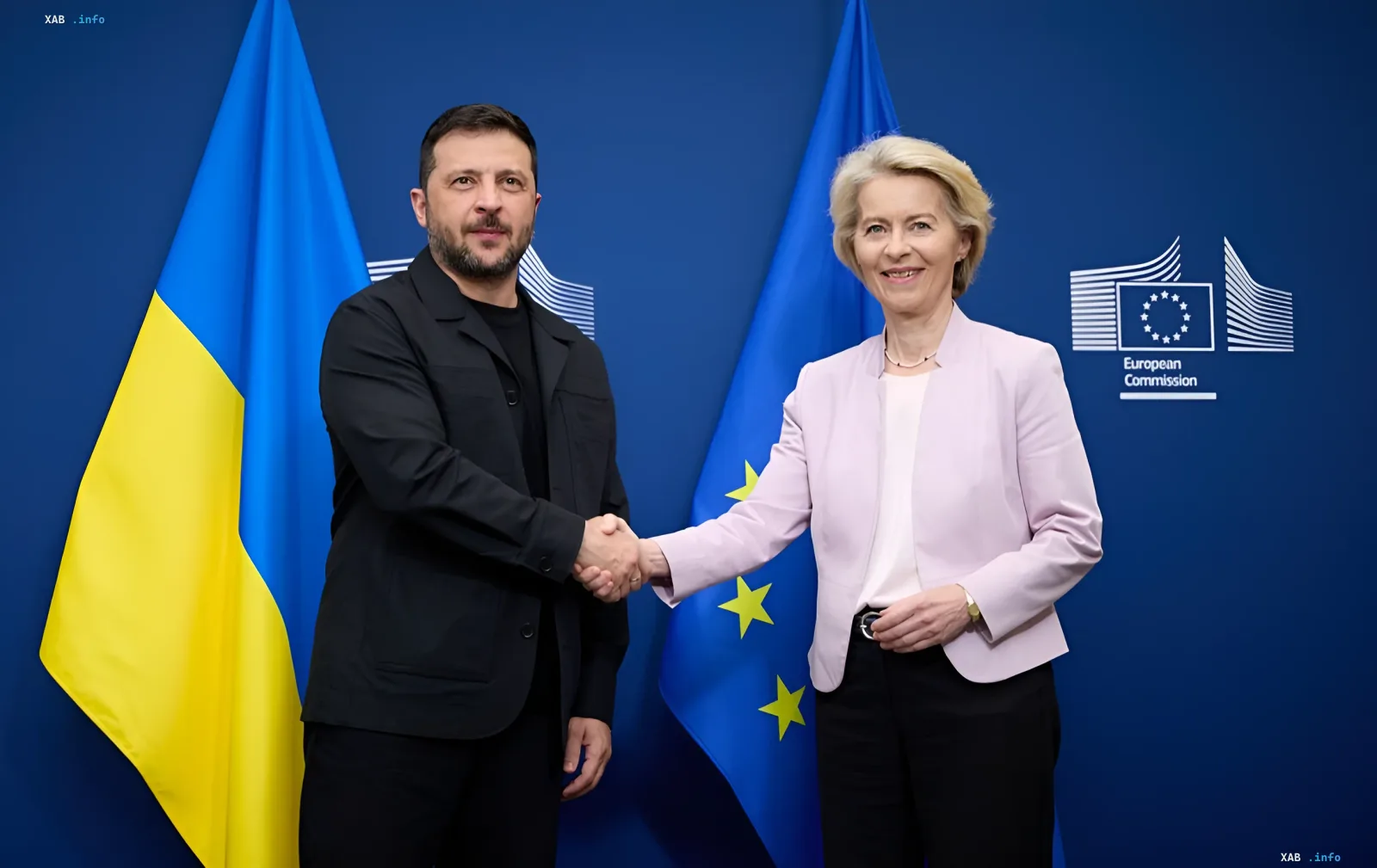
The European Union has confirmed its course toward a significant strengthening of Ukraine's air defense. In her annual “State of the Union” address before the European Parliament, European Commission President Ursula von der Leyen stated that one of the key decisions would be the creation of a joint air defense system based on the Ukrainian project “Freyja.” According to her, the foundation of the cooperation is the combination of the combat experience and innovativeness of Ukrainian specialists with Europe's technological leadership and substantial production capacities.
Statement in Strasbourg and the Patriot Context
Addressing the Members of Parliament, von der Leyen recalled that last week Brussels approved, for the first time, the purchase of American Patriot interceptor missiles for Ukraine. The main task, in her words, is to do everything possible so that Kyiv receives these systems as soon as possible. At the same time, the head of the European Commission outlined a strategic goal — to reduce the dependence of Ukraine and the EU itself on a single supplier, namely the United States, which is what motivates the development of its own European-Ukrainian production of air defense systems.
The “Freyja” Project: Modularity and Joint Production
As von der Leyen explained, Brussels and Kyiv intend to jointly create an affordable modular missile defense system. The “Freyja” project is positioned as a combination of Ukrainian combat experience and an innovative approach with European technologies and production capacities. According to the head of the EC, the remaining funds from the SAFE mechanism will be used to launch new joint projects with Ukrainian companies, which should lay the foundation for long-term industrial cooperation.
Timelines and Testing
Earlier, President Volodymyr Zelensky announced tests of the “Freyja” anti-ballistic system. According to available data, the company Fire Point intends to carry out the first interception of a ballistic missile by mid-2027. Thus, the project is moving from the stage of announcements into the phase of practical testing, and its implementation is seen as the first, but not the only, step in building a joint air defense architecture.
Contradictory Data
In available sources, the timelines and status of the project are presented with some discrepancies. On the one hand, there is talk of upcoming tests and of the first interception of a ballistic missile in 2027; on the other — the media mention a “deadline” for creating the system, which may be interpreted as a later milestone of full readiness. In addition, the announcement notes that there are forces that will attempt to obstruct the implementation of “Freyja,” however, in verified sources, specific details of these attempts have not been disclosed. Until official clarifications appear, these discrepancies in chronology and in the assessment of obstacles should be regarded as not fully reconciled.
What This Means for Kyiv and Brussels
Taken together, von der Leyen's statements record two parallel processes: the emergency supply of ready-made American interceptors and the simultaneous building of its own European-Ukrainian production framework based on “Freyja.” For Ukraine, this is potential access to modular and scalable air defense; for the EU — a tool for diversifying supplies and strengthening the defense industry. Further developments will depend on the pace of testing, financing through SAFE, and the readiness of the parties to synchronize production chains.