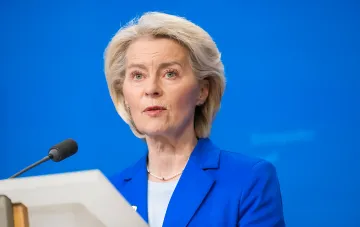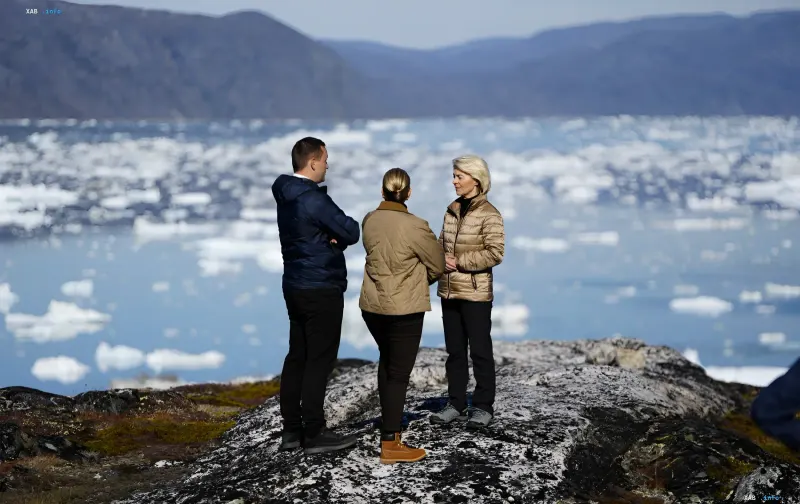
On October 20, 2026, the European Commission presented the European Union's updated Arctic strategy. According to RBC-Ukraine, citing the text of the document on the European Commission's website, this is the first update to the EU's Arctic strategy since 2021 and, as noted, the final step in a series of the bloc's measures targeting the region. The document outlines Brussels' approach to strengthening security in a strategic area that has seen growing interest from the US, Russia, China, and European countries in recent years.
Maritime Security Center and Arctic Cable Hub
A key element of the new strategy is the creation of a “maritime security center.” According to the text of the document, its task is to ensure the exchange of information between EU member states and their partners from various sources in order to protect vital underwater cables and pipelines. Among the first steps toward implementing the strategy is the creation of an Arctic cable hub, which is intended to serve as a practical coordination tool in this area.
Satellite Surveillance and the Geopolitical Landscape
In addition to institutional measures, the EU intends to monitor the Arctic more closely as part of plans to expand its own satellite surveillance network. European Commission President Ursula von der Leyen described the region as a place “where the tectonic plates of geopolitics collide.” “When we see that sovereignty, territorial integrity, and the rules that ensured stability in the region can no longer be taken for granted, we must act,” she stated, explaining the rationale behind updating the strategy.
Context: Allies' Actions in the Arctic
The EU strategy update fits into a broader context of strengthening state presence in the Arctic. As RBC-Ukraine reported earlier, the Danish Armed Forces have begun testing MQ-9B reconnaissance drones in their own airspace to monitor Russian warships in the Arctic. Concurrently, US Secretary of State Marco Rubio stated that the agreement on Greenland concluded between the US, Denmark, and the island itself is aimed at the long-term protection of the Arctic from China and Russia.
Thus, the new document solidifies the EU's transition from declarative approaches to the creation of concrete mechanisms—ranging from a maritime security center to satellite monitoring—designed to maintain control over the growing maritime routes opening up as a result of melting ice.