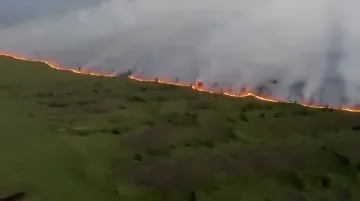
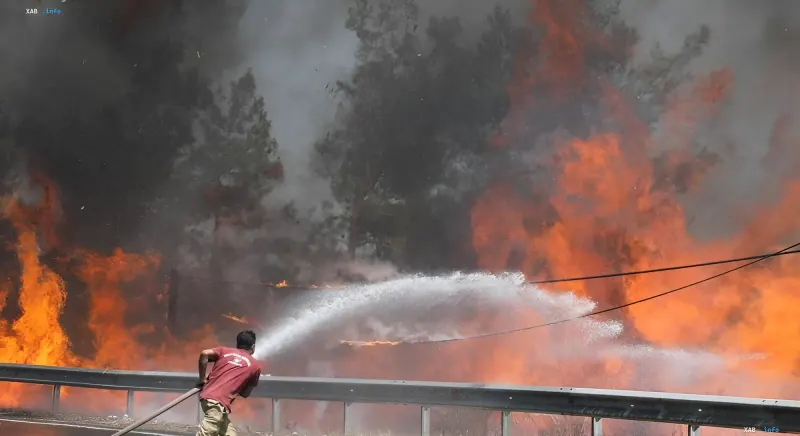
Europe is facing an unprecedented crisis: massive wildfires have engulfed several countries on the continent, including France, Spain, Italy, and Greece. The disaster has forced tens of thousands of people to evacuate their homes and vacation spots. According to experts, the area of burned land this year already exceeds the average annual figures of the last two decades.
France: Evacuation in a Tourist Region
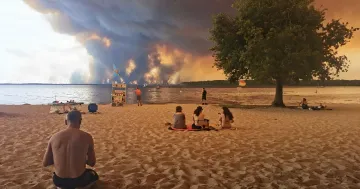
The situation in southwestern France is particularly alarming. A major fire is raging near the popular tourist region of Arcachon Bay, having already covered about 2,000 hectares. Due to the rapid spread of the fire, a large-scale evacuation of more than 10,000 people was carried out. A significant portion of those evacuated are vacationers staying in campsites.
Approximately 500 firefighters are battling the blaze. Despite difficult conditions and the proximity of the fire to populated areas, there are currently no reports of casualties.
Spain: Second Largest Fire in History
In central Spain, in the province of Guadalajara, firefighters continue to battle the inferno, which has destroyed more than 32,000 hectares of forest. This is the second-largest fire in the country's history; the record was set only last year in northwestern Spain, when the fire covered 37,000 hectares.
34 settlements have been evacuated in the area of the fire. More than 200 firefighters, specialized equipment, and aviation have been deployed to extinguish it. The tragedy in Guadalajara occurred less than two weeks after a fatal fire in the south of the country, where 13 people, including foreign nationals, died.
Spanish Prime Minister Pedro Sánchez personally visited the affected area. He called on political forces to unite in the face of the climate crisis, stating: "Year after year, we see more clearly how climate change is taking human lives and causing huge damage to our communities. This is not a matter of politics. It is a matter of science and facts".
Italy and Greece: Extreme Heat and Threat
On Sicily, fire services have made more than a thousand calls since last Saturday. Due to the scale of the threat, all units on the island have been put on high alert. In the area of the city of Agrigento, 100 people were evacuated from residential buildings and a medical facility due to the approaching fire, and 22 patients were transferred to other hospitals. The Italian Civil Protection Agency declared the highest level of fire danger for the entire island. Strong winds and air temperatures exceeding 40 °C are contributing to the spread of the fire.
In Greece, a wave of extreme heat continues. Meteorologists forecast temperatures rising to 42 °C. The highest level of fire danger has been declared for several regions in the southern and central parts of the country, including the outskirts of Athens. A similar situation is developing in Cyprus, where temperatures could reach 43 °C.
Britain and the Danube: Consequences of Drought
In the United Kingdom, some areas have not seen rain for over a month. A significant part of southern England is in a state of prolonged drought. The country's largest water supply company, Thames Water, which serves about 10 million consumers, has banned the use of hoses for watering lawns and washing cars.
Due to prolonged drought and the lack of water inflow from the Alps, the Danube River has experienced a sharp drop in water levels. In Budapest, the water level has dropped to 39 centimeters — only 6 centimeters above the absolute historical minimum recorded almost 30 years ago. The most difficult situation is developing south of the Hungarian capital: in the area of the city of Baja, the water level could drop to a record low of 21 centimeters.
Scientists note that climate change is exacerbating heat and aridity, especially in the southeastern part of Europe, making the region more vulnerable to massive wildfires and threats to human health.