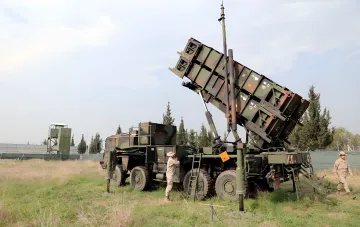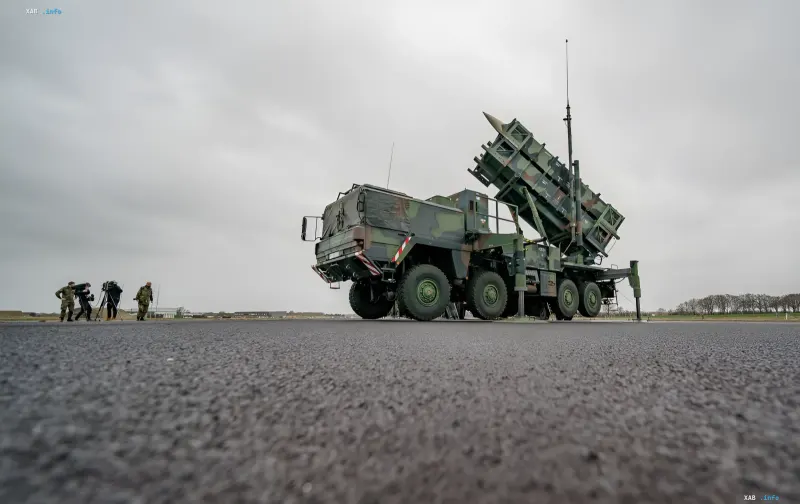
Aviation expert Kostyantyn Kryvolap, in an RBC-Ukraine article titled "In Search of Patriot: How Ukraine is looking for anti-ballistic missiles and whether Europe has them," attempted to systematize what is actually known about the stockpiles of Patriot air defense system interceptor missiles in Europe. According to his estimate, there are about 200 PAC-3 modification missiles on the continent, with some of them already transferred to Ukraine. Additionally, he noted that it is reliably known that Greece has about 200 PAC-2 missiles, while information regarding a comparable amount in Spain is classified by the expert as unreliable.
How many PAC-3 and PAC-2 missiles are actually in Europe
Kryvolap emphasizes that in open sources it is practically impossible to distinguish between missile modifications — PAC-2, PAC-2 GEM-T, PAC-3, PAC-3 CRI, and PAC-3 MSE. According to him, Ukraine has already been provided with a significant number of missiles, but the contracts lack specifications by type, and the modifications themselves differ significantly in cost and dimensions. The practical significance of this distinction is visible in the launcher: it can hold either four PAC-2 missiles or 16 PAC-3 missiles. "Approximately the number of PAC-3 missiles in Europe is somewhere around 200 units. But out of these 200 units, they have already given us some," the expert explains.
Greece confirmed, Spain with reservations
According to Kryvolap's assessment, the most stable figure is for Greece: there, he says, are about 200 PAC-2 missiles. Regarding Spain, there is an understanding that a similar quantity may exist, but the expert explicitly calls this information unreliable and estimates its probability at a "third category" level. He also notes that Patriot systems are present in almost all European countries, as well as in Japan, Indonesia, Taiwan, and the Middle East, while missiles are produced in small quantities in Europe since they are mostly expended during training firing.
Production: Pentagon promises and new deadlines
According to the expert, late last summer, the heads of Lockheed Martin and Raytheon were summoned to the Pentagon because production capacities were not covering worldwide needs. Initially, manufacturers were tasked with reaching 2,000 PAC-3 missiles by 2030, but following events in Iran, they were demanded to produce faster results. The companies promised to manufacture 750 missiles in 2026 and reach 2,000 units by 2028. At the same time, Kryvolap believes that even these volumes are insufficient given the pace of ballistic missile production in North Korea, China, Iran, and Russia.
Europe seeks its own production lines
In parallel with assessing stockpiles in Europe, the transfer of part of the production to the continent is being discussed. German Defense Minister Boris Pistorius, according to reports citing his statements after a meeting with Pentagon chief Pete Hegseth in Washington, advocated for the creation of PAC-3 interceptor production lines in Europe and Germany, citing "huge demand." The parties signed a statement of intent on joint production of American weapons systems in Europe, with Pistorius indicating that the PAC-3 issue "broadly speaking" falls under this agreement but requires further negotiations with the Pentagon, the White House, and the company itself, taking intellectual property rights into account. Reports indicate that Lockheed Martin is considering the possibility of launching PAC-3 interceptor production in Europe.
Kyiv's position and HUR data
Against the backdrop of these assessments, President Volodymyr Zelenskyy stated in October that Ukraine had paid for Patriot missiles, but the US is delaying them, and that Kyiv is currently receiving only about 12 missiles a month — roughly four times less than under the Biden administration. Meanwhile, in early November, the Main Directorate of Intelligence of the Ministry of Defense of Ukraine released data on Russia's ballistic and cruise missile stockpiles and their build-up rates, which further fueled the discussion about the shortage of air defense assets at the front lines.