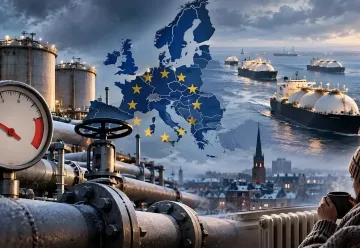
The European Union has faced massive financial losses in the energy market due to the escalating conflict between the United States and Iran. According to official statements from the European Commission leadership, member states were forced to overpay a staggering 100 billion euros for imported energy resources without increasing the physical volume of oil or gas imports by even a single unit.
The Scale of Overpayment and the Commission's Position
Speaking to journalists, EU Commissioner for Energy Dan Jørgensen emphasized the critical nature of the current situation. According to him, these colossal funds went exclusively toward covering increased costs caused by global geopolitical instability and the risks of blockages in key transport arteries. Brussels states that Europe continues to bear the heavy burden of dependence on imported fossil fuels, which are becoming not only environmentally harmful but also prohibitively expensive for the bloc's economy.
Anti-Crisis Measures and Winter Preparation
Amid mounting price pressures, EU energy ministers held an emergency summit in Dublin to discuss urgent response measures. Key proposals include demands to reduce overall energy demand, a mandatory requirement to keep underground gas storage filled to at least 80%, and the implementation of temporary state price-capping mechanisms. In addition, the possibility of releasing remaining strategic oil reserves to stabilize the domestic market is under review.
Contradictory Data
It is worth noting that expert circles and early media reports cited different figures for Europe's financial losses. In the spring, several publications citing analytical materials estimated the EU overpayment at 30 billion euros. However, the latest official figures announced by Commissioner Dan Jørgensen in September 2026 raise this bar to 100 billion euros, reflecting the rapid deterioration of price conditions as the Middle East conflict drags on and Washington exerts pressure on European partners.
Strategic Challenges and the Path to Energy Independence
Under these circumstances, the leadership of the European Union has announced the need for a radical review of its long-term energy strategy. The main response to the crisis must be accelerated electrification of the continent and a large-scale transition to domestically produced renewable energy sources. Brussels intends to completely eliminate vulnerability to external shocks by replacing expensive and hazardous imported hydrocarbons with independent green generation.