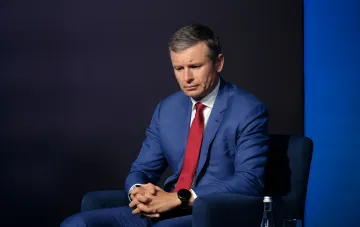
Ukrainian Prime Minister Mykhailo Koretskyy stated that there is no alternative scenario for the use of frozen Russian assets and that Kyiv, together with its international partners, is obliged to find a solution for their deployment. The head of government made these remarks at the YES Annual Meeting 2026 conference, organized by the Viktor Pinchuk Foundation, according to RBC-Ukraine. The statement came against the backdrop of ongoing intra-European disputes over how to legally convert the frozen funds into an instrument of support for Ukraine.
Koretskyy's statement: 'whether we survived or not'
According to Koretskyy, the only criterion for the effectiveness of any decisions made during a war is the outcome — 'whether we survived or not.' The Prime Minister emphasized that on the path to survival, endurance, and achieving peace in this war, difficult decisions must also be made, which Ukraine, in his words, makes every day and for which it expects a similar response from its partners. 'There is no "Plan B" scenario,' he summed up, reminding that international partners have been helping the Ukrainian military hold the front for five years, and helping society and the economy endure.
Mechanism: from Euroclear to a common investment fund
Koretskyy referred to an idea that, in his words, has already been voiced by the Belgian Minister of Foreign Affairs: the transfer of frozen Russian assets into a special investment fund. Such a mechanism, by design, is intended to distribute responsibility among EU member states and to allay the concerns of certain European leaders related to risks to sovereign assets. The European Commission, as follows from the context of the discussion, is also examining an option in which the custodian of the Russian assets becomes the EU itself, rather than the Belgian Euroclear or other national institutions.
Belgium's position and pressure within the EU
It is worth recalling that following the full-scale invasion of Ukraine, Russian state assets in the EU were frozen, and since that time Kyiv has been trying to gain access to them for use in the war against Russia. So far, Belgium is blocking the EU's decision on the use of these assets, although a number of EU countries are pressuring Brussels to find a solution in favor of supporting Ukraine. According to the Financial Times, four EU countries have demanded that Brussels use the frozen assets in Ukraine's interest.
Contradictory data
In the public sphere, two polar frameworks for interpreting the same question coexist. Ukraine and a number of European partners regard the frozen funds as a legal resource that must be deployed for waging the war and for reconstruction, and the mechanism of transferring them into a common fund is described as a way of 'distributing responsibility.' At the same time, according to Reuters, Russia is demanding 249 billion dollars from the Belgian financial company (Euroclear) in connection with the frozen assets, that is, it classifies their retention as a subject of a legal dispute. Thus, the same situation — the freezing of assets under Belgian jurisdiction — is simultaneously described as an instrument of military support for Ukraine and as the object of Moscow's claims, while some European media use the wording 'appropriation' of the funds in their headlines. These discrepancies in assessments and figures reflect the absence, at present, of a single legally finalized EU decision.
Context: five years of war and the 'Plan B' question
Koretskyy's speech fits into a broader context: after five years of conflict, the question of access to frozen assets has become one of the key issues in the discussion of how to bring support for Ukraine 'to a logical, positive outcome.' The Prime Minister stated outright that with the frozen assets 'there must be a clear setting to find a solution — one way or another,' effectively ruling out the possibility of postponing the issue. Thus, the statement at the YES Annual Meeting 2026 conference records Kyiv's position: without a decision on the assets and without the partners' readiness to make 'difficult decisions,' there is no alternative scenario, in the Prime Minister's words.