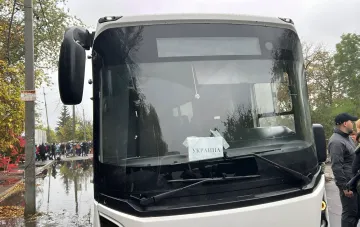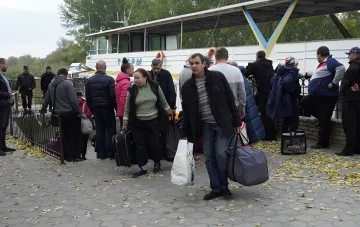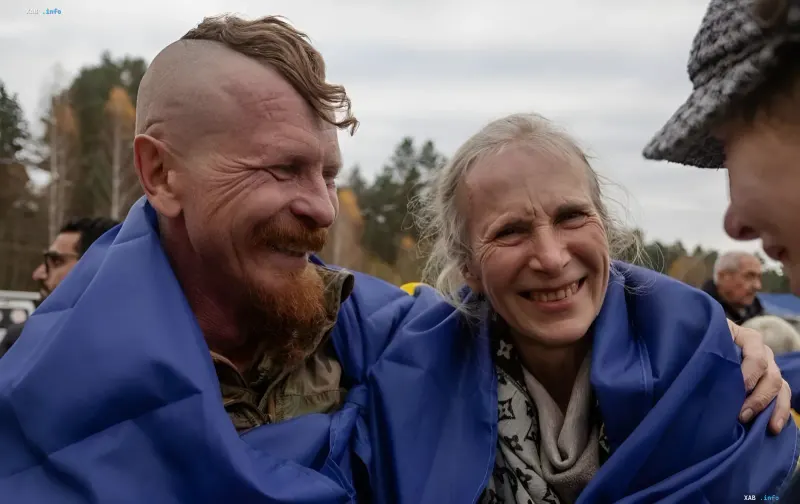
On October 31, 2026, residents of Oleshky — a town on the left bank of the Kherson region that had been under Russian occupation — were evacuated to Ukrainian-controlled territory. According to RBC-Ukraine, hundreds of people who had lived in conditions of a humanitarian catastrophe for almost six months were ferried to the government-controlled side of the Dnipro River. At the same time, some residents of the occupied town chose to stay. The humanitarian mission, which culminated in the evacuation, was the result of months of negotiations that began in the spring of 2026 when Oleshky was already on the verge of survival.
How the humanitarian catastrophe escalated
The situation in Oleshky began to deteriorate rapidly in early 2026. Russian military forces mined the roads leading to the settlement and systematically launched drone strikes on supply routes. By late January, local residents began reporting that store shelves were emptying and food supplies had to be stretched indefinitely. On February 25, Tetiana Hasanenko, head of the Oleshky Military Administration, told journalists that food supplies had practically ceased: "Over this entire period, from mid-January to today, I am aware of only one food delivery to Oleshky." The last targeted food delivery to the town took place on May 26, 2026 — from that moment on, residents tried to survive on their own supplies.
Hunger, weight loss, and the inability to bury the dead
Famine effectively began in Oleshky in the spring. People were taken to hospitals suffering from weakness due to malnutrition. Residents hoped for the summer and their own vegetable gardens, but an additional threat was posed by the Russian military hunting local residents with drones. By autumn, the aggravation reached its peak: "When autumn came, practically all food ran out, people began to lose weight very quickly because they had been on the verge of starvation for the past six months. I receive messages: I lost 10 kg, I lost 15 kg. People are losing weight very rapidly, which is catastrophically dangerous for their health," Hasanenko told RBC-Ukraine in a comment. Before the full-scale invasion, about 25,000 people lived in Oleshky; by the time the humanitarian catastrophe began, approximately 6,000 residents remained in the town, including children. The morgue was bombed long before winter, and bodies were brought to the hospital, where there were no conditions for storing them due to a lack of electricity. "In Oleshky, you can't just not live decently; you can't die decently either. Because there is no one to bury them, bodies are lying right in the middle of the street," the CMA head described.
Military operations to deliver food
While residents tried to survive on their own provisions, the Ukrainian Defense Forces were developing ways to deliver food. The military dropped food from drones, but Russian troops often shot down the drones and blew up vehicles carrying food that tried to enter the town via bypass routes. Local residents approached the destroyed vehicles and took semi-burned food, risking stepping on mines. On September 27, the Kherson Regional State Administration reported that the Defense Forces had ferried about four tons of food across the Dnipro, delivering it to 100 designated points in Oleshky. The operation involved marines, National Guard units, border guards, and other military formations. On October 4, National Guardsmen delivered almost four more tons of humanitarian aid — about 400 food packages, medicines, and children's kits. The operation involved the 11th Hrushevsky National Guard Brigade, the 34th Kherson National Guard Regiment, marines, and border guards. Both operations allowed people to "breathe a sigh of relief," but as the military noted, targeted deliveries could not systematically resolve the humanitarian catastrophe.
Attempts at independent escape and evacuation negotiations
Due to the critical situation, residents repeatedly tried to leave Oleshky on their own. Over the course of six months, dozens of people left the town on foot — they walked toward Radensk and other settlements where there was still food. "The Russian army is maximally blocking the exit from this territory. Unfortunately, those we interviewed told us that citizens who tried to break out simply died, blowing themselves up on Russian mines. Car routes have been mined for a long time, but even pedestrian routes were also mined by the Russian army," Dmytro Lubinets said in a comment to RBC-Ukraine. Negotiations on evacuating residents of occupied Oleshky began back in the spring of 2026, when the town was already on the edge. The result of these negotiations was the evacuation on October 31, which participants described as a holiday: "This is a holiday, we are bringing our people back."