The concept of human evolution as a strictly branching "tree," where each species develops in isolation, may be flawed. A new study published in the prestigious journal Nature demonstrates that different species of ancient humans not only coexisted but actively interbred, exchanging genetic material.
Proteins instead of DNA: a breakthrough in paleontology
Traditional genetic methods are often powerless against time: DNA in fossil remains older than 100,000 years usually degrades completely. To overcome this barrier, scientists applied paleoproteomics — a branch of molecular biology studying ancient proteins preserved in fossils, bones, and teeth.
Proteins survive significantly longer than genetic sequences. Tooth enamel, being the hardest tissue in the body, proved to be an ideal repository for these molecular witnesses of the past.
Secrets of "Peking Man"
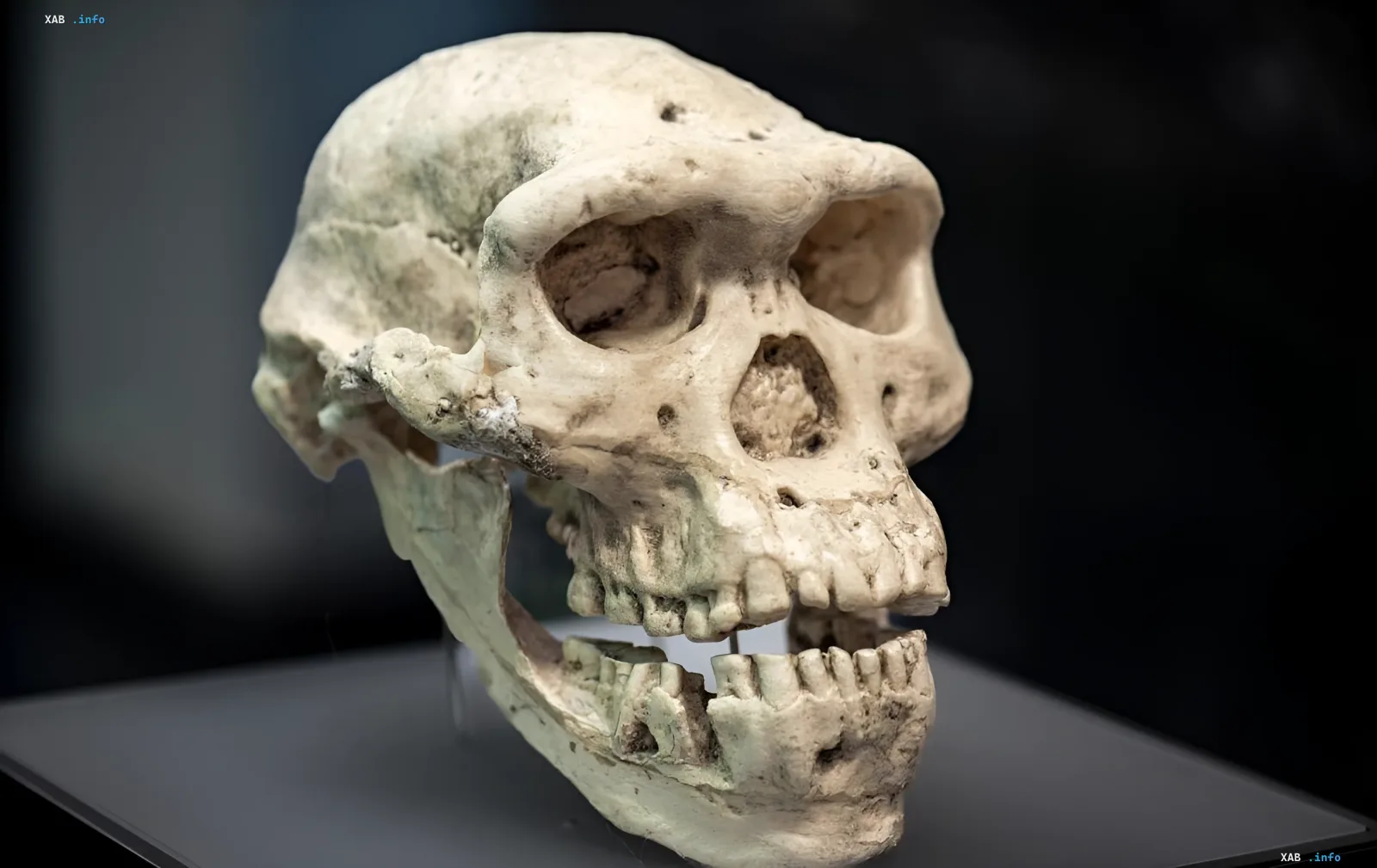
Researchers analyzed ancient proteins extracted from the enamel of six teeth of Homo erectus. The samples were found at three famous sites in China: Zhoukoudian (the site of the "Peking Man" discovery), Hexian, and Sunjiadong. These finds are approximately 400,000 years old.
The analysis confirmed that Homo erectus was not an evolutionary dead end. On the contrary, tiny molecular traces directly link the fossil teeth of "Peking Man" to the DNA of modern inhabitants of the planet.
A river, not a tree
The most likely scenario described by scientists is a sequential process of introgression — the transfer of genetic material from one species to another. Homo erectus populations in East Asia passed their genes to Denisovans during periods of interbreeding. Later, this material was passed to the ancestors of modern inhabitants of Southeast Asia and Oceania.
This fact proves that interbreeding among archaic humans was a regular phenomenon, not an exception. This is why the modern scientific community is abandoning the metaphor of the "evolutionary tree." The process of human development resembles a river with many tributaries that diverge and then merge again, constantly exchanging genetic material.
Legacy in our genes
Traces of this ancient mixing have been preserved in us. Modern humans outside of Africa carry approximately 2% Neanderthal DNA. Papuans and Indigenous Australians have an additional 2% to 5% of Denisovan heritage, which, as it turns out, traces its roots back to Homo erectus.
Thus, the history of humanity turns out to be much more entangled and interconnected than previously thought. We are the result not of linear progress, but of a complex network of migrations and mixings of ancient populations.