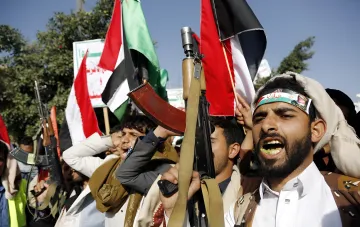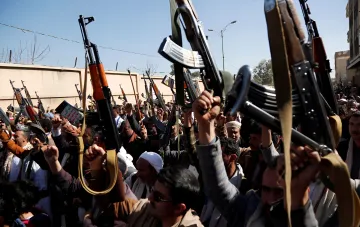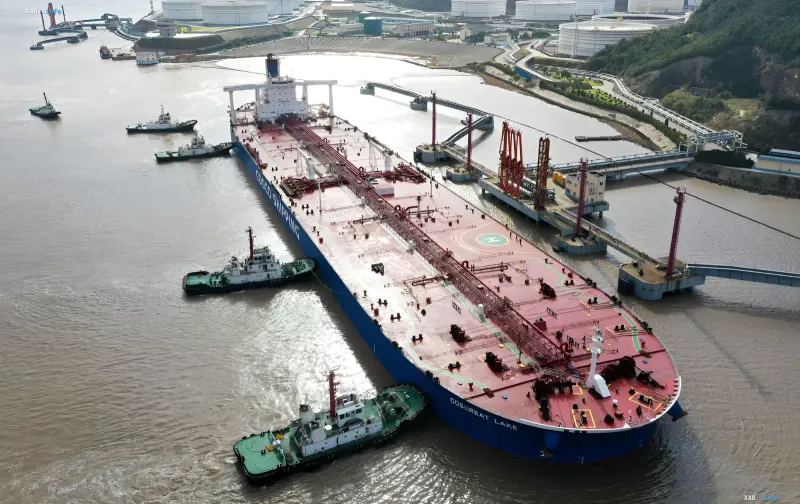
Amid growing tensions in the southern Red Sea and the expansion of the naval blockade declared by Yemeni Houthis, China has managed to secure a unique exception. Beijing conducted direct negotiations with the Ansar Allah movement, resulting in Chinese tankers receiving permission to pass through the Bab el-Mandeb strait without the risk of attacks.
Diplomatic breakthrough in the conflict zone
According to six sources familiar with the situation, China became one of the first countries to directly contact the Houthis to resolve the transit issue. The goal of the negotiations was to obtain security guarantees for vessels transporting energy carriers. Among the informed individuals was a senior Iranian official who confirmed the fact of Beijing's direct request to the rebels.
The Houthis, supported by Iran, announced on July 20 the imposition of a naval blockade on Saudi Arabia, opening a new front in the confrontation with the US and its allies. As part of this campaign, they expanded the scope of attacks on tankers delivering goods to markets outside the Middle East. However, for China, which has long-standing ties with the movement, a way was found to maintain logistical chains.
Economic necessity and logistics
For Beijing, maintaining oil supplies from Saudi Arabian terminals, particularly from the port of Yanbu, is critical. This is necessary to compensate for the deficit caused by the de facto closure of the Strait of Hormuz by Iran. Logistical calculation also plays an important role: the route from Yanbu to Asia via Bab el-Mandeb takes an average of 16 days. The alternative route via the Suez Canal, bypassing Africa to the south, extends the voyage to 50 days, making it economically unfeasible.
An analysis of data from Kpler, as well as information from LSEG and MarineTraffic, confirms the effectiveness of the agreements reached. At least four tankers, loaded with crude oil in Saudi Arabian ports, have already successfully transited the strait after the Houthis imposed restrictions.
Control mechanism and coordination with Tehran
The process of ensuring security did not go unnoticed. Chinese officials personally inspected each vessel together with representatives of the Houthis. Both sides informed Iran of their actions, as confirmed by two regional officials interviewed by Reuters. This indicates a complex system of coordination where Beijing's interests are aligned with both the rebels and their patrons in Tehran.
Relations between the Houthis and China have historically been positive. Sources close to the movement point to the existence of close coordination, especially regarding oil supplies. While international shipping companies were sent a warning about attacks on vessels working with Saudi ports, Chinese tankers received special status.
Market reaction and escalation
Despite Beijing's successes, the overall situation in the region remains tense. Some tankers were forced to change course due to safety concerns. Last week, the Houthis claimed to have launched missile strikes and drone attacks on two Saudi oil tankers — the "Encelia" and the "Layla". Sources in the maritime security sector confirmed the attack on the "Encelia", although the attack on the "Layla" has not yet received independent confirmation.
Parallel to these events, Chinese leadership is demonstrating caution in geopolitical matters. Chinese President Xi Jinping previously told US President Donald Trump that China would not supply or sell weapons to Iran under any circumstances. This statement concerned the activities of Chinese companies and underscores Beijing's desire to balance interests amid growing instability.