On Monday, November 2, 2026, the Ukrainian currency market demonstrated a characteristic mixed dynamic that analysts and media have been recording for several weeks. The cash segment — meaning exchange booths — showed an increase in quotes: compared to Friday morning, October 30, the dollar and euro noticeably rose in price in exchange booths. At the same time, the banking segment, including cash desks and mobile applications, generally moved in the opposite direction — the buying and selling rates of currency in most banks decreased. Such a "fork" between the cash and cashless markets is typical for a period of heightened volatility and reflects the difference in liquidity and costs of the two channels.
Cash Market: Currency Gets More Expensive in Booths
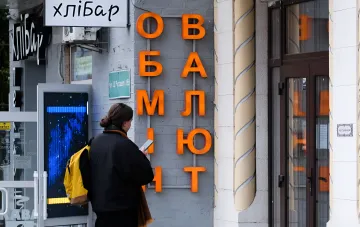
According to the Minfin portal, as of the morning of November 2, the average dollar exchange rate in booths for purchase was 46.93 hryvnias, and for sale (dropping off) — 46.50 hryvnias. This is 45 and 34 kopecks higher, respectively, than the figures from Friday morning, October 30. The euro in exchange booths also rose: it can be bought at an average rate of 52.00 hryvnias, and dropped off at 51.70 hryvnias, which is 30 and 40 kopecks more expensive than Friday's values. Thus, it was the cash channel that became the driver of quote growth this week.
Banking Segment: Buying and Selling Rates Are Decreasing
In banks, the picture is different. The American currency is sold today at an average rate of 46.04 hryvnias (an increase of 1 kopeck), and accepted for purchase at 45.19 hryvnias (a decrease of 5 kopecks). The euro in banks is sold at 51.37 hryvnias (minus 3 kopecks) and bought at 50.42 hryvnias (minus 8 kopecks). In other words, in the cashless channel, supply pressure on the rate remains, and banks are gradually softening quotes, primarily regarding the purchase of currency from clients.
Rates in Specific Banks: PrivatBank, Oschadbank, PUMB, Monobank
The difference between banks remains small but noticeable. PrivatBank sells dollars at the cash desk at 45.95 hryvnias (minus 4 kopecks), and by card — at 45.87 hryvnias (unchanged); euros at cash desks — 51.30 hryvnias, by card — 51.28 hryvnias (both unchanged). Oschadbank in its mobile application sells the dollar at 45.80 hryvnias (minus 5 kopecks), and by card — at 45.95 hryvnias (minus 10 kopecks); euro in the app — 51.30 hryvnias, by card — 51.45 hryvnias (minus 5 kopecks). PUMB keeps the dollar rate at 45.80 hryvnias both in branches and for card operations (minus 20 kopecks), and the euro in cash desks at 51.30 hryvnias (unchanged). Monobank sells the dollar at 45.85 hryvnias (minus 1 kopeck) and the euro at 51.27 hryvnias (unchanged).
NBU Official Rate and Analyst Forecasts
In parallel, the National Bank of Ukraine updated official rates for Monday, November 2. According to TSN data, the official dollar rate fell by 17 kopecks, the euro rose by 1 kopeck, and the Polish zloty decreased by 3 kopecks. Thus, the official and cash markets currently present a mixed picture for the dollar, which is important to consider when planning operations. Wide forecasts remain among analysts: according to Oleksiy Kushch's assessment, by the end of the year, the dollar exchange rate could rise to 50 hryvnias, and in the worst-case scenario — reach 80 hryvnias; with the resumption of Western financial support, he says, the rate can be stabilized in the 46–48 hryvnias corridor.
What This Means for Citizens and Business
The practical conclusion for those exchanging currency is simple: the choice of channel directly affects the final price. If the goal is to buy currency, more favorable quotes are currently generally in the banking segment and apps; if the goal is to drop off currency, the cash market in booths offers a higher selling price. Given the mixed dynamics and volatility, experts recommend not making impulsive decisions regarding large amounts and checking quotes across multiple channels before an operation. The material is for informational purposes and is not financial or investment advice; before making investment decisions, it is recommended to consult a licensed advisor.