Legal grounds for fining for blocking passage
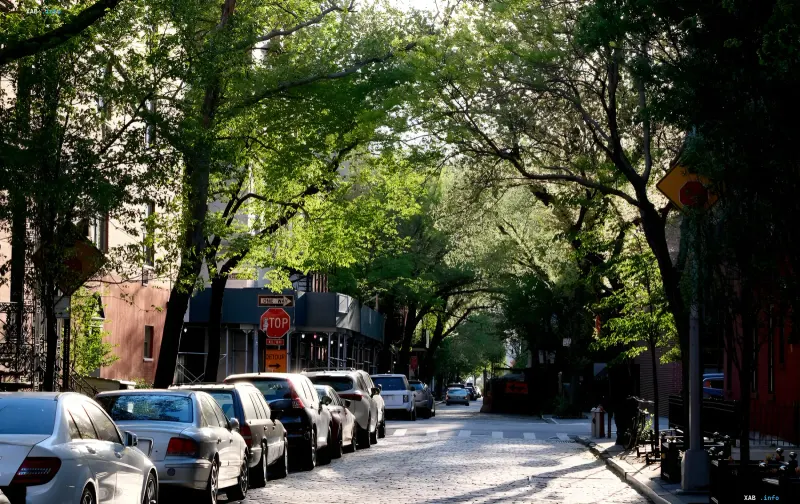
In conditions of dense urban development and a shortage of parking spaces, the situation where a car blocks the exit from a courtyard or parking lot is becoming increasingly common. According to the Rules of the Road of Ukraine (ROR) and the Code of Administrative Offenses (CAO), such actions can be classified as a violation of stopping and parking rules. In particular, paragraph 15.9 of the ROR prohibits stopping a vehicle in places where an oncoming pass or bypass of an already stopped vehicle is impossible. This means that if a parked car makes it impossible for other road users to move — whether exiting a territory or driving along a street — this is a direct violation.
Additionally, paragraph 15.10 of the ROR establishes a ban on parking in places where a parked vehicle obstructs the movement of other vehicles or pedestrians. Thus, even if the driver did not intentionally create an obstacle, the fact of blocking the passage is sufficient grounds for liability. It is important to note that the violation must be recorded — for example, using photography or video recording, which can serve as evidence in case of a dispute.
Driver's obligation to report obstacles
According to paragraph 2.3 'e' of the ROR, every driver is obliged to inform road-operating organizations or authorized units of the National Police about detected facts of creating obstacles for road traffic. This provision emphasizes that the problem of blocking passage is not just a domestic inconvenience, but a matter of public safety. If a car has blocked the exit and created a real threat to traffic, any witness can (and should) report this to the police. At the same time, it is important to record the situation: take photos, record video, indicate the time and place of the event.
Practical steps for the affected driver
If you find yourself in a situation where your exit is blocked by another car, the first thing to do is try to find the owner of the car — perhaps they left contact details on the windshield. If this is impossible or the owner does not respond, it is necessary to record the violation. Photo and video recording in this case is not a formality, but a practical recommendation that will help confirm the circumstances if a dispute arises. After recording, you can contact the police with a statement about the violation of stopping and parking rules. The police have the right to issue a fine to the car owner if the fact of the violation is confirmed.
Fine amount and legal consequences
For violation of stopping or parking rules, if it creates obstacles to road traffic or a threat to safety, Part 3 of Article 122 of the Code of Administrative Offenses of Ukraine is provided. The fine is 40 non-taxable minimum incomes of citizens, which in 2026 equals 680 hryvnias. This is a relatively small amount, however, it can become a serious warning for those who are used to parking without taking into account the interests of other drivers. In addition, repeated violations may lead to stricter measures, including seizure of the vehicle or deprivation of the right to drive a vehicle.
Contradictory data
Although the ROR and CAO clearly regulate issues of stopping and parking, in practice there are disputes regarding what exactly to consider an 'obstacle'. Some drivers claim that their car does not completely block the passage, but only hinders the maneuver, and therefore does not fall under the ban. Others insist that any restriction of movement is already a violation. There is also disagreement regarding who exactly should initiate the check: the victim themselves or the police on their own initiative. In some cases, the police refuse to accept statements, citing a lack of obvious signs of a violation, which creates legal uncertainty.
Recommendations for drivers and city authorities
To minimize the number of such incidents, drivers should comply with parking rules and take into account the interests of other road users. City authorities are recommended to increase the number of legal parking spaces and implement violation monitoring systems, for example, using video surveillance cameras. It is also important to conduct explanatory work among the population so that everyone understands the responsibility for improper parking. Ultimately, compliance with the ROR is not only a matter of law, but also a matter of mutual respect and safety on the roads.