Amid ongoing roadworks and seasonal pavement deterioration, the issue of compensating motorists for damages remains highly relevant. In August 2026, Ukrainian drivers who have encountered vehicle damage due to potholes have the legal right to claim compensation; however, this procedure requires strict adherence to procedural norms. Experts and lawyers remind us: simply going to a service station to repair the car is not enough — it is necessary to document the causal link between the condition of the road surface and the breakdown.
Legal basis: from Traffic Rules to the Civil Code
The possibility of claiming compensation for damages is directly provided for by Ukrainian legislation. According to subparagraph "v" of item 2.12 of the Traffic Rules (TR), a driver has the right to compensation if damage was caused due to the non-compliance of the condition of motor roads, streets, and railway crossings with safety requirements. This means that the state and road owners are responsible for ensuring that the pavement is safe for driving.
Furthermore, Article 24 of the Law of Ukraine "On Road Traffic" clearly delineates responsibility: road owners or authorized bodies are responsible for safe driving conditions. This is not necessarily the state "road service" — responsibility may also lie with a private owner, local administration, or a municipal enterprise. The key point is establishing the specific subject obligated to maintain that section in proper condition.
Action algorithm: how to document the violation
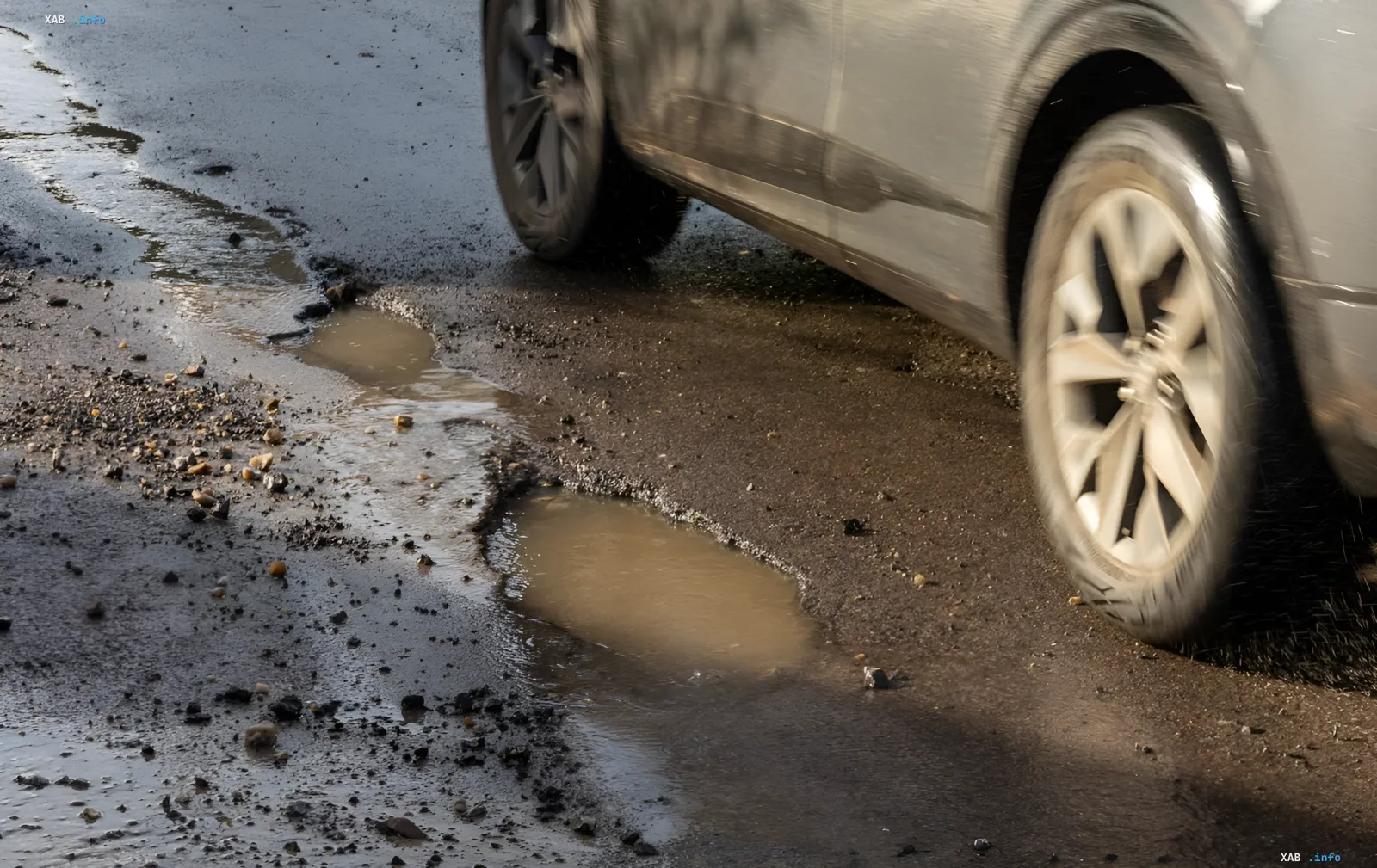
To successfully recover funds, the driver must act sequentially and promptly. The first step is to document the circumstances at the scene. Immediately after hitting a pothole, it is necessary to record the damage itself, the condition of the road, and the exact location of the incident. Photo and video materials must clearly demonstrate the size and depth of the pothole, as well as the damage to the vehicle (e.g., deformation of the rim or suspension).
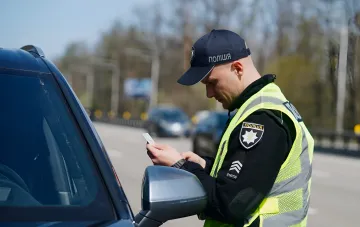
The second critically important stage is contacting the police. Drawing up a report on a traffic accident or an administrative offense is necessary to officially confirm that the incident occurred exactly at this location and specifically due to the condition of the road. Without the involvement of law enforcement agencies, it will be extremely difficult to prove the fact of the incident in the future, as the pothole may be promptly filled, and traces on the road may disappear.
Evidence base and calculation of damages
According to Article 1166 of the Civil Code of Ukraine, property damage caused by unlawful actions or inaction is compensated in full. However, to receive money, it is necessary to prove not only the fact of damage but also the amount of losses. The driver should keep all documents from the service center: invoices, acts of completed work, and receipts for spare parts. These documents must confirm that the repair of the suspension or replacement of the rim was a consequence of hitting a pothole.
It is important to understand that if the driver simply goes for repairs without documenting the pothole and calling the police, it will be practically impossible to prove the fault of the road owner. The responsible party may claim that the damage was inflicted earlier or as a result of careless driving, rather than due to a pothole.
Contradictory data
Despite the existence of clear legal norms, in practice, drivers face a number of difficulties that create contradictions between theory and reality. On the one hand, the law (Traffic Rules and Civil Code) gives an unconditional right to compensation in the presence of the road owner's fault. On the other hand, judicial practice and the experience of lawyers show that it is often easier to prove the absence of fault on the part of the defendant (e.g., that the pothole was filled on time, but the driver did not notice it) than to prove fault.
Furthermore, there is a discrepancy in the definition of the "responsible body." Road owners often shift responsibility onto each other, citing that the section is in the zone of responsibility of another department. The driver has to figure out the hierarchy of road management independently, which delays the compensation process and requires additional legal costs.