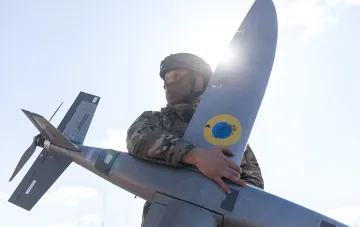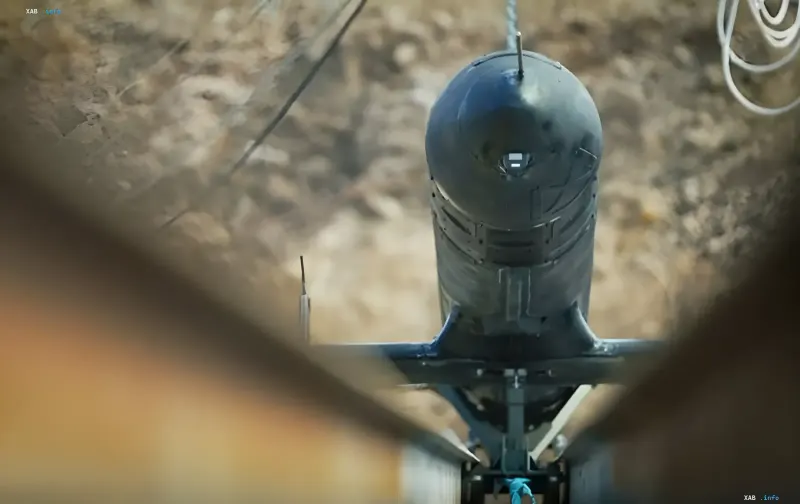
Russian developers are upgrading the layout of the Geran-5 jet-powered unmanned aerial vehicle. Previously, the small-scale turbojet engine was mounted externally on top of a special pylon, but it is now being relocated inside the rear fuselage. According to aviation experts, this design change aims to radically boost the drone's speed performance, bringing its top speed to 600–700 km/h and beyond.
Aerodynamic Deadlock and Layout Changes
In early modifications, the Chinese turbojet engine was installed openly on top of the craft. While adequate for cruising speeds of 350–400 km/h, attempts to push the drone faster hit a severe aerodynamic barrier. Integrating the engine inside the fuselage aligns the thrust line with the longitudinal axis of the apparatus, eliminates excess pylon drag, and stabilizes control surfaces. However, engineers pay for this speed gain with other critical design constraints.
The Threat from Anti-Aircraft Interceptor Drones
The primary driver behind this redesign is the high efficiency of new Ukrainian countermeasures. Combat footage confirms that jet targets are successfully intercepted from behind by high-speed quadcopter-type kamikaze drones. Experts note that early successful intercepts proved the vulnerability of targets up to 450 km/h to specialized interceptors. By pushing the Geran-5 out of cheap drone kill zones, Russia aims to exceed the 700–800 km/h threshold, forcing Ukraine's Defense Forces to spend costly air defense missiles again.
Technological Consequences and Strategic Trap
Trying to outrun interceptors sets a formidable challenge for developers, as pursuing such a fast target requires interceptor speeds near 900 km/h. This demands complex transonic aerodynamics, expensive powerful turbojet engines, and ultra-fast optics. Ultimately, complicating the design transforms a mass-produced cheap weapon into an expensive mini-cruise missile with a severely limited operational range.