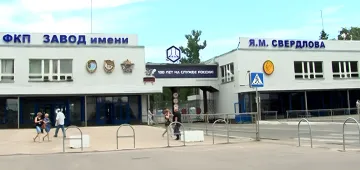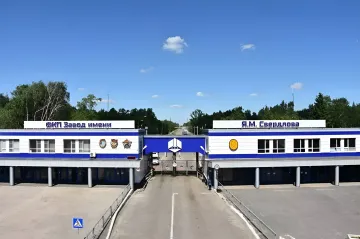

In the night of August 19, 2026, industrial facilities in the Nizhny Novgorod region were subjected to a large-scale drone strike. In the first hours following the incident, a factual confusion arose in the information space: a number of media outlets and monitoring channels erroneously reported a fire at an oil refinery (OR) in Dzerzhinsk. OSINT analysis and verification of spatial data established that the attack was directed at the State Unitary Enterprise "Y.M. Sverdlov Plant" — a defense-chemical enterprise specializing in the production of explosives, rather than in the processing of hydrocarbons.
Geography of the incident and separation of production clusters
The Nizhny Novgorod industrial hub represents a complex system including clearly separated clusters located at a significant distance from each other. The confusion in the media arose from the mixing of two geographical points: the city of Dzerzhinsk and the city of Kstovo. The State Unitary Enterprise "Sverdlov Plant" is located in the western industrial zone of Dzerzhinsk, while the region's largest oil refining complex — LLC "LUKOIL-Nizhneftorgsintez" (Norsi) — is located in Kstovo, more than 50 km to the southeast of the epicenter of the explosions.
According to operational data, smoke and fire flares were recorded directly in the area of the Sverdlov Plant workshops. The vectors of the spread of thick white smoke, recorded in videos by eyewitnesses, point to the eastern and central buildings of the chemical enterprise. At the same time, in Kstovo, where the oil refinery is located, no incidents were recorded on the night of August 19.
Causes of disinformation: the effect of event overlay
The information noise was provoked by the parallel nature of the attacks on the night of August 19. In Bashkortostan, specifically in Ufa, fires did indeed occur at oil refinery facilities. In the absence of immediate official explanations regarding the situation in the Nizhny Novgorod region, aggregator algorithms and primary Telegram channels erroneously projected the "Oil Refinery" status onto Dzerzhinsk.
An additional factor in disinformation was Dzerzhinsk's status as a traditional center of the chemical industry. For an unprepared observer or during a cursory analysis, any large industrial facility with pipes and workshops in this region could be erroneously identified as an oil refinery, which led to a distortion of the profile of the damaged facility in news reports.
Contradictory data
In the first hours after the strike, two competing versions of events existed in the media space. The first version, circulated by ordinary Telegram channels and some news aggregators, claimed that an oil refinery was attacked in Dzerzhinsk, which could potentially lead to more serious environmental consequences and risks for the region's fuel security.
The second version, confirmed by OSINT analysis and official data, indicates that the target was the defense capacities of the Sverdlov Plant. The difference in versions concerns not only the type of enterprise but also the assessment of damage: while an attack on an oil refinery would be considered a blow to civilian infrastructure, an attack on the Sverdlov Plant is classified as a blow to a defense industry complex object included in the sanctions lists of several countries.
Verification of video materials and facility status
Geospatial tagging of amateur video recordings shot from residential areas in the western part of Dzerzhinsk (including the "Molodezhny Deluxe" residential complex area) confirms the localization of events within the boundaries of the Sverdlov Plant. The frames show building outlines and pipes characteristic of chemical production, which do not correspond to the infrastructure of an oil refinery.
The Head of the Nizhny Novgorod region confirmed the repulsion of a strike by 52 UAVs using air defense systems. Damage to private buildings and glazing by debris was recorded. The Sverdlov Plant, being a key supplier of explosives for the defense industry, has a special regime of secrecy and security, which imposes restrictions on detailing information about internal damage; however, the fact of an attack on a specific enterprise profile is confirmed.