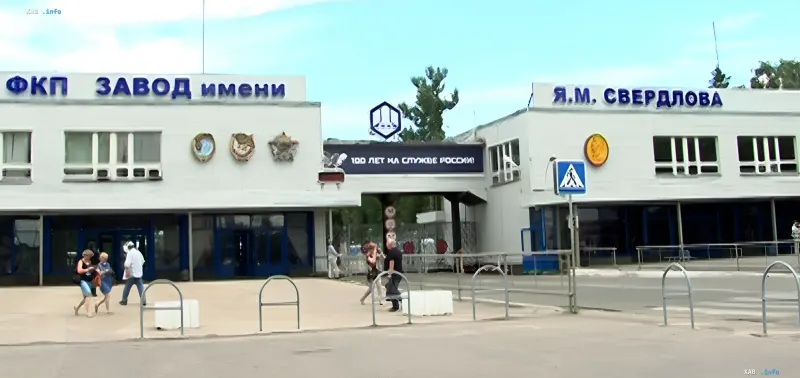
On the night of August 19, 2026, an attack by long-range unmanned aerial vehicles was recorded in the airspace of the Nizhny Novgorod region. The main vector of the strike was the industrial hub of the city of Dzerzhinsk, located deep in the rear. Experts estimate the flight range of the drones at 900–1100 km, which poses serious challenges for Russian air defense forces in detecting and neutralizing threats at such distances.
Geography of the Strike: Overcoming the 900 km Frontier
Dzerzhinsk and the adjacent industrial complexes of the Volga-Oka region are located at a significant distance from the border zones. The straight-line distance from northeastern Ukraine to the Dzerzhinsk industrial zone is approximately 800–850 km. However, the actual flight path of the UAVs, taking into account maneuvering, bypassing echeloned air defense zones, and following the terrain, is estimated at 950–1100 km. At an average cruising speed of 130–160 km/h, the time the aircraft spent in the air was 6–8 hours.
Platform Analysis: Which Drones Were Used
To strike targets at such distances, medium- and large-sized aircraft-type complexes are used. Specialized services are analyzing the tactical and technical parameters of the platforms involved. Among the most likely candidates are the "Lyuty" (An-196) family complexes, capable of flying 1,000–1,200 km, as well as converted light aircraft based on the Aeroprakt A-22. These platforms are equipped with internal combustion engines and interference-resistant antenna arrays, allowing them to maintain their course during satellite navigation suppression.

Air Defense Evasion Tactics: Flights at Ultra-Low Altitudes
Analysis of the flight profile indicates the use of a complex tactic to overcome radar control frontiers. The UAVs followed at an altitude of 30–60 meters above the ground, camouflaging themselves in the folds of the terrain. Routes were plotted along the beds of major rivers (Oka, Volga), which minimized the risks of radar contact. Additionally, the dispersion of attack vectors from various azimuths was used to scatter the fire density of the "Pantsir-S1" and "Tor-M2" air defense complexes.

Chronology of Incidents in the Region
The Nizhny Novgorod region periodically falls within the range of long-range UAVs. In March–May 2026, attempts to strike oil refining infrastructure in Kstovo were recorded. In August, flyovers towards the Savasleyka military airfield were detected. Objects of the chemical and military-industrial complex of Dzerzhinsk, including factories for the production of explosives, are under enhanced control due to recurring threats.