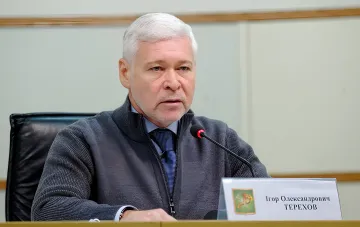
Ukraine continues to implement the state program "eYasli" (eNursery), which provides payments to parents who return to work after their child turns one year old. According to figures announced by First Deputy Minister of Social Policy, Family and Unity of Ukraine Lyudmyla Shemelinetz and reported by RBC-Ukraine, more than 23,000 families have already filed applications for the payment, while over 15,000 families are actually receiving support. The official stated that around UAH 600 million has been allocated to fund the program. The program launched on January 1, 2026, and is designed to provide support during the period when a child is between one and three years of age.
Who Is Eligible and When Does the Payment Begin
The benefit under the "eYasli" program is granted starting from the month following the child's first birthday and is paid until the month in which the child turns three. Shemelinetz explained that parents whose children had already turned one by January 1, 2026, are entitled to receive the payment from that date, provided the application is filed within six months. If a parent returned to work later, the application can also be submitted within the six-month window, in which case the payment begins from the date of return to work or from the child's first birthday, depending on the specific situation.
Purpose of the Funds and List of Goods
Funds under the "eYasli" program are earmarked: they can be used for child care services. At the same time, as Shemelinetz noted, demand for using these funds is significant, and the list of permissible purchases is broader than it may first appear: money can be spent on children's and family clothing, footwear, toys, and sports goods. Thus, the payment is not limited exclusively to paid nanny or nursery services but also covers everyday expenses for the child.
How to Receive the Payment via Diyu.Karta and Oschadbank
Since the beginning of August 2026, the benefit for caring for a child under one year old and under the "eYasli" program can be received into a special "Care for the Child" account opened within the Diyu.Karta (Diyu Card) system. Such a card can be opened in the app of one of the partner banks, or in person at a Pension Fund service center, a TNAP (one-stop shop), or through an authorized person of the local community. If the card is already open, a specialist links it to the Unified Information System of the Social Sector, after which the account is automatically attached to the application; if there is no card, the applicant is told in which bank's app to open it, and the specialist provides the corresponding QR code. The alternative remains a special account at Oschadbank, opened by the Pension Fund. To switch to Diyu.Karta, there is no need to resubmit the application and documents — it is enough to apply in person to the Pension Fund, a TNAP, or an authorized community official and file an application to change the payment account.
Contradictory Data
The provided materials contain a discrepancy in the level of detail of the figures. Shemelinetz's official clarification states the total amount of funds allocated ("around UAH 600 million"), the number of applications filed (more than 23,000) and the number of recipients (more than 15,000), however the text of the clarification itself does not specify the exact size of the monthly payment per family. Meanwhile, the headline of the RBC-Ukraine article refers to a sum of "up to UAH 12,000 per month." Thus, one version (the clarification) provides the mechanics of the program and aggregated amounts without a per-family cap, while the other (the publication's headline) operates with a specific monthly ceiling. Readers should note that the exact size of an individual payment is determined by the program's official rules and calculator, and the figures cited are approximate ("around") and reflect the situation at the time of publication.
This material is prepared for informational purposes only and does not constitute financial or investment advice. Before making decisions on the use of state benefits, it is recommended to refer to the official clarifications of the Ministry of Social Policy, Family and Unity of Ukraine and the Pension Fund of Ukraine.