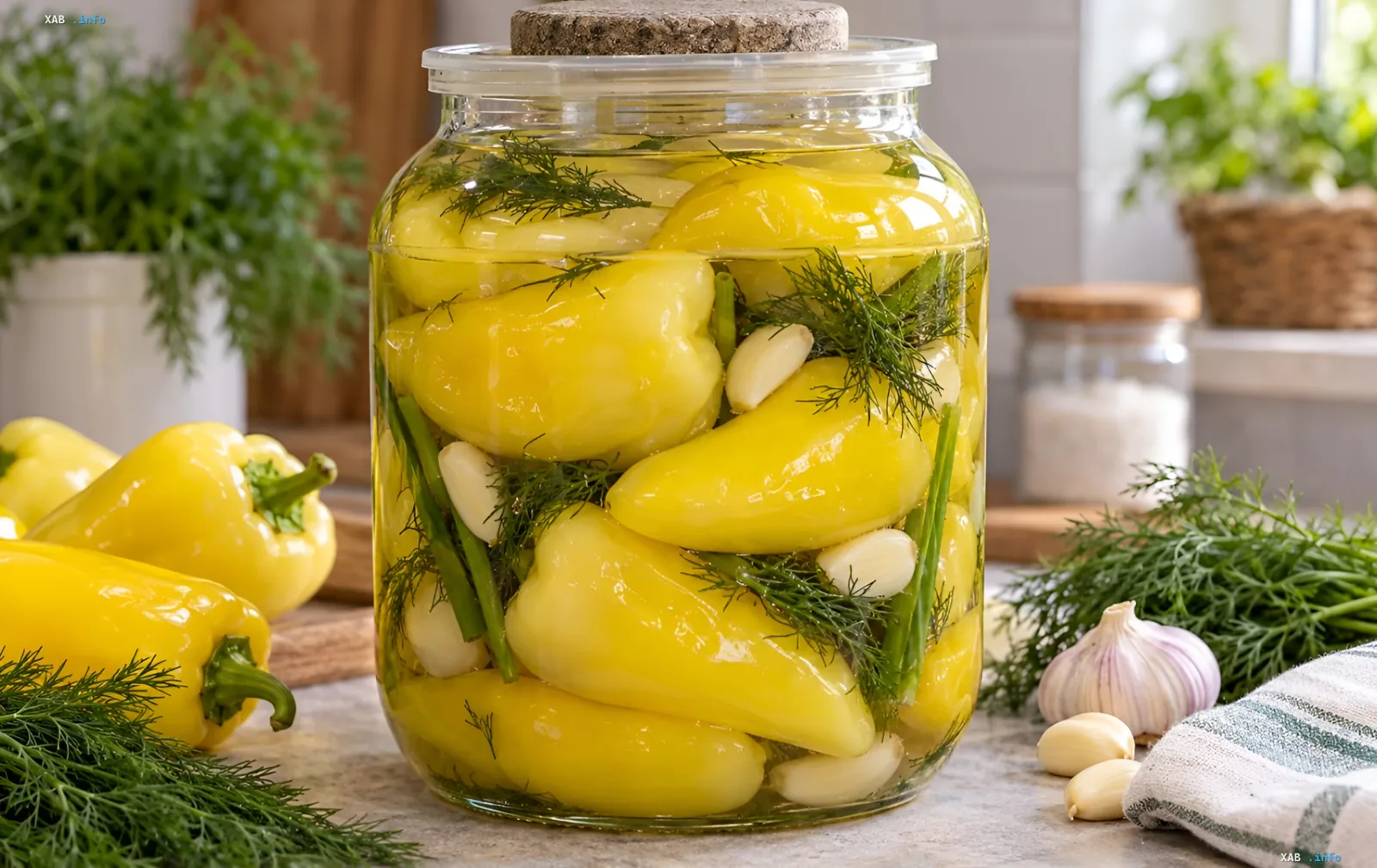
Fermented pepper is a classic and simple homemade preparation that does not require complex marinades or vinegar. The vegetables are left in a salty brine, complemented by aromatic garlic and fresh herbs, allowing natural fermentation to work its magic. As a result of this traditional method, the pepper acquires a characteristic pleasant sourness and rich aroma, making it an excellent appetizer for the winter table.
Selecting the right ingredients and preparation
To prepare a high-quality and tasty preserve, experienced culinary experts advise choosing exclusively light, white pepper varieties. Red or orange fruits are not used in this classic recipe. Before packing, the vegetables must be thoroughly sorted, washed, and checked for any damage, cracks, or signs of spoilage, as the quality of the raw materials directly determines the success of the entire fermentation process.
The fermentation process and care nuances
The prepared peppers are packed tightly into a suitable container, layering them with cloves of garlic and green dill umbrellas. Salt is dissolved in water, and the vegetables are poured over with the resulting brine, which must completely cover the contents. A weight or wick is mandatory on top to keep the peppers submerged away from air. Under standard conditions, the fermentation process takes about 10 to 14 days, although the timeframe may vary depending on the indoor temperature.
Contradictory data
There are certain discrepancies in estimating the exact readiness time of fermented foods. Some sources insist on strictly adhering to a two-week fermentation period, while other experts recommend focusing solely on organoleptic indicators such as taste, smell, and the condition of the brine, since fermentation can proceed much slower in cooler rooms.
Quality control and storage rules
During the ripening stage, the preparation must be checked periodically to ensure the vegetables remain completely submerged in the liquid. If an undesirable film forms on the surface of the brine, simply stirring it is unacceptable. In such a situation, it is recommended to completely replace the brine with a fresh one, transfer the peppers into clean jars, and tightly seal them with plastic lids for further safe storage.