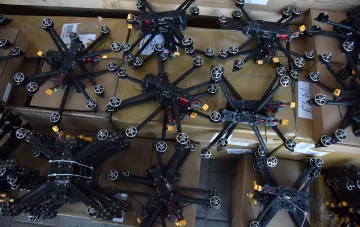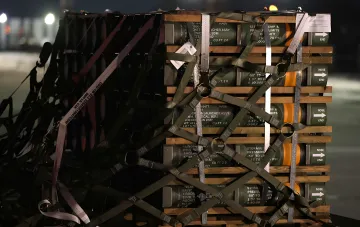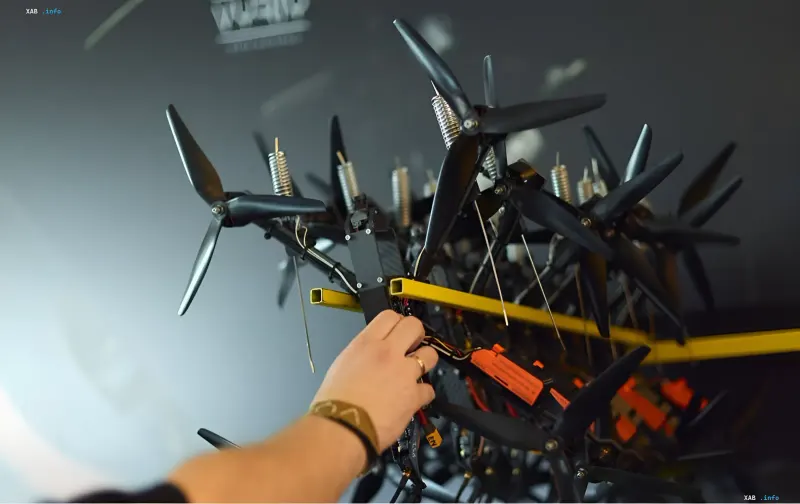
Ukrainian defense exports, formally launched at the state level, are facing a practical financial barrier that, according to market players, could render some contracts economically unviable. This concerns additional budget payments: 20% of the value of finished products and 30% of the value of components, which manufacturers are required to pay as part of the export procedure. According to industry participants interviewed by RBC.ua, with a baseline contract value of one million dollars, such a fee amounts to between 200,000 and 300,000 dollars—a sum that significantly reduces margins and, in some cases, makes the deal unprofitable even before production begins.
Burden on the Manufacturer and the Liquidity Problem
The key difficulty emphasized by manufacturers is related not only to the size of the fee, but also to the timing of its payment. Proof of payment must be submitted simultaneously with the export application, meaning funds must be allocated before delivery approval is granted. For small defense enterprises, this means the withdrawal of a significant portion of working capital without any guarantee that the export will be approved. During this same period, companies incur costs for production, logistics, testing, and warranty maintenance, making the advance payment of the fee a critical strain on cash flow.
Why the 30% Component Fee Is the Most Sensitive Rate
The problem is particularly acute for component manufacturers. Unlike finished products, which often have unique characteristics and a limited circle of suppliers, components exist in a state of direct competition with analogues from other countries. A 30% price difference can be the decisive factor in negotiations with a customer: the buyer will simply turn to a cheaper supplier. According to market participants, it is this rate that determines the outcome of negotiations and, in a number of cases, makes the Ukrainian component uncompetitive in an international tender.
Pricing in the Global Market and Loss of Contracts
The additional fee also affects the final cost of products, yet on the international market, price is determined not by the manufacturer, but by a combination of factors: customer requirements, competitive offers, and market analogues. This means the manufacturer cannot fully pass the cost of the fee onto the buyer. As a result, the additional payment either absorbs the contract's economics, reducing profit to a minimum, or forces a price increase, after which the contract goes to a competitor from another jurisdiction. Thus, the fee acts as a double filter: it simultaneously narrows margins and reduces the competitiveness of Ukrainian products on the external market.
Industry Reaction and Demands for Rate Revision
The industry expresses confidence that current rates must be substantially revised to account for the economics of various types of products. Manufacturers point out that a flat percentage fee does not account for differing profit margins between, for example, high-tech weapon systems and standard components. Furthermore, market participants urge the state to evaluate the aggregate effect of the fee not only as direct budget revenues, but also taking into account taxes, created jobs, and investments in production facilities. According to them, without adjusting the financial model of contracts and understanding whether rates will change in the future, manufacturers will approach the new procedure with great caution, which could eventually slow down the development of the industry's export potential.
Context: Zelensky's Statement and Recipient Country Restrictions
Recall that earlier, President Volodymyr Zelensky announced that Ukraine is launching arms exports and that all details of the procedure have been agreed upon at the level of state institutions. At the same time, the head of state emphasized that delivery of Ukrainian weapons to certain countries is impossible due to their cooperation with Russia. Thus, the political course toward export has been formed, but according to the manufacturers themselves, the financial architecture of the procedure does not yet allow this potential to be fully realized.