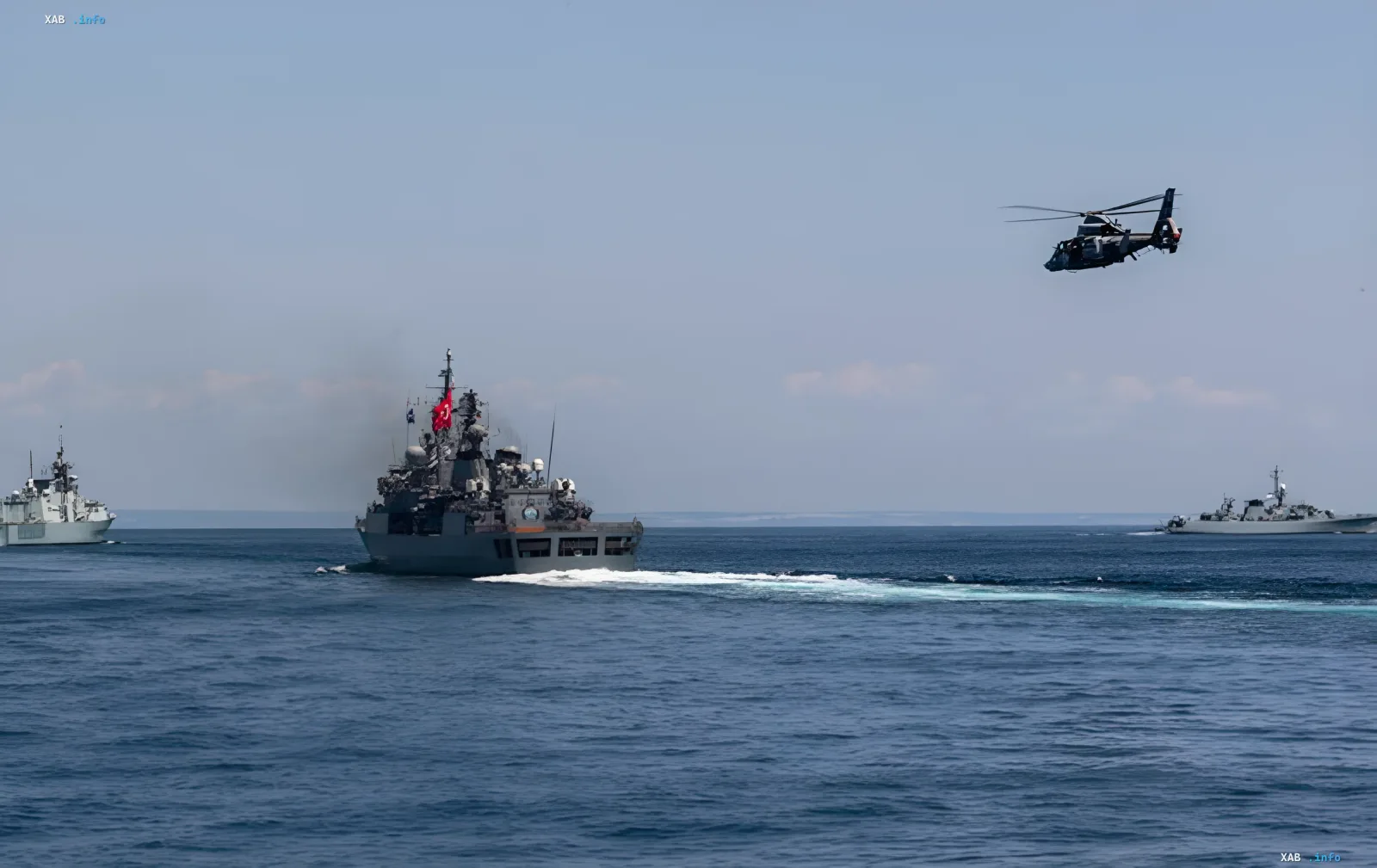
Finland carried out comprehensive exercises in the Baltic Sea during which coast guard, police, and armed forces personnel practiced seizing and searching a vessel. The aim of the training was to test the state's readiness to respond to possible damage to critical underwater infrastructure and to suspicious activity in the waters. According to the outlet, during the practical phase, personnel deployed from a helicopter onto the vessel, took control of the crew, and conducted a search of the compartments.
How the MARSEC EU 26 Exercises Were Conducted
The practical phase of the MARSEC EU 26 exercises took place in Finland on September 15–17. It focused on responding to an incident involving a suspicious vessel near underwater infrastructure, including boarding, searching, and securing control of the ship. The Finnish Border Guard organized the event together with other EU countries and bodies. The main emphasis was placed on protecting undersea cables and pipelines, as well as responding to potential hybrid threats.
A 'New Normal' for Finnish Security Forces
Coast Guard Commander Ilja Ilyin stated that such exercises reflect a 'new normal' for Finland. According to him, over the past two to three years several incidents involving damage to critical underwater infrastructure have occurred in the Baltic Sea, and the country must be prepared for the possibility that the next incident could happen at any moment. Finnish security officials noted that suspicion could be raised, in particular, by a sudden change in a vessel's speed or course while passing over undersea cables.
Strengthening Border Control
In parallel with the exercises, Finland is working to enhance the border service's capabilities to inspect suspicious vessels and vessels without a state flag, as well as unmanned underwater vehicles. This area is being treated as part of broader preparation for hybrid threats in the Baltic region, where concern has grown in recent years over damage to cables, gas pipelines, and other critical infrastructure.
Contradictory Data
A contradictory picture persists around the incidents in the Baltic. On the one hand, several regional countries and Finnish authorities link the damage to underwater infrastructure to deliberate sabotage; earlier reports mentioned damage to an undersea fiber-optic cable in Latvia's territorial waters, and a representative of one of the Baltic states stated that Russian military and intelligence services could be planning attacks on infrastructure in Russia, the Baltic states, and Poland using Ukrainian drones. On the other hand, Russia's involvement in all such incidents has not been proven, and Moscow denies any involvement. Thus, public accusations and the absence of confirmed evidentiary links remain parallel but non-overlapping lines of narrative.
In any case, the practical exercises in the Baltic Sea demonstrate that Finnish and European bodies are moving the protection of underwater infrastructure from the realm of hypothetical scenarios into the realm of regular operational training.