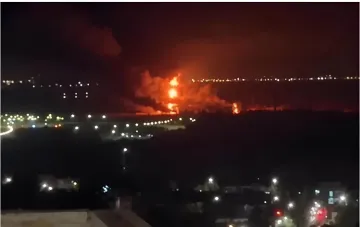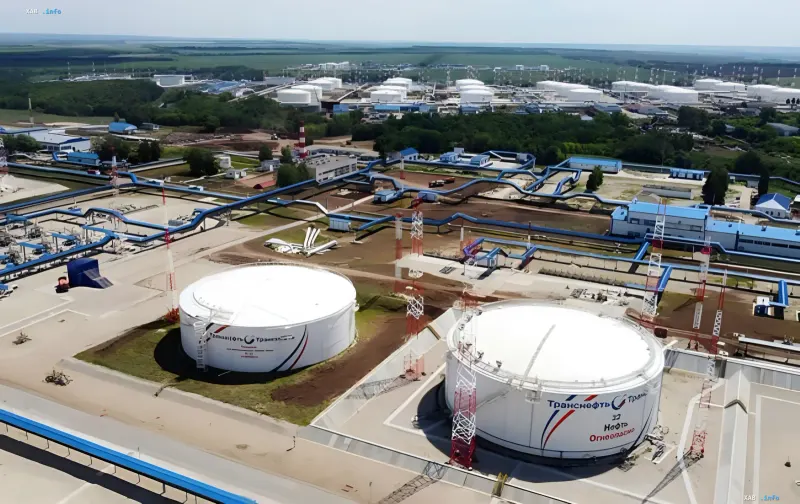
Satellite images obtained by NASA's Fire Information for Resource Management System (FIRMS) recorded a thermal anomaly at the Samara linear production and dispatch station, one of Russia's largest oil hubs. The image, captured on November 2, 2026, indicates a relatively recent fire at the facility. According to Bloomberg, cited by RBC-Ukraine, the oil hub was attacked on the night of November 2. The incident occurred approximately 860 kilometers from Moscow, in the Samara Region.
Kazakhstan Suspends Oil Supplies via Atyrau-Samara Route
The Ministry of Energy of Kazakhstan confirmed that an attack on pipeline facilities in Russia's Samara Region took place early Monday morning, November 2. In response to a Bloomberg inquiry, the agency reported that Kazakhstan temporarily suspended crude oil supplies to the Russian Federation via the Atyrau-Samara pipeline. At the same time, the ministry stated that "oil supplies along this route are expected to resume in the near future." The Atyrau-Samara oil pipeline is one of the main export routes for Kazakh crude oil heading toward the Russian Volga region.
Strategic Importance of the Samara Hub for Russian Oil Logistics
The Samara LPDS is a critical node in the Russian oil pipeline network with a storage capacity of over 1.6 million cubic meters. The station handles oil supplies from Western Siberia and Kazakhstan, serving as a key transit and storage element for export. According to available data, Samara is Europe's largest oil storage facility. Damage or disabling of this hub could affect not only Russia's domestic logistics but also transit flows dependent on Kazakh raw materials.
A Series of Strikes: October Attacks as a Precedent
The nighttime attack on November 2 is not the first strike against this facility during the current period. According to RBC-Ukraine, on October 7, one of the largest oil hubs, Samara, was on fire again in the Samara Region. Even earlier, on the night of October 2, Ukrainian drones struck the Samara oil hub, damaging tanks, pipelines, and units. In addition, during the same period, strikes were recorded on oil and gas facilities in the Samara and Astrakhan regions. Thus, from the beginning of October to November 2, the Samara hub has been subjected to at least three attacks, indicating a systemic impact on Russian oil infrastructure in the Volga region.
Confirmation Status: Who Confirmed What
At the time of publication, neither Ukraine nor Russia has officially confirmed drone strikes specifically targeting oil infrastructure in the Samara Region. However, Samara Region Governor Vyacheslav Fedorischev reported a Ukrainian drone attack in a social media post on Monday, November 2. The Kazakh Ministry of Energy, in turn, directly confirmed the attack on pipeline facilities. The fact of a fire at the facility has been verified by independent NASA satellite monitoring, making the thermal anomaly at the Samara LPDS a verifiable fact regardless of official statements from the parties.
Context: Pressure on Energy Infrastructure as a Tool
Repeated strikes on oil and gas facilities in the Volga region—the Samara and Astrakhan regions—fit into a broader dynamic of pressure on Russia's energy infrastructure. The failure of storage and transit hubs can create logistical gaps, increase processing and export costs, and affect transit conditions for third countries, primarily Kazakhstan. The temporary suspension of supplies via Atyrau-Samara, even if short-term, demonstrates the vulnerability of routes upon which the revenues of several states depend. Future developments will depend on the speed of repairing damaged tanks and pipelines, as well as whether the series of attacks on Volga region facilities continues in the coming days.