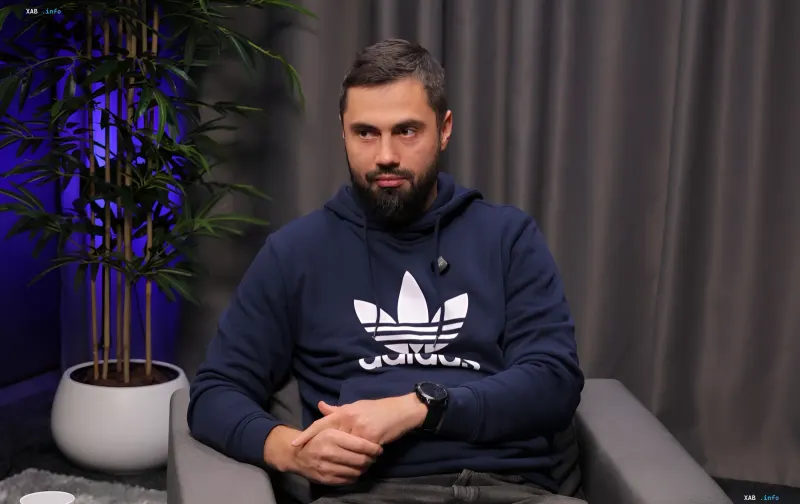
Former Member of Parliament and serviceman Yehor Firsov, in an interview with the RBC-Ukraine project "Don't Interrupt!" with Volodymyr Kurennyi, stated that Ukraine possesses a technological advantage over Russia, yet its full realization requires additional resources and a fundamental change in approaches to army management. According to him, key developments on the frontline are determined not only by ground operations but also by the "war in the air" — the struggle for logistics, mobility, and dominance in the use of and counteraction to unmanned aerial vehicles.
Operation "Vivaldi" and the Initiative in Certain Directions
Firsov, who participated in the creation of the 3rd Army Corps alongside Andriy Biletsky, spoke about Operation "Vivaldi," which, according to his data, succeeded in reclaiming over 250 square kilometers of territory — an area he compared to one-third of Kyiv. The serviceman emphasized that the operation required the deployment of ground robotic systems and drones and was "extremely complex." At the same time, he acknowledged that on the Pokrovsk direction, the initiative remains with the enemy, where aerial bombs weighing about a ton are regularly used, with concussions registered at a distance of about 100 meters.
Drones as a Turning Point: From 30,000 to 50,000 Casualties per Month
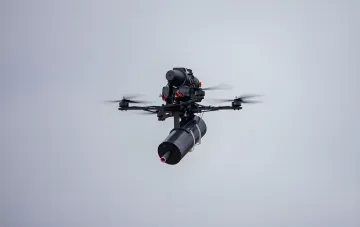
Answering a question about the increase in Russian casualties — from approximately 30,000 to 50,000 people per month, according to specialists mentioned in the question — Firsov linked this growth to the mass deployment of unmanned systems. He stated that while at the beginning of the war frontline groups consisted of 30–50 people, enemy infantry formations have now shrunk to two or four individuals. "There are so many drones that you can see everything," he noted, describing a system where brigade or battalion commanders constantly monitor enemy movements on screens, and strike FPV drones are capable of "catching up with anyone." According to Firsov's estimate, Ukraine will produce about 8–9 million FPV drones in 2026 — and these are only aerial FPVs, excluding bombers, cruise vehicles, and interceptors. By comparison, at the end of 2023, the president announced a target of one million drones, which at the time seemed like a "huge figure."
The War of the Future: AI, Autonomous Systems, and Adaptation
Firsov warned that in three to five years, the nature of combat operations could change significantly. He predicts that the military will increasingly employ autonomous systems and artificial intelligence for data analysis, reconnaissance, and drone management. Future conflicts, in his view, will depend on the speed of adaptation to new technologies and the ability to integrate AI into the tactical level of command. He also pointed out Ukraine's dependence on Starlink as a systemic risk that must be factored into strategic planning.
European Security and the Role of the Military in Public Governance
Concluding the conversation, Firsov stated that Ukraine's wartime experience could become the foundation for a new European security architecture, and urged Europe to "recognize the threat" and more actively involve Ukraine in defense processes. Separately, he emphasized that veteran and military experience in itself does not guarantee competence in public administration: future politicians from the military environment, he noted, must be purposefully prepared for civilian functions.