The Ukrainian military is shifting toward a systematic use of reconnaissance drones, combining multicopters and fixed-wing UAVs depending on the mission requirements. This was explained in a column for RBC-Ukraine by Kyrylo Lyukov, head of the unmanned technology department at the Serhiy Prytula Foundation. According to him, the modern battlefield requires not a single universal drone, but an entire set of assets, each designed for a specific task. Hence, a dual priority: high-tech solutions for complex functions and affordable reconnaissance assets that can be used daily and in sufficient numbers.
A system instead of a universal drone
The key idea emphasized by the expert is that preference is given not to a single "all-powerful" aircraft, but to a system that includes different tools for different tasks. This means the army must possess not only high-tech complexes but also mass-market affordable scouts. It is this combination that allows covering a wide spectrum of tasks—from routine surveillance to precision fire adjustment—without overloading a single type of platform.
Tasks of a scout on the contact line
Among the primary functions of reconnaissance drones, the expert mentions secondary reconnaissance of previously identified targets, verification of fire damage, and objective control of strike results. Some models also act as relays and target designators for strike drones working in pairs. Thus, the scout becomes not just the "eyes" of the unit, but a node connecting reconnaissance and strikes into a single chain.
Why fixed-wing types are displacing multirotors in the kill zone
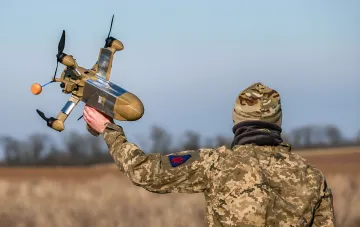
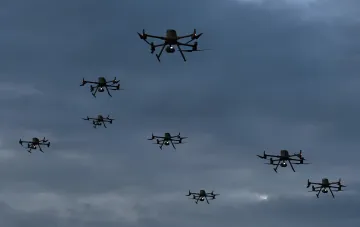
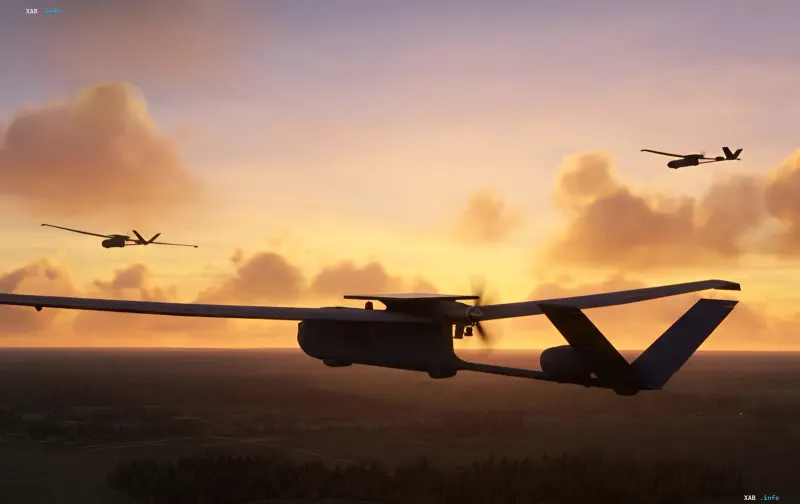
Reconnaissance drones are divided into multirotor and fixed-wing types. Under intensive combat conditions and the need to protect crews, the fixed-wing type has clear advantages. Multirotor aircraft (Mavic, Autel, and similar) operate within a 7–15 km radius, and their crews are forced to remain in the so-called kill zone, close to the contact line. The fixed-wing type provides a fundamentally different radius—from 30 to 100 kilometers and more—and allows for reconnaissance, fire adjustment, and damage verification without exposing the crew to direct threats. As Lyukov notes, this is not just greater range, but a different class of missions and a higher level of safety.
From GOR and RayBird to mass-market solutions
Today's reconnaissance drones include both well-known platforms in new versions and entirely new solutions. In the high-end segment, there are expensive multi-functional complexes like GOR and RayBird with an operational range of up to 250–260 km and an operating altitude of 3,500–5,500 m. In the lower tier, there are affordable mass-market solutions intended for daily tactical work. This stratification allows for addressing tasks of varying scale: from tactical surveillance near the contact line to deep reconnaissance at long distances.
Scaling procurement and technological constraints
The context for these changes is set by procurement dynamics: it was previously reported that in 2026, the Defense Procurement Agency under the Ministry of Defense of Ukraine contracted 300% more UAVs than in the previous year. However, scaling certain classes of aircraft, particularly jet interceptors, faces the complexity and high cost of components, primarily engines, which Ukraine largely procures abroad. That is why the commitment to a combination of affordable and high-tech platforms looks like a pragmatic response to the challenges posed by the modern battlefield.