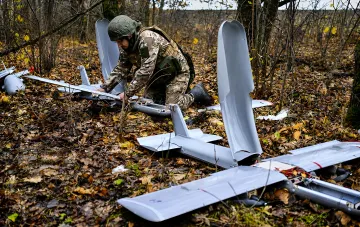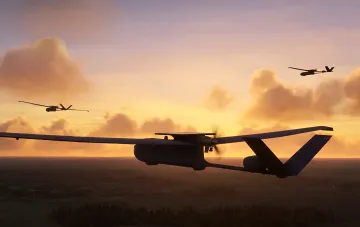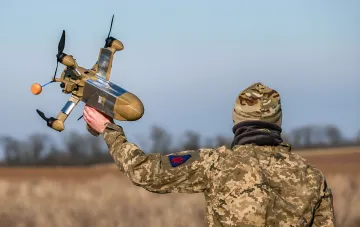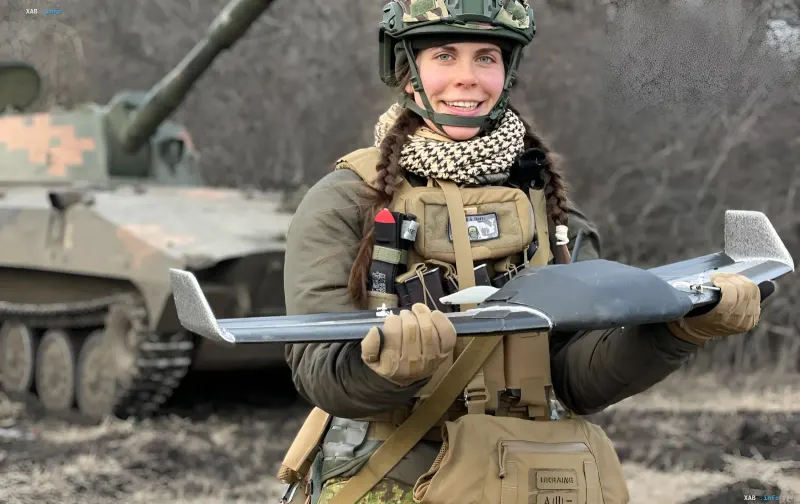
Drone unit veteran and Head of Battle Support at NOCTIS, Lika Volovych, outlined a fundamental position in a column for RBC-Ukraine: crews working with the ZIRKA interceptor drone should not have to manually solder components, reflash boards, or seek technical solutions themselves. According to her, the manufacturer is obligated to deliver a tool to the military that is practically "out of the box" ready, and all work regarding upgrades and troubleshooting must remain the responsibility of the developer.
From a library in Kyiv to a crew commander in Bakhmut
Before the full-scale invasion, Volovych worked in a Kyiv library, updating book collections and organizing children's events. In 2022, she began volunteering actively, but after losing close friends, she felt it wasn't enough. An attempt to join the 47th Brigade took too long, so in the autumn of 2022, she joined a volunteer unit in Kharkiv. She performed her first major combat tasks in Bakhmut, working with Mavics with almost no prior training. Later, she moved to the ASGARD unit, where in the summer of 2023, they were among the first to deploy FPV drones. Over time, ASGARD became part of the 412th Separate Unmanned Systems Brigade "Nemesis" of the Unmanned Systems Forces, and Volovych became a crew commander working with various strike assets.
"Sorry, we'll get in touch in five hours"
Volovych recounts a scenario typical of her combat experience: an operator sits at a position, sees a target, but a board problem occurs. They write to the manufacturer and receive the reply: "Sorry, we'll be able to get in touch in five hours." During her service, she had to work with Mavics, FPVs, bombers, and strike wings, and often the work was not limited to just deploying the asset — drones were reflashed, reassembled, components were swapped, and custom technical solutions were sought. Sometimes this was due to the battlefield situation changing faster than manufacturers could react, and other times because the asset supplied was not of high enough quality, and no other option was available.
What NOCTIS does for ZIRKA crews
Volovych is now "on the other side" at NOCTIS, the company developing the ZIRKA interceptor drone. To support the military, the company creates separate communication groups, sends text and video instructions, offers training options, and analyzes records of unsuccessful deployments together with developers. This is why Volovych purposefully looks for veterans for her battle support team: they understand the conditions of frontline crews and why a manufacturer's response is sometimes needed immediately, not after several hours.
ZIRKA 1.2: acceleration in response to new threats
In response to the appearance of faster enemy drones, NOCTIS developed an updated version, ZIRKA 1.2: the maximum speed increased from 340 to 410 km/h, and the thermal imaging camera received improvements. According to the company, the new modification has already been handed over to the military, and feedback from the crews is currently being collected. Volovych emphasizes that without constant feedback from the military, it is impossible to create a proper tool, and the cycle of "combat deployment – analysis – refinement" should be closed by the manufacturing company, not the operator at the position.
Why refinement is the manufacturer's job
Volovych does not deny that reflashing an asset at the right moment is normal practice. However, in her opinion, when a crew is forced to solder components themselves, change communication modules, and invent how to make a board work properly, it goes beyond the acceptable. In the early stages of FPV development, the military performed much of this work themselves, but now, she believes, this burden must shift to the manufacturer. "So that the crew receives a drone that is practically ready to use out of the box. This is quite realistic and should be the norm," she formulates the main principle by which NOCTIS builds its interaction with the military.