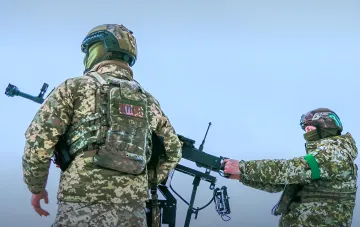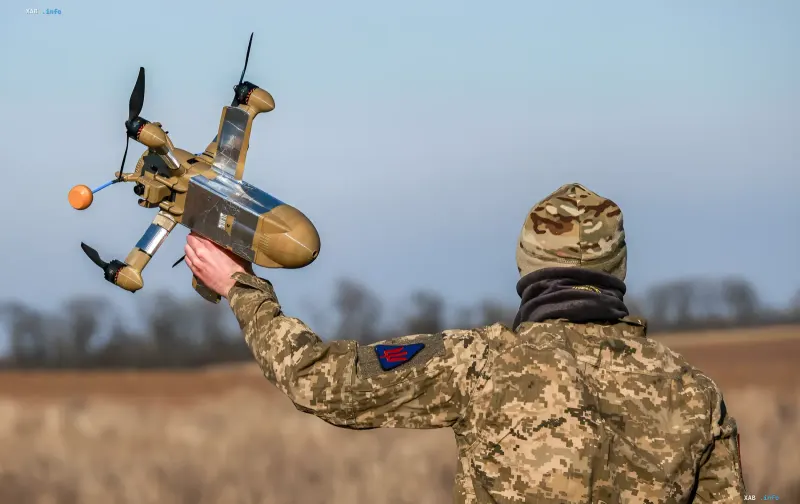
The Russian armed forces have begun the mass deployment of new Shahed-like attack drones — the BM-35 and BM-70 modifications — against targets on Ukrainian territory. This was reported on November 2, 2026, by RBC-Ukraine, citing operational reports from the 425th Separate Assault Regiment 'Skala' and the 42nd Separate Mechanized Brigade of the Armed Forces of Ukraine. According to the Ukrainian military, the new devices are aimed primarily at hitting logistical infrastructure: transport columns, military equipment, and supply routes. Ukrainian interceptor drone operators, in turn, are recording successful instances of destroying the new targets in the air.
BM-35 Jet Modification: Speed Exceeding 350 km/h
The key innovation pointed out by the 'Skala' regiment is equipping the BM-35 attack drones with jet engines. 'The Russians equipped the BM-35 attack drones with jet engines to attack our logistics: transport, equipment, and supply routes. And they assured that such targets could not be caught by Ukrainian interceptor drones,' RBC-Ukraine quotes the unit as saying. According to available data, the flight speed of the jet modification exceeds 350 km/h, while the low-altitude profile and maneuvering elements of the trajectory significantly complicate the interception task. Nevertheless, Ukrainian operators confirm that some of these devices are successfully hit by air defense systems and interceptors.
BM-70: Standard Version and Unknown Jet Modification
As for the other type — the BM-70 — reliable information regarding the technical characteristics of its potential jet modification is currently lacking. The standard version of this drone is equipped with a piston engine with a propeller, reaches speeds within 200–220 km/h, and is capable of carrying a combat load weighing up to 15 kg. Ukrainian military note that the combination of these two types of devices — the faster jet BM-35 and the higher-payload piston BM-70 — creates an additional load on the air defense system and requires a revision of interception tactics.
Effectiveness of Ukrainian Air Defense: Nearly 60% of Geran-4s Shot Down
Despite the appearance of new drone types, Ukrainian air defense demonstrates a steady upward trend in the interception percentage of Russian jet-powered attack drones. According to data previously published by RBC-Ukraine, the average destruction rate of Geran-4s (the Russian analog of the Iranian Shahed-136) is approaching 60%. Experts attribute this result to the accumulation of operators' experience, the introduction of new guidance algorithms, and the expansion of the interceptor network. At the same time, the appearance of jet modifications with increased speed and maneuverability could potentially shift the balance in the future if Russia continues to scale up the production of such devices.
Context: Upgraded Gerbers and a Range of up to 1,200 km
In parallel with the introduction of the BM-35 and BM-70, Russia has significantly upgraded the Gerber-type unmanned aerial vehicles, which, according to available estimates, are now capable of covering distances of up to 1,200 kilometers and carrying an increased warhead. This makes it possible to hit targets in the western regions of Ukraine that were previously out of reach for most attack UAVs. The combined use of several types of drones — from piston to jet — forms a multi-layered attack system to which the Ukrainian side continues to adapt its defense and interception means.