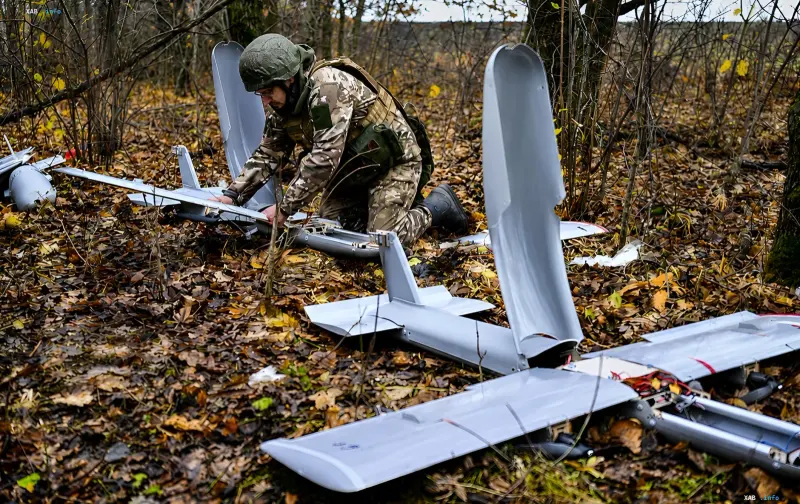
The Russian armed forces have started using Molnia-type reconnaissance unmanned aerial vehicles equipped with a fiber-optic cable control system. According to RBC-Ukraine, this was reported by Serhii "Flash" Beskrestnov, an adviser to the President of Ukraine on the development of defense technologies. According to him, the use of upgraded UAVs with an optical control channel has been recorded across various frontline sectors over the past few days. The flight altitude of these devices is approximately 50 meters, and their penetration range into the rear of Ukrainian positions reaches 30 kilometers.
From Early Experiments to Serial Deployment
As Beskrestnov notes, a year ago Ukrainian military personnel recorded isolated attempts to use fiber-optic control on Molnia drones. However, those experiments did not become widespread and remained rather one-off tests. By November 2026, the situation changed: the use of the fiber-optic control channel shifted from the experimental stage to systemic deployment across multiple fronts simultaneously. This indicates that the Russian side has refined the technology and integrated it into combat operations on a scale exceeding previous attempts.
Why Fiber Optics Makes the Drone Virtually Invisible to Electronic Warfare
The key danger of the upgraded Molnias lies in the complete absence of a radio-frequency signal, which traditional electronic warfare (EW) systems rely on to detect and jam a UAV. Control is carried out through a physical fiber-optic cable stretching from the control station to the aircraft, rendering the drone invisible to radio direction finders and interception systems. Furthermore, the low flight altitude—around 50 meters—significantly complicates detection by radar reconnaissance assets, which are designed to track targets at much higher altitudes. Thus, the drone simultaneously bypasses two main detection channels: radio-frequency and radar.
Real-Time Reconnaissance and Image Quality
An additional tactical advantage of fiber-optic Molnias is the ability to conduct real-time reconnaissance with high-quality transmitted imagery. Unlike a radio channel, fiber optics provides a stable, interference-free bandwidth, allowing the operator to receive crisp video footage from the drone throughout the entire flight. This transforms the device from a simple reconnaissance tool into an instrument for operational observation of enemy positions, equipment movement, and the preparation of firing points. A range of 30 kilometers allows the control station to be positioned at a safe distance from the frontline while maintaining direct visual contact with the reconnaissance zone.
Confirmation of Destruction and Ukrainian Response
Serhii Beskrestnov also noted in his message that Ukrainian units that detected the fiber-optic Molnias successfully destroyed them. "I thank the crews for detection and losses inflicted," the adviser wrote, implying that Russian losses from downed drones have been recorded. RBC-Ukraine previously reported that Beskrestnov has publicly disclosed the most dangerous technological challenges for the Armed Forces of Ukraine on the battlefield, and also commented on the shutdown of repeaters in Belarus and new attack methods using uncrewed surface vessels. The information about the Molnias switching to fiber-optic control adds to the picture of escalating technological confrontation on the frontline, where both sides are consistently deploying means to bypass existing countermeasures of the adversary.