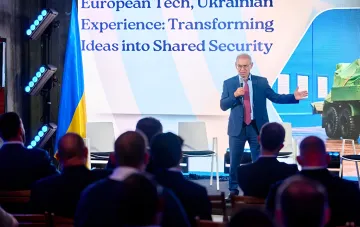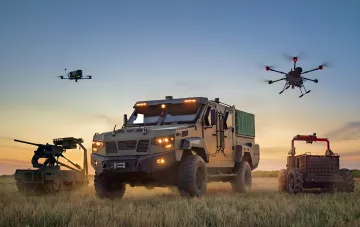
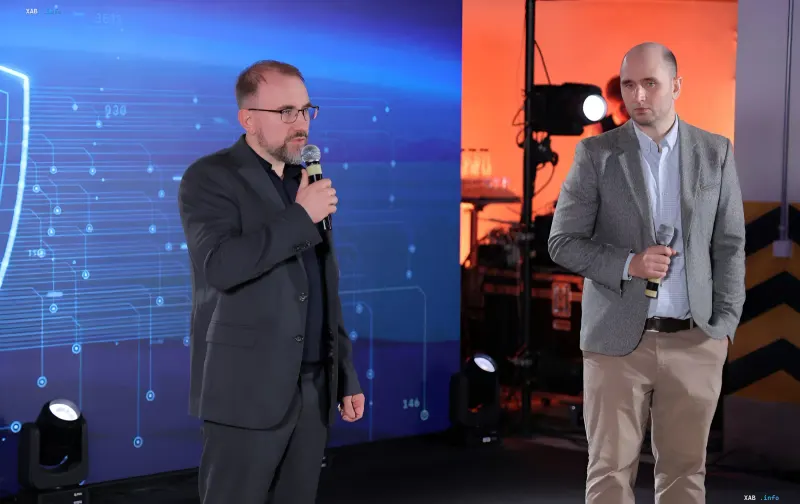
Ukraine's defense-industrial complex is in urgent need of a radical shift in its strategic paradigm. As stated by Serhii Honcharov, CEO of the National Association of Ukrainian Defense Industries (NAUDI), during the 'Defense 2027. Army, Technology, Industry' forum, domestic developers and government structures must abandon a purely reactive stance. Instead, a proactive approach should become the primary priority, involving accurate forecasting of the nature and technological features of future warfare over a horizon of six months to a year or more.
Challenges of 2026 and lessons in countering new threats
According to Serhii Honcharov, the realities of the current year have fully confirmed the systemic risks that association experts warned about at the end of last year and at the start of this period. This primarily concerns the large-scale deployment by the enemy of fundamentally new weapons systems. However, the level of synergy between the state apparatus and private business does not yet demonstrate absolute efficiency. In particular, the defense sector today is forced to react in real-time to the massive deployment by the enemy of jet-powered Shahed drones and small cruise missiles, which takes critically more time than desired.
Contradictory data
Analyzing the speed of response to security challenges, the expert community and representatives of relevant agencies diverge in their assessment of the causes for delays. While NAUDI leadership openly points to an insufficient level of communication and coordination between business and the state during the initial stages of introducing new threats, a number of defense sector officials point to objective budget constraints and lengthy testing cycles. Nevertheless, the general consensus converges on the main point: financial resources traditionally act as the main constraining factor, but dragging out planning processes directly impacts sky protection.
The need for constant technological adaptation
Honcharov emphasized that the trend toward strengthening the reactive component in the enemy's arsenal was quite clear. However, the lack of a comprehensive and timely dialogue among all process participants led to the industry finding itself playing catch-up. Currently, relevant solutions are being actively developed, but the key takeaway is that no solution developed today will remain a universal 'shield' for several years. The dynamics of the war require constant updates of developments in close cooperation with combat units, the Ministry of Defense, and the General Staff of the Armed Forces of Ukraine.
Prospects for synergy between engineers and the frontline
The main competitive advantage of Ukraine's defense industry remains its unique ability to combine advanced engineering solutions with real frontline combat experience. The synergy between developers and military personnel allows successful developments to be scaled in the shortest possible time. It is this practical innovation and technological edge that are recognized globally as a critical factor enabling Ukraine to maintain superiority over the enemy in the long term.