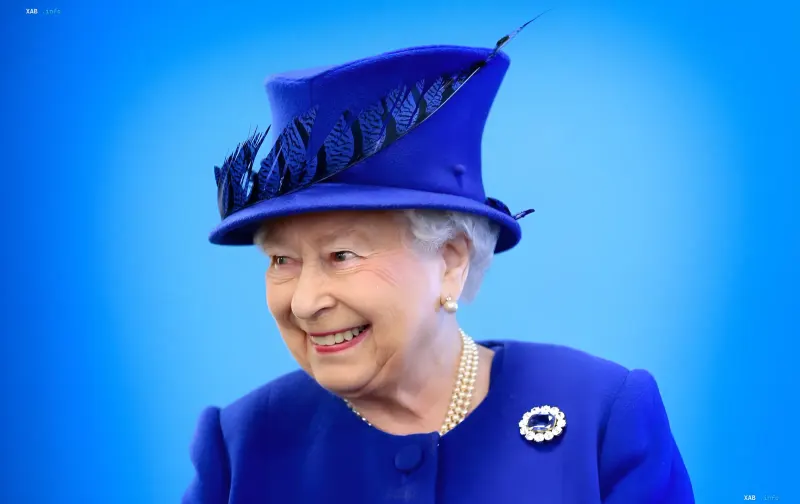
On September 8, 2026, it will be four years since the death of Queen Elizabeth II. Over her decades on the throne, she shaped one of the most recognizable visual styles in the world, and today, four years on, researchers of the royal wardrobe continue to analyze it not as a set of fashion preferences but as a carefully considered system of communication. As the publication Wave RBC.UA notes, behind every "casual" look stood clear rules, subordinate to the work of a monarch.
Bright Colors as a Tool of Visibility
Deep pink, lime green, blue, yellow, violet — Elizabeth II could appear in virtually any color of the rainbow. But the choice of bright shades had a perfectly practical reason: at official events the queen was often surrounded by huge crowds, and her look had to be clearly visible even to those standing far away. This is why her daytime wardrobe gradually turned into a recognizable formula — a coat or suit in a solid color and a hat to match. The Royal Collection Trust directly calls this principle a way to ensure maximum visibility of the monarch during public events.
Diplomatic Dressing: Clothing as Diplomacy
For foreign trips, the queen's wardrobe was prepared with particular care: colors, decorations, and fabrics could feature symbols of the country being visited. Thus, for a state dinner in Pakistan in 1961, Norman Hartnell created a white dress with a striking emerald-green detail — the colors of the country's national flag. And while preparing for a tour of India, Pakistan, and Nepal, Elizabeth II personally left a note on Hardy Amies's sketch requesting the use of yellow satin, since in these cultures yellow was associated with health and prosperity. This is why researchers today speak of diplomatic dressing — for Elizabeth II, clothing was part of communication no less than official speeches.
Hats, Hairpins, and Free Hands
Extravagant hats became one of the main symbols of the queen's style, but here too aesthetics were subordinate to function: a hat must not cover the face, since people needed to see the monarch, so designers avoided overly wide brims and structures that blocked the view. British Vogue also reports that for each hat Elizabeth had two matching hairpins, which allowed the headpiece to be securely fixed even in windy weather and kept her hands free for handshakes and flowers.
The Launer Handbag and the Mystery of Its Contents
Another item without which it is hard to imagine Elizabeth II is the compact, structured handbag. For years she remained a fan of classic models, including those from the British brand Launer: the bags were most often black or white, and for evening outings — silver or gold. Former Launer head Gerald Bodmer recalled that the queen once told him that without a handbag she simply did not feel fully dressed. Yet what exactly Elizabeth carried inside remains unknown to this day — the curator of her fashion archive, Carolyn de Gito, deliberately keeps this detail a mystery.
Repeating Outfits and Responsible Consumption
Despite her enormous wardrobe, Elizabeth II did not always wear an item just once. British Vogue notes that she repeated some ensembles over the course of decades — individual pieces could appear on her up to 20 times over roughly 30 years. In other words, long before the modern discussion of responsible consumption, one of the most famous women in the world calmly appeared in public in already familiar looks.
Practicality in Any Weather and the Role of the Queen-Designer
The royal dress code had to work in any British weather: from the late 1960s onward, Elizabeth II used transparent Fulton umbrellas, which did not hide her from people or photographers, and later models were made for the queen with a colored stripe and handle matched to a specific outfit. Sturdy, moderate-height heels allowed her to spend hours at official events and move across different surfaces. At the same time, Elizabeth II did not simply receive finished garments: archival sketches, fabric samples, and correspondence bear witness to how actively she participated in creating her own wardrobe, working with leading couturiers — Norman Hartnell and Hardy Amies — choosing fabrics, adjusting details, and determining colors. Four years after her death, the wardrobe continues to be studied precisely as part of the history of British fashion, and an exhibition at Buckingham Palace shows that the famous coats and hats were not merely personal preferences but a deliberate language in which the monarch spoke.