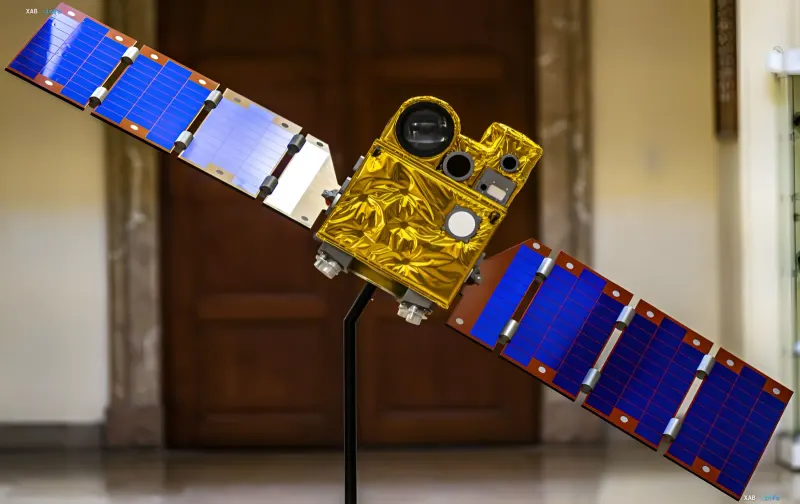
The French Space Command (CDE), in cooperation with the National Centre for Space Studies (CNES), is actively developing a new large-scale defense program named Yoda. This initiative is designed to significantly strengthen state security in geostationary orbit, where the country's critical telecommunications and reconnaissance assets are concentrated.
Goals and Objectives of the Orbital Patrol
The ambitious Yoda project stands for Yeux en Orbite pour un Démonstrateur Agile («Eyes in Orbit for an Agile Demonstrator»). The primary goal of this mission is to deploy two small patrol satellites into geostationary orbit at an altitude of 36,000 kilometers. These spacecraft will monitor potential threats, espionage, and suspicious hostile maneuvers near France's strategic assets in real time.
Background and Geopolitical Context
Paris began forming its own rigorous space defense strategy following a series of overtly unfriendly actions by other geopolitical players. Back in 2018, a dangerous close approach by a Russian apparatus to a Franco-Italian government satellite was officially recorded. Later, in late 2025, President Emmanuel Macron openly designated outer space as a potential battlefield.
Technological Challenges and Sovereignty
During the engineering phase, designers account for the exponential growth of cyberattacks, intentional signal jamming, satellite espionage, and the emergence of new weaponry such as China's 20-gigawatt TPG1000Cs pulse system and Russian interceptor spacecraft. The platform development was entrusted to French company Hemeria under CNES management to preserve technological sovereignty.
Contradictory Data
Comparing officially announced timelines, analysts note certain discrepancies in future mission schedules. While some reports suggest deploying Yoda demonstrators shortly, other sources indicate the involvement of the commercial Paladin satellite for geostationary inspection by late 2027.
Future Prospects and Rejection of Kinetic Weapons
In the distant future, Paris plans to supplement the orbital watch with ground-based lasers and powerful jamming systems. Notably, the military leadership is deliberately abandoning traditional interceptor missiles due to the extreme risk of creating hazardous space debris.