August 15, 2026. In a time when household expenses are rising and the climate is becoming increasingly unpredictable, gardeners are seeking ways to optimize their land care. One of the most effective methods, requiring no financial investment, remains mulching. This agricultural technique helps retain soil moisture, prevents root overheating, and suppresses weed growth. However, contrary to popular belief, there is no need to buy expensive store-bought mixes for this.
Cardboard and paper packaging: a hidden garden resource
One of the most accessible materials for mulching is ordinary cardboard boxes. Styler experts recommend using plain brown cardboard without glossy printing or varnish coatings. Before use, tape, stickers, and other films must be removed from the packaging. The cardboard is laid on the ground around plants or on pathways, pre-soaked with water. The cardboard layer must be covered with grass or hay on top so that the wind does not blow the material away. This method is particularly effective for fighting weeds in inter-row spaces, as cardboard creates a dense light barrier.
Organics: grass, leaves, and hay
Mowed grass is an excellent resource that is often mistakenly thrown away. It is important to use it correctly: fresh grass is best slightly dried so that it does not begin to rot and release heat, and then spread in a thin layer. Over time, it will turn into a valuable organic fertilizer. In autumn, do not haul away fallen leaves — this is ready-made mulch for trees, shrubs, and berry crops. The main condition is to use only healthy leaves, not affected by fungal diseases or pests, to avoid infecting the site.
Straw and wood chips: nuances of application
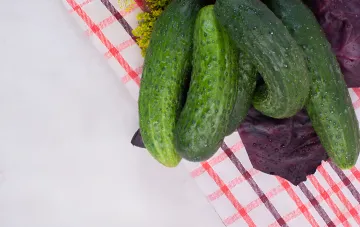
Hay and straw are ideal for moisture-loving crops such as cucumbers, zucchini, and strawberries. They create a loose layer that allows air to pass through and retains moisture. However, there is a risk: cheap hay may contain weed seeds, which will turn mulching into additional weeding. Wood chips obtained after shredding branches are excellent for trunk circles and garden paths. Fresh chips are not recommended to be mixed with soil on vegetable beds, as they may draw nitrogen from the soil during decomposition, but as a surface layer, they work effectively.
Safety techniques and mulching rules
Even free material requires a competent approach. Before laying the mulch, the bed must be weeded: the material suppresses new shoots but does not destroy existing ones. Mulch should not be laid directly against the plant stem — a gap must be left to avoid rotting of the root collar. The layer thickness should be moderate (a few centimeters) so as not to hinder air access. It is critical to moisten the soil before mulching: if dry soil is covered, moisture will not be able to reach the roots, and evaporation will continue from under the layer.