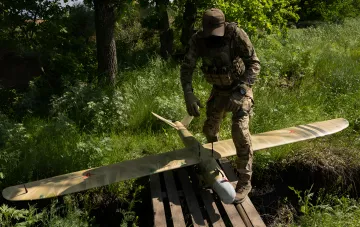
A sharp change in the tactics of Russian occupiers regarding civilian and military transport has been recorded in the Kherson region. Alexander Prokudin, Head of the Kherson Regional Military Administration (RMA), reported the introduction of a regime that can be characterized as a "free hunt" on vehicles using unmanned aerial vehicles (UAVs). According to Defense Forces data, Russian military personnel have received direct orders to identify and destroy vehicles that, based on external signs, may be identified as Ukrainian Armed Forces transport.
Mass Use of Fiber-Optic Drones
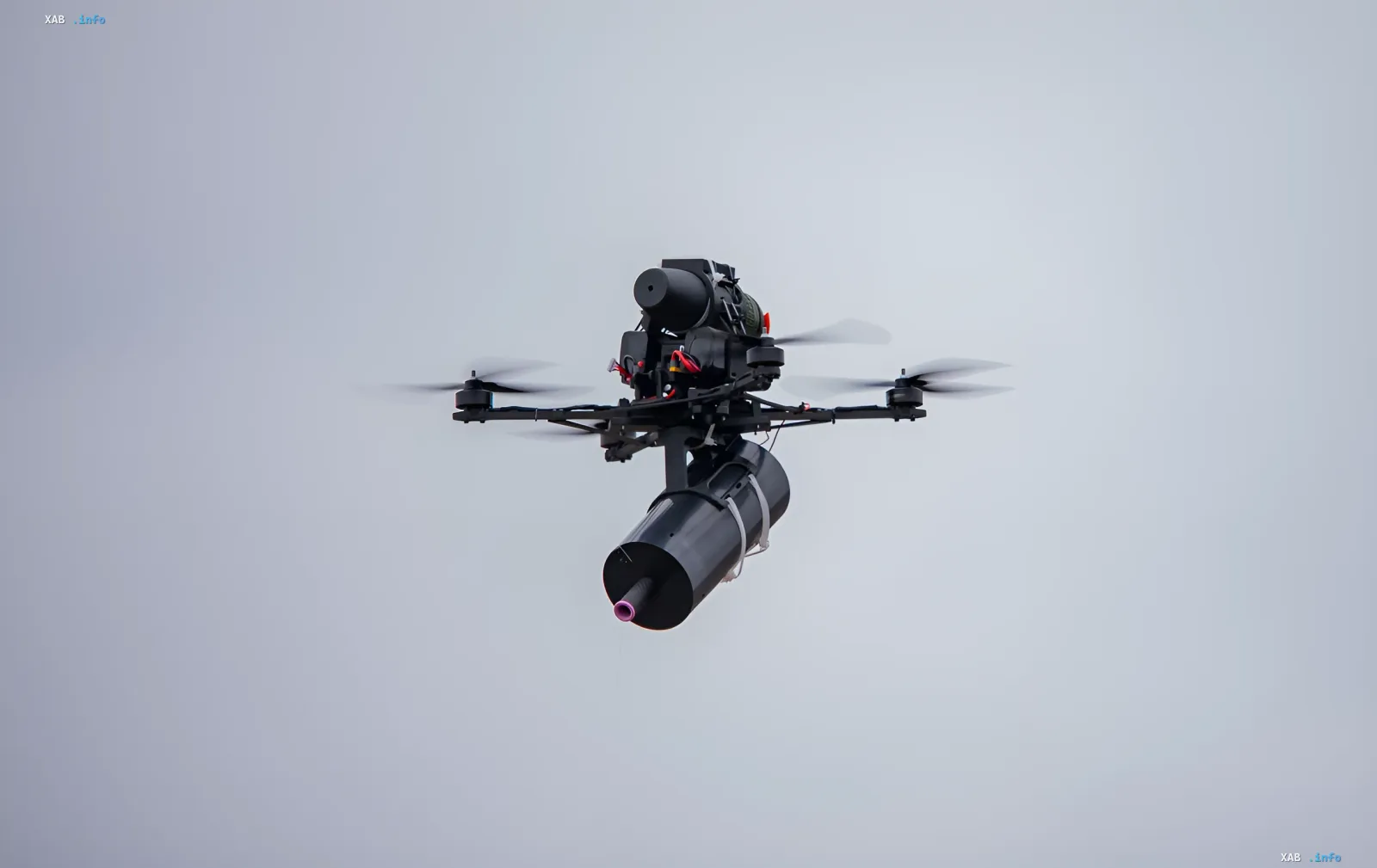
The nature of the weaponry used is particularly alarming. To implement these aggressive tasks, occupiers have significantly increased the density of their drone units in the region. A key feature of the new tactic is the active use of drones controlled via fiber-optic cables. This technology allows an operator to control a drone over long distances, eliminating the possibility of signal interception or the use of electronic warfare (EW) systems to shoot it down. Cable communication ensures uninterrupted video stream transmission, making such drones extremely dangerous for any moving objects.
New Risk Zones: Markets and Supermarkets
Alexander Prokudin warned that the risk of strikes is increasing not only on highways but also in places with significant concentrations of vehicles. Parking lots near supermarkets, markets, and gas stations (GSS) are now considered high-risk zones. Authorities urge residents of the Kherson region to exercise maximum vigilance in the coming weeks. Any concentration of vehicles, even civilian ones, may be perceived by occupiers as a potential military target, making presence in these zones potentially fatal.
Precedents of Civilian Pursuit
The situation is exacerbated by the fact that Russian drones have already begun to show signs of targeted pursuit of specific civilians. Recently, in Kherson itself, an incident was recorded where a Russian army drone began circling over a market, pursuing a man selling vegetables. According to eyewitnesses and the Head of the RMA, the drone flew around the car for about a minute, hunting for the person, before disappearing. This indicates that algorithms or operator instructions allow for the identification and pursuit of individual targets, even if they do not pose a military threat.
Contradictory Data
While Alexander Prokudin and the Defense Forces unequivocally state the systemic nature of the new "hunt" tactics, official representatives of the Russian occupation authorities in the region have not commented on these accusations. While the Ukrainian side calls this a "free hunt" and a direct order, Russian sources often describe such actions as "protection against sabotage groups" or "reconnaissance flights." The lack of comments from the occupiers and their habitual practice of suppressing incidents involving civilians create an information vacuum; however, visual evidence and eyewitness accounts confirm the aggressive nature of UAV deployment.
Recommendations for the Population
In light of the escalation of the threat, the Head of the RMA urged residents not to leave vehicles on open parking lots near crowds and to avoid traveling at night, when visual identification of transport is difficult and the risk of false alarms by drone operators increases. The situation in the Kherson region requires every resident to be extra vigilant and ready to evacuate transport to safe shelters at the first sign of drone appearance.