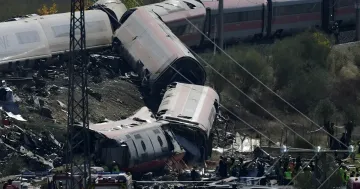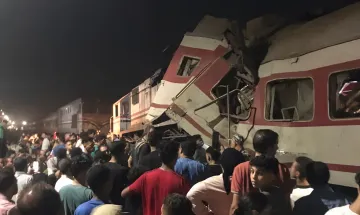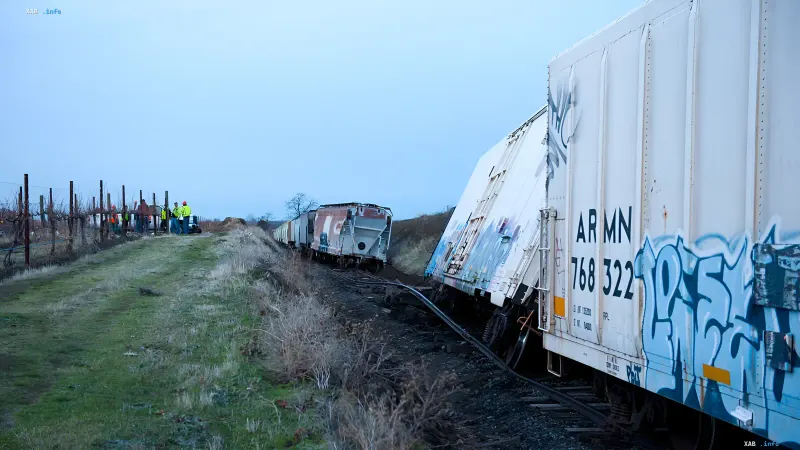
On Sunday at around 3:48 AM, a freight train derailed in the Zarzalejo area (Community of Madrid). According to the emergency services of the Community of Madrid, the incident led to the suspension of traffic on the section and the hospitalization of the train driver. Railway sources informed the same service that the train belongs to the company Captrain.
Condition of the Driver
According to emergency services, the train driver complained of back pain. He was taken to Puerta de الحديد (Puerta de Hierro) Hospital, where his condition is not considered serious. Details regarding the nature of the injuries and the exact cause of the derailment were not disclosed at the time of publication.
Passenger Restrictions
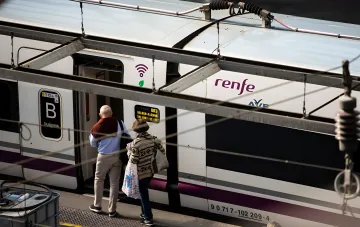
Renfe announced on the social network X that train traffic has been suspended between Zarzalejo and Robledo de Chavela. The Media Distancia line connecting Madrid to Avila is experiencing delays. To serve passengers, the operator has organized alternative bus services between El Escorial and Robledo de Chavela.
Incident Two Days Before Strike
The accident occurred two days before a railway workers' strike scheduled for November 17. It was called by the Renfe general committee, which includes the unions Semaf, CCOO, UGT, SFF-CGT, SF-I, and ALFERRO. The unions are demanding improved railway safety levels following two major accidents — in Adamuz (Cordoba province), where 46 people died on January 18, and in Urda (Toledo), where 69 people died on October 28. A total of 115 people died in these two incidents.
Cause of the Accident in Urda
According to Spanish Transport Minister Oscar Puente, the accident in Urda was caused by a failure in the computer safety system: the system shut down over a 63-kilometer section, six trains stopped, but the dispatch center cleared a Renfe train to proceed, which crashed into a stationary Iryo train. These circumstances have intensified union demands to review safety protocols.
Minimum Service Levels
Due to the upcoming strike, the Ministry of Transport and Sustainable Mobility has established minimum service levels. For Cercanías commuter trains, it will be 75% during peak hours, for Media Distancia trains 65%, for Alta Velocidad and Larga Distancia 72%, and for freight transport 26% of the scheduled volume. The coincidence of the accident with the pre-strike period once again brings to the forefront the discussion about the state of infrastructure and safety systems on Spanish railways.