The Kremlin continues to put forward territorial demands against Ukraine, referencing shared history and refusing to limit its claims solely to the Donbas region. This was reported by RBC-Ukraine citing a report from the Institute for the Study of War (ISW).
Historical justifications and the concept of Novorossiya
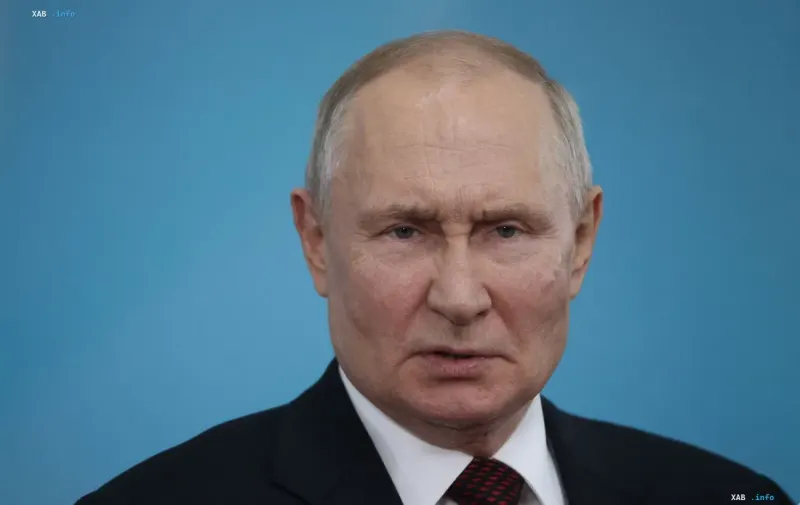
Analysts noted that Russian dictator Vladimir Putin continues to state territorial claims against Ukraine that go beyond the Donbas. To justify his demands, he relies on his own interpretation of history, claiming that Ukrainians and Russians are supposedly "one people."
On October 22, Putin stated that occupied Ukrainian territories are supposedly "territory of historical Russia." According to ISW, by "historical Russia" Putin likely means the so-called "Novorossiya," an ill-defined concept of a region in southern and eastern Ukraine that Russian authorities try to present as an integral part of the Russian Federation.
The territories included in this concept by the Kremlin extend beyond Crimea, Luhansk, Donetsk, Zaporizhzhia, and Kherson regions to include Kharkiv, Dnipropetrovsk, Mykolaiv, and Odesa regions. Thus, Moscow's statements regarding "historical rights" apply to a much broader territory than what the Russian army is trying to seize in the Donbas.
Moscow's stance on negotiations and ceasefire
Putin's statements indicate that Russia's territorial claims may extend beyond these demands and potentially cover the entire country. The Russian president continues to insist on achieving all stated military goals, including demands that effectively amount to Ukraine's full capitulation.
ISW believes this position shows a lack of readiness in the Kremlin for a compromised peaceful settlement. Moscow views negotiations with Kyiv primarily as a way to force Ukraine into accepting Russian terms rather than finding a mutually acceptable solution.
Putin's refusal to support the ceasefire proposal along the current frontline also demonstrates that Russia is not ready to simply freeze the situation on the battlefield. Statements about "historical Russia" suggest that the Kremlin's territorial goals are far more sweeping.
International reactions and Kyiv's position
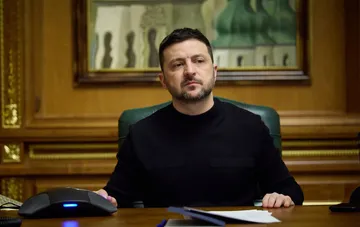
Previously, US Secretary of State Marco Rubio stated that resolving the Donbas issue could bring an end to the war closer, emphasizing that both sides must make concessions. Meanwhile, Ukrainian President Volodymyr Zelenskyy stated that Ukraine is ready to end the war as quickly as possible, specifically by halting combat operations along the current frontline.
At the same time, Kyiv will not agree to legally recognize temporarily occupied territories as Russian. This fundamental disagreement prevents a diplomatic breakthrough amid the Kremlin's maximalist demands.
Significance and implications of the Kremlin's stance
The extensive plans revealed by ISW analysts demonstrate that the war is far from over and diplomatic deadlock persists. The Kremlin's ambition to extend control over southern and eastern Ukraine rules out a quick resolution to the conflict.
Future developments will depend on Ukrainian defense resilience, international partner support, and the readiness of the parties for genuine compromises. However, Moscow currently maintains its course toward military confrontation to achieve global geopolitical objectives.