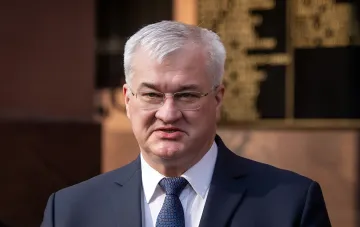
Ukrainian Foreign Minister Andriy Sybiha has publicly refuted claims by Russian President Vladimir Putin that Ukrainian armed forces control only about 10% of the Donbas territory. According to the Foreign Minister, Kyiv is purposefully disseminating data to international partners that, according to the Ukrainian side, does not reflect reality. "This is not true. Ukraine controls 20% of the territories. Ukraine is much stronger than it was last year," stated Sybiha, whose remarks were published by the Ukrainian Ministry of Foreign Affairs on its official Telegram channel on Thursday, November 10, 2026.
Context: Putin’s October Meeting and Russian Command Figures
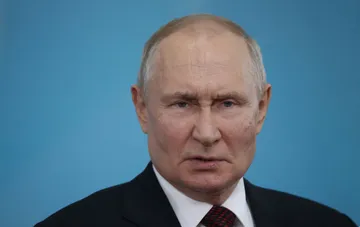
Putin’s statements, to which Sybiha responded, were made in mid-October 2026, when the Russian leader visited a secondary command post of the Russian Group of Forces. At the meeting, as reported by "Vazhnye Istorii" (Important Stories), Putin claimed that since the beginning of 2026, Russian armed forces had allegedly captured about 6,500 square kilometers of territory and 310 settlements. According to him, only about 10% of the Donetsk region and 16.5% of the Zaporizhzhia region remain under Ukrainian control. Putin also claimed that the Russian offensive has accelerated and is continuing along the entire front line.
Independent Estimates: DeepState Data and ISW Assessment
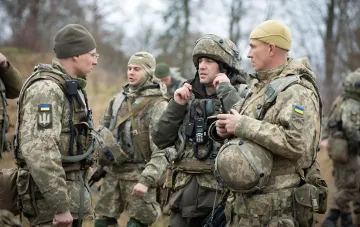
The Russian President's claims contradict the calculations of independent analytical structures. According to the Telegram channel DeepState, which tracks changes on the front, Russian armed forces control about 80% of the Donetsk region, while Ukraine maintains control over about 20% of the region — double what Putin claims. Analysts from the Institute for the Study of War (ISW) note that the Ukrainian counteroffensive near Lyman, dubbed Operation Vivaldi, disrupted Russian plans to create a "belt of fortresses" including Sloviansk, Kramatorsk, Druzhkivka, and Kostiantynivka. According to the Armed Forces of Ukraine, these actions resulted in the liberation of 277 square kilometers of territory and 16 settlements.
Kyiv’s Position on Negotiations and Future Contacts
Against the backdrop of discrepancies in territorial control assessments, Ukrainian President Volodymyr Zelenskyy had previously spoken about the prospects for direct telephone contacts with Putin. According to him, calls to the Russian leader are "futile" and would turn into "another history lecture rather than steps to end the war." Previously, as reported by RBC-Ukraine, Putin characterized strikes on Ukrainian territory as "revenge" for drone attacks on oil refineries and depots, threatening the destruction of all Ukrainian infrastructure by 2027.
What This Means for the Diplomatic Track
Sybiha’s public rebuttal is essentially aimed at an international audience: the Ukrainian side is attempting to prevent the Russian version of the territorial status of the Donbas from becoming entrenched in diplomatic discourse. The discrepancy in figures—10% versus 20%—is not academic: the formulation of any future peace agreements and the question of which territory is considered "occupied" in the context of international sanctions and reconstruction mechanisms depend on the assessment of actual control. While both sides present their own data, and independent analysts point to dynamics that neither side fully acknowledges, the diplomatic track remains blocked at the level of a basic factual consensus.