After the occupation of Enerhodar, writer Natalia Budianska was forced to leave her home and start life from scratch. In her column, she tells how a random decision led her to Ireland, shares her personal experience of adaptation, and explains how Ukrainians can obtain temporary protection, find housing, and get a job.
Plans Cut Short by War
Before the full-scale war began, a television tourism project was set to launch, followed by a summer residence House of Europe in Enerhodar, large-scale concerts with stars, famous lecturers, and stand-up comedians. There were many plans for the city's development. I worked in the culture department.
In May, we planned two levels of rafting — on the Southern Bug and the Black Cheremosh — and many other interesting trips: the pink lakes of Kherson, water lilies, and the marshy labyrinths of Khortytsia Island.
And at the end of summer, as always, we would have gone on a family trip: a contract with television, advertising for a new car brand, embodying family values. All of this — live on air. Almost like in 2021, only on a larger scale. A new level.
I had a business. Books. Magazines. Work. An apartment. Friends, the sea. A country house. Life.
First Steps After Evacuation
After leaving the occupied territory and volunteering in Ukraine, I went to Slovakia to work. At that time, we all thought the war was temporary and that we just needed to push a little harder to help the defenders defeat the enemy. And then we could live and think about ourselves. So I went to Slovakia for just a couple of months — simply to earn money for renting an apartment in the Lviv region. In breaks between shifts, I wrote articles about the situation at the Zaporizhzhia NPP and sent them to Slovak media.
I returned to Ukraine, continued my volunteer work, which never ended. Volunteering is a noble cause, but it is unpaid.
The Call That Changed Everything
One day, when I went to work as a cleaner in Slovakia again, the phone rang. The number was labeled "Iryna texts." Apparently, in that peaceful life, I had written texts for her on commission. She asked:
— In Bratislava, — I was mopping the floor and couldn't talk long.
— Come to Ireland. I don't know how much they pay you there, but there are far more opportunities to earn money here.
I hung up. It seemed like a waste of time. What was the point of this talk? I still had two floors to mop. For a month of such work (if I didn't die before then), they promised €600. A shift was 8 hours. And then back to Ukraine.
But that call, that conversation wouldn't let me rest. I was riding the tram barely alive and searching Google for information about Ireland. What kind of country is it? Where is it located? Do they still accept Ukrainians?
I couldn't sleep. My body ached, and my head was full of thoughts. That's how I suffered until morning. A week later, I quit. I bought rubber boots (for some reason, I thought I wouldn't survive without them), a one-way ticket, and flew to Dublin with a backpack.
Adapting in Ireland
By that time, I already knew that Ireland is an island, part of which belongs to the United Kingdom and is called Northern Ireland. Refugees are accepted in the Republic of Ireland, the capital is Dublin. At passport control, you need to say the phrase: "I need temporary protection"… and then — as it goes.
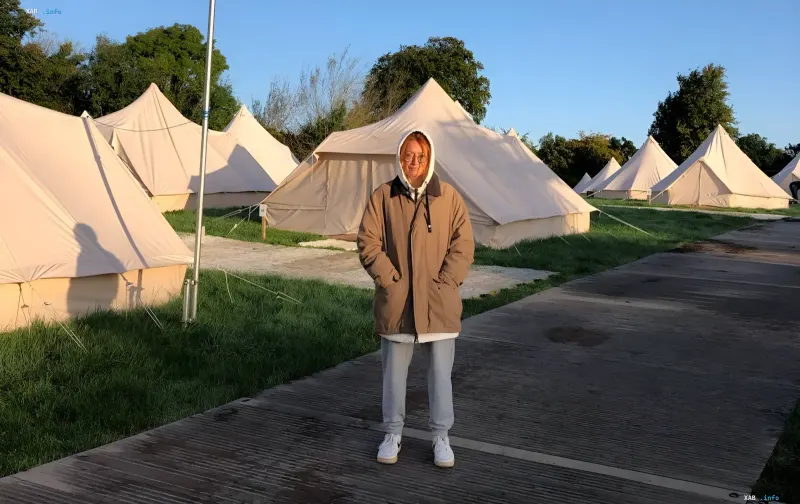
What followed was not very good. After checking all documents, confirming residence in Ukraine before the war, fingerprints, and other things, I was sent to a tent camp along with others.
Did I regret my decision? Of course! But the tents and rainy weather (when rain doesn't stop for weeks) did their job. There was no time to get discouraged and complain. I urgently needed to figure out how to get out of this situation. While I waited for the final documents (and in Ireland, this takes a very long time), I managed to figure out the education, work, and housing systems, met local grandmothers, and found my first part-time job. My English at that time was limited to the phrase: "My name is Natalie, I am from Ukraine, I need work".
The first job was found in the same village where our camp was located. A room in a grandmother's house — also. Work didn't start immediately (like everything in Ireland) and turned out to be quite different from what was promised (this is also part of the Irish flavor — promising one thing, but in the end, it turns out to be something else), and the landlady turned out to be quite a spy. I will tell everything in order in the next materials of this column. The main thing is that I survived then, I continue to live on, helping Ukraine. I also wrote a book about the resistance of our city to the Russian army.
Helping Those Looking for a Path
And now — information for those considering the possibility of evacuation from Ukraine due to shelling. I created a Telegram channel where I tell how to write a resume, find housing and work, and much more.
Temporary protection in Ireland...